

Spore-safe handling
Collect and examine fruiting bodies using gloves and dedicated tools, then discard them in sealed bags with household trash rather than compost, to avoid spreading spores into edible mushroom beds or vegetable plots.

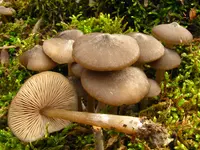
Entoloma vernum is a small, early-spring mushroom rather than a true garden plant. It typically forms dull brown to grayish caps with pale, often sinuous stems, and gills that turn pinkish as the spores mature.
This fungus is usually found in woodland or forest edges in temperate regions, often on soil rich in leaf litter. It is not a species to grow intentionally at home, and reliable information on how to care for Entoloma vernum as a cultivated organism is very limited.
Its appearance can be variable, and correct identification requires close attention, which makes it unsuitable for beginners interested in edible or ornamental fungi.

Care Difficulty
Moderate Care

Light Preference
Partial Shade

Water Requirements
Moderate Water

Temperature Preference
Cool Climate

Hardiness Zone
Unknown

Soil Texture
Loamy, Silty, Organic-rich

Soil pH
Acidic (5.5–6.5)

Soil Drainage
Moist but well-drained

Fertilization
Minimal (feed rarely)
Scan your plant to receive care tips personalized for your specific plant
Available on iOS and Android
This spring-fruiting woodland fungus prefers cool, subdued light typical of forest understory conditions.
Moist, humus-rich soil is essential for stable colony development and mushroom formation.
This species is adapted to cool spring conditions and is sensitive to both hard frost and high heat.
Humidity is not a meaningful factor for Entoloma vernum, which relies mainly on suitable outdoor soil and microhabitat moisture rather than ambient air humidity.
This fungus depends on undisturbed, moist forest soil rather than prepared garden mixes.
This species is not suitable for container growing, as it depends on complex forest soil conditions and mycorrhizal relationships that containers cannot realistically replicate.
This wild mushroom forms nutrient partnerships with soil organisms and does not benefit from standard garden fertilization.
As a short‑lived woodland fungus, Entoloma vernum does not require pruning in the way vascular plants do.
This species is not suited to pot culture, so management focuses on leaving its woodland habitat undisturbed rather than repotting.
Reproducing this woodland mushroom is technically complex and not recommended for typical home growers.
This fungus survives underground as mycelium and generally needs no active winter care in its natural range.

Plant Health Check
Not sure what's wrong with your plant? Check your plant's health inside the app.
This species typically fruits very early in the year, often appearing in late winter or early spring when few other agaric mushrooms are present, which makes its identification seasonally distinctive in temperate forests.
It is often found in nutrient-poor, sandy or acidic forest soils, especially under conifers, indicating an ecological adaptation to relatively low-fertility habitats.
Like other members of its genus, it produces angular, pinkish-brown spores, and the resulting pink spore print is a key feature used by mycologists to separate it from superficially similar early-spring mushrooms.
This species is considered poisonous and must not be eaten. It contains toxic compounds that can cause serious gastrointestinal symptoms. Correct identification is difficult, so all similar pink-gilled mushrooms should be treated as inedible for safety.
Keep your plants happy and healthy with plant identification, disease detection, and easy care guidance.

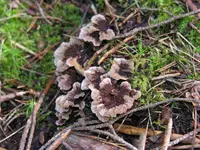
Common Fiber Vase
Thelephora terrestris
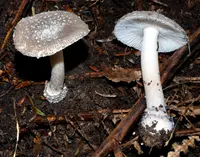
Maori dust amanita
Amanita nehuta
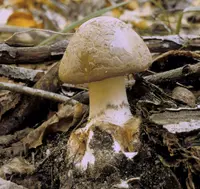
Brown American Star-footed Amanita
Amanita brunnescens
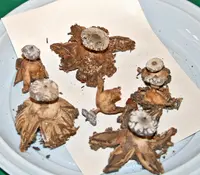
Striated Earthstar
Geastrum striatum
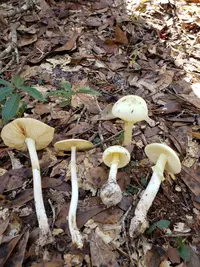
Coker's Lavender Staining Amanita
Amanita lavendula
winter stalkball
Tulostoma brumale
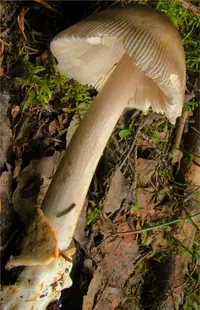
Gray-Zoned Ringless Amanita
Amanita battarrae
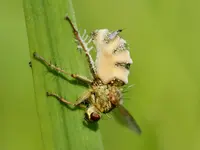
Fly Death Fungi
Entomophthora muscae