Phaeoclavulina flaccida Care

Phaeoclavulina flaccida

About Phaeoclavulina flaccida

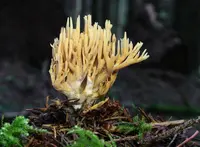
Phaeoclavulina flaccida is a coral fungus, not a typical leafy plant. It forms soft, branching, coral-like clusters in shades of pale yellow to tan. The fruiting bodies are often fragile and can collapse or dry quickly. This species usually appears on soil or among leaf litter in coniferous and mixed woodlands.

It is native to temperate regions of the Northern Hemisphere, especially North America and Europe. Its appearance is strongly tied to moisture levels and seasonal conditions, so it can be unpredictable from year to year.

Because it is a woodland fungus, it is not a practical candidate for regular home cultivation. For those still interested in how to care for Phaeoclavulina flaccida, it generally favors cool, moist, shaded forest environments with undisturbed organic soil.

Main Plant Requirements

Care Difficulty

Hard Care

Light Preference

Partial Shade

Water Requirements

Keep Soil Moist

Temperature Preference

Cool Climate

Hardiness Zone

Unknown

Soil Texture

Loamy, Silty, Organic-rich

Soil pH

Acidic (5.5–6.5)

Soil Drainage

Moist but well-drained

Fertilization

Minimal (feed rarely)

Get Personalized Care Plan

Scan your plant to receive care tips personalized for your specific plant

Available on iOS and Android

How to Care for the Phaeoclavulina flaccida

This woodland coral fungus prefers low to moderate light that mimics a shaded forest floor.

  • Provide bright shade or dappled light, such as beneath deciduous trees, with no more than 1–2 hours of weak morning sun and no direct afternoon sun.
  • Allow 6–8 hours per day of indirect, filtered light; heavy, dense shade slows fruiting and can produce thin, pale branches in Phaeoclavulina flaccida.
  • In summer, protect from strong sun that dries the substrate; in late autumn, increased low-angle light is acceptable as long as the ground stays cool and moist.

This fungus requires consistently moist, not waterlogged, conditions in a humus-rich forest-like substrate.

  • Maintain evenly moist soil, allowing only the top 1–2 cm to start drying before re-wetting; never let the underlying layer fully dry out.
  • Use loose, well-drained, organic-rich material; water more frequently during warm, dry spells and less during cool, wet weather when rainfall already keeps the ground damp.
  • Watch for signs of overwatering such as sour odor and slimy mycelium, and for underwatering such as brittle, collapsing fruiting bodies that dry and shrivel quickly near the surface.

This species thrives in cool to mild conditions typical of autumn woodland environments.

  • Aim for active growth and fruiting around 50–65°F (10–18°C), which supports stable moisture and slow, steady development of the mycelium and fruiting bodies.
  • Protect from freezing; short drops to 32°F (0°C) may be survived in sheltered soil, but repeated hard frosts can damage or halt Phaeoclavulina flaccida fruiting.
  • In warmer periods up to about 75°F (24°C), provide shade and ample moisture; sustained heat above 80°F (27°C) with dry conditions causes rapid drying and decline.

This fungus prefers naturally moist woodland air but does not need strict humidity control in cultivation.

  • Aim for 60–80% humidity by growing Phaeoclavulina flaccida outdoors in shaded, leaf-littered areas or in a humid terrarium-style setup.
  • It tolerates brief drops to 40–50%, but prolonged dry air slows or stops fruiting and can cause shriveling tips.
  • Signs of low humidity include drying, brittle branches and pale, collapsing tissue; increase moisture with damp leaf litter, nearby water trays, or light misting of the substrate, not the fruiting bodies.

This species needs a loose, humus-rich, consistently moist substrate that mimics decaying forest litter.

  • Use a mix built from leaf litter, well-rotted wood chips, and compost, with some coarse sand to keep the structure open and crumbly.
  • Ensure free drainage so water moves through quickly but the substrate stays evenly moist; avoid heavy clay and standing water.
  • A slightly acidic reaction around pH 5.0–6.5 suits typical woodland conditions where this fungus naturally decomposes organic matter.
  • Improve aeration and drainage by including coarse bark pieces or perlite, and avoid compacting the substrate when filling beds or trays.

This species is generally unsuited to conventional container growing, as it relies on complex soil and wood decay conditions that are hard to maintain in pots.

This woodland fungus typically grows on nutrient-rich forest soil and does not benefit from additional fertilization in gardens or containers.

Phaeoclavulina flaccida requires no true pruning, only simple cleanup of fruiting bodies if needed.

  • Remove collapsed, decaying fruiting clusters using clean gloves or a small knife to reduce mess and mold buildup.
  • Cut at the base of the fruiting body without disturbing the underlying mycelium in the soil or wood substrate.
  • Dispose of removed material in green waste or compost if local guidance for wild fungi allows this.

As a mycorrhizal or wood-inhabiting fungus, this species is rarely suitable for container culture and is not typically transplanted.

  • Transplanting usually fails because the mycelium forms extensive, delicate networks with soil and host trees that are easily damaged.
  • If relocation is attempted, move a generous block of intact substrate and associated soil, keeping it evenly moist throughout handling.
  • Carry out any move in cool, moist weather to limit drying stress and temperature shock to the fungal tissue.

Propagation of Phaeoclavulina flaccida is challenging and generally left to natural spore dispersal in suitable woodland habitats.

In its natural range this fungus is cold hardy and typically needs no intentional winter care.

Care Tips

Use clean substrate

When cultivating this coral fungus, always start on sterilized woody debris, leaf litter, or a prepared agar/wood-based medium to reduce competition from faster-growing molds and other fungi.

Mimic forest microclimate

Place culture containers or outdoor beds in a shaded, sheltered spot with steady airflow but no direct wind, imitating the cool, stable, slightly moist conditions of a mixed woodland floor.

Monitor substrate aging

Mark the date when a batch of substrate is prepared and replace or refresh it once it becomes noticeably compacted, sour-smelling, or heavily colonized by other fungi, as this species prefers relatively fresh, lightly decomposed material.

Gentle harvesting technique

Cut fruiting bodies at the base with a clean blade rather than pulling, and leave some intact clusters in place so the underlying mycelium remains undisturbed and can fruit again.

Spore dispersal support

If aiming at growing Phaeoclavulina flaccida over a wider area outdoors, allow some mature clusters to remain until they drop spores naturally, then lightly rake the surrounding leaf litter to help spores contact suitable organic material.

Common Pests and Diseases

Mycophagous springtails

These insects feed on developing fruiting bodies, nibbling branch tips and deforming the coral-like structure. Symptoms include ragged, blunted tips and slowed expansion of the cluster.

Solution

Lift and discard heavily grazed fruiting bodies and reduce excessive surface moisture in cultivation trays or beds. Use fine mesh or physical barriers to limit access from soil-dwelling arthropods and, if needed, apply targeted, soil-safe biological controls such as products based on Beauveria bassiana following label directions.

Slug and snail grazing

These pests actively feed on soft fungal tissue, leaving large irregular bite marks, slime trails, and collapsed branches. This damage often appears overnight in outdoor or shade-house culture.

Solution

Hand-pick slugs and snails at dusk or early morning, use copper tape or sharp mineral barriers around beds, and remove nearby hiding places such as boards or dense ground debris. In wetter sites, deploy iron phosphate slug baits placed away from the fruiting bodies, following product instructions carefully.

Fungal parasitism (parasitic molds)

This disease appears as fast-spreading white, gray, or slightly colored mold that overgrows young coral clusters, causing collapse and rapid decay. Symptoms include a cottony or powdery coating starting at the base or shaded surfaces of the fruiting body.

Solution

Promptly remove and dispose of affected fruiting bodies and any visibly colonized substrate, then improve airflow and reduce overcrowding in the fruiting area. In controlled cultivation, lower surface moisture, increase fresh air exchange, and rotate blocks or trays so that new flushes form on cleaner, less-contaminated substrate, which supports more stable Phaeoclavulina flaccida care over time.

Bacterial soft rot

This disease causes localized water-soaked spots that quickly turn into slimy, foul-smelling patches on the branches and base. Symptoms include tissue that collapses when touched and may attract flies and other insects.

Solution

Remove and discard any soft, discolored fruiting bodies at the first sign of odor or slime and avoid overhead misting directly onto mature clusters. Improve drainage and air movement around the fruiting area, disinfect tools and containers, and space cultures so that splashing water does not transfer bacteria between clusters.

Interesting Facts

Slender yellow coral

This fungus forms soft, flattened, coral-like branches in shades of pale yellow to ochre that often look drooping or wilted rather than upright.

Late-season decomposer

It typically fruits in late summer to autumn on the forest floor of coniferous and mixed woods, helping break down fallen needles and leaf litter in temperate ecosystems.

Look-alike confusion risk

It can be confused with other yellow coral fungi, and reliable identification often requires attention to branching pattern, brittleness of the flesh, and microscopic features such as spore shape and surface ornamentation.

FAQs about Phaeoclavulina flaccida

This coral fungus is generally regarded as inedible due to its tough texture and poor culinary value. Identification can be difficult, and confusion with similar species is possible, so foragers should avoid eating it.

Grow Healthy Plants with Botan Care

Keep your plants happy and healthy with plant identification, disease detection, and easy care guidance.

Botan plant care app — identify plants on mobile

Explore More Plants