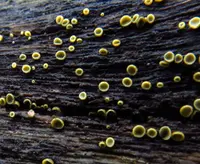
Green Wood Cup Care (Chlorociboria aeruginascens)

Also known as: Green Elfcup
Green Wood Cup

About Green Wood Cup

Green wood cup, Chlorociboria aeruginascens, is not a typical houseplant but a small cup fungus that grows on decaying wood. It is best known for staining wood a striking blue-green color used in specialty woodworking.

This fungus forms tiny, shallow cup-shaped fruiting bodies on fallen branches, especially in cool, moist forests. It occurs mainly in temperate regions, often in North America and Europe, where there is plenty of rotting hardwood.

Because it depends on specific wood-decay conditions, it is challenging to cultivate indoors or in gardens. Enthusiasts who want to learn how to care for Green Wood Cup usually focus on providing consistently damp, shaded wood and stable, naturalistic conditions.


Main Plant Requirements

Care Difficulty

Hard Care

Light Preference

Shade

Water Requirements

Keep Soil Moist

Temperature Preference

Cool Climate

Hardiness Zone

Unknown

Soil Texture

Organic-rich, Peaty

Soil pH

Acidic (5.5–6.5)

Soil Drainage

Moist but well-drained

Fertilization

Minimal (feed rarely)

Get Personalized Care Plan

Scan your plant to receive care tips personalized for your specific plant

Available on iOS and Android

How to Care for the Green Wood Cup

This wood-decay fungus prefers low to moderate light similar to a shaded woodland floor.

  • Provide dappled or filtered light under trees, avoiding direct midday sun, which can dry out its woody substrate and slow growth.
  • Aim for bright shade or light reaching it for roughly 1–3 hours in the early morning or late afternoon, not harsh afternoon sun.
  • Site Green Wood Cup on the shaded side of logs or branches; excessive sun bleaches color, while deep, constant darkness can reduce fruiting.

This species relies on consistently moist but not waterlogged wood rather than direct surface watering.

  • Maintain the substrate (buried or partially buried hardwood) evenly moist; allow only the outer 1–2 cm to dry before rewetting through rainfall or gentle soaking.
  • Ensure the wood sits in well-drained soil so excess water can drain away; standing water encourages rot by competing fungi and bacteria.
  • In warm, dry periods, watch for pale, shriveling cups as a sign of drying, and avoid heavy, frequent soaking that leaves the wood spongy and sour-smelling.

This fungus performs best in cool to mild conditions typical of temperate woodlands.

  • Optimal growth occurs around 50–68°F (10–20°C), with fruiting often strongest in cool, moist seasons such as spring and fall.
  • It tolerates brief drops close to 32°F (0°C), but prolonged hard freezes can damage exposed fruiting bodies, though the wood-inhabiting mycelium often survives.
  • Sustained heat above 77–82°F (25–28°C) with dry air can halt visible growth; provide shade and moisture to moderate temperature swings on the host wood.

This fungus thrives in consistently humid conditions similar to damp woodland air.

  • Aim for 70–90% humidity, resembling moist, shaded forest habitat where Green Wood Cup naturally occurs.
  • Dry air causes cups to shrivel, lose color intensity, and stop producing new fruiting bodies.
  • Increase humidity by keeping the colonized wood in a closed, ventilated box with damp sphagnum nearby, not touching the wood.

This species does not grow in conventional potting soil but in decaying wood with specific structural conditions.

  • Chlorociboria aeruginascens colonizes well-rotted hardwood, which functions as a fibrous, organic-rich substrate rather than loose soil.
  • Use pieces of thoroughly decayed oak, maple, or similar hardwood kept uniformly damp but not waterlogged to maintain internal air spaces.
  • Target a slightly acidic environment, roughly pH 5.0–6.5, often present naturally in decomposing hardwood and fallen logs.
  • Avoid mineral soils, compacted substrates, and any mix that stays saturated, as these limit oxygen and favor competing molds.

This species is only marginally suitable for containers because it is specialized for colonizing decaying wood rather than free soil.

  • Use a shallow, broad container to hold decayed hardwood pieces in a single layer so air can circulate around all sides.
  • Elevate the wood on a plastic grid or stones so excess water drains away from the underside and does not stagnate.
  • Choose an opaque or thick-walled container to reduce light and surface drying, helping the internal wood moisture stay stable.

This wood-decay fungus usually gains enough nutrients from its host wood and generally does not require additional fertilization.

Chlorociboria aeruginascens needs no true pruning, but simple hygiene helps maintain healthy growth on wood surfaces.

  • Remove heavily decayed, moldy, or insect-infested wood sections if they threaten nearby plants or structures.
  • Trim away loose, crumbling wood with a clean knife or saw to reduce unwanted spread of other fungi.
  • Disinfect tools with alcohol or a 10% bleach solution after cutting to limit transfer of microorganisms.

This species is not a typical potted plant; management focuses on relocating or replacing colonized wood rather than repotting.

  • Transplant only when the colonized wood is no longer structurally safe or is in an unsuitable location.
  • Carry out moves during cool, moist weather so the wood does not dry out quickly.
  • Cut and move sections of colonized wood gently, handling pieces by solid, non-crumbling areas to limit disturbance.
  • Place the wood in a shaded, humid spot with minimal air movement to reduce stress on developing fungal tissue.

Propagation of this fungus is specialized and rarely attempted by typical home growers.

Outdoors, this fungus on wood is naturally cold hardy in temperate climates and usually needs no specific winter care.

Care Tips

Use Decayed Hardwood

Place sections of well-rotted oak, beech, or other hardwood in a shaded, consistently moist spot and allow them to weather outdoors for several months before inoculation, as partially decomposed wood is colonized more readily than fresh timber.

Pre-Soak Inoculation Wood

Before adding spawn or colonized plugs, soak the wood in clean, non-chlorinated water for 12–24 hours, then drain thoroughly so the interior is hydrated but the surface is not dripping, which improves mycelium establishment without encouraging bacterial rot.

Maintain Stable Moisture

Once the fungus is established, cover the inoculated wood loosely with leaf litter or burlap to reduce evaporation and keep the microclimate evenly damp while still allowing air exchange.

Rotate Shade Position

If the site receives shifting dappled light, rotate small logs or boards a quarter turn every 2–3 weeks so the shaded side does not dry out excessively or stay waterlogged for long periods.

Harvest Wood Carefully

When harvesting the stained green wood for crafts, cut only well-colored sections and leave some colonized material in place so the organism can continue spreading, which supports long-term success in growing Green Wood Cup.

Common Pests and Diseases

Competing wood-decay fungi

This disease involves other wood-decay fungi colonizing the same substrate and outcompeting the green wood cup, leading to reduced fruiting and loss of the characteristic blue-green staining. Symptoms include patchy or absent cups and replacement by different-colored fungal growth.

Solution

Remove and discard wood pieces overrun by other fungi and source fresh, undecayed hardwood with minimal visible fungal activity. Maintain moderate, stable moisture and good air movement around the substrate so the preferred mycelium can establish quickly and remain dominant.

Mold overgrowth

This disease occurs when fast-growing molds such as Trichoderma or Penicillium colonize the surface of inoculated wood or culture containers, covering or suppressing the cups. Symptoms include dense green, white, or gray fuzzy growth that obscures the small blue-green cups.

Solution

Discard heavily contaminated material, then improve hygiene by using clean tools, avoiding handling the substrate with bare hands, and keeping culture containers or terraria well ventilated but protected from dust. Reduce excess surface moisture and, if culturing indoors, consider using pasteurized or pre-treated wood to give the desired fungus a head start.

Fungus gnats

These insects lay eggs in moist, organic substrates and the larvae may tunnel through colonized wood or culture media, disturbing the mycelium and young cups. This pest is more common in enclosed terraria or culture boxes with high moisture and poor airflow.

Solution

Allow the top layer of substrate to dry slightly between misting, improve airflow with small vents, and use fine mesh over openings to block adult gnats. Sticky yellow traps placed near the setup help reduce adult numbers, and removing any soggy, decomposing organic debris limits egg-laying sites.

Mite contamination

These insects are tiny arthropods that can graze on mycelium and fruiting bodies, causing slow decline, malformed cups, or patchy disappearance of growth in culture conditions. Symptoms include very fine movement on surfaces and dull, damaged tissue on the cups or surrounding mycelium.

Solution

Isolate affected cultures and, if possible, restart from clean tissue or spores on fresh, sterile substrate. Keep the environment clean, avoid overcrowding cultures, and reduce excess humidity and organic debris that favor mite buildup; in specialized setups, some growers use predatory mites as a biological control, but this is usually optional for small collections.

Interesting Facts

Natural wood dye

This fungus stains the wood it colonizes a distinctive blue‑green color by producing pigments called xylindeins, which are stable enough to persist in dead, dry wood for many years.

Specialist on hardwoods

It primarily decomposes fallen hardwood branches and logs, especially oak and beech, helping recycle nutrients in temperate forests while turning only the sapwood zones green.

Visible fruiting cups

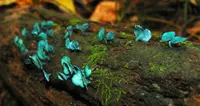
The small, turquoise to blue‑green cup‑shaped fruiting bodies appear on the surface of infected wood and release spores, making it easier to spot the fungus compared to many other wood‑decay species.

Botan icon

Did you know?

Blue‑green stained wood produced by this species, often called green oak, has been used as an inlay material in European marquetry since at least the Renaissance, with confirmed examples in 16th‑century Italian intarsia work.

FAQs about Green Wood Cup

This fungus spreads slowly within suitable dead hardwood, following natural cracks and fibers. It does not jump between substrates quickly and is not considered aggressive, but can gradually color large sections of consistently moist, decaying wood.

Grow Healthy Plants with Botan Care

Keep your plants happy and healthy with plant identification, disease detection, and easy care guidance.

Botan plant care app — identify plants on mobile

Explore More Plants