Sterile Substrate Setup
Use freshly sterilized hardwood sawdust or finely shredded, pesticide-free straw as the fruiting substrate to reduce competing fungi and bacteria that can quickly overwhelm this delicate species.

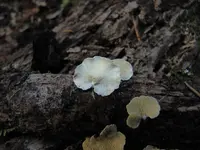
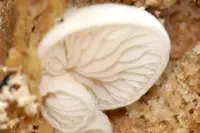
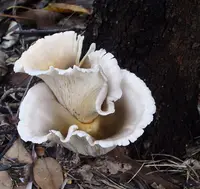
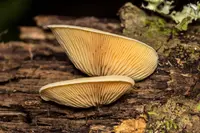
Grass oysterling, Crepidotus epibryus, is a small saprobic fungus rather than a true plant. It forms tiny, shell-shaped caps that sit directly on mosses, decaying leaves, or small plant debris. The caps are typically pale, with a smooth to slightly fuzzy surface and a fan-like shape.
This species occurs in temperate regions, often in damp forests and shaded garden corners where organic matter stays moist. It plays an important role in breaking down dead material but is not a typical home cultivation species, so how to care for grass oysterling is rarely addressed in mainstream guides. Its reliance on consistently cool, humid, and shaded conditions makes deliberate cultivation challenging for most hobby growers.

Care Difficulty
Moderate Care

Light Preference
Shade

Water Requirements
Keep Soil Moist

Temperature Preference
Cool Climate

Hardiness Zone
Unknown

Soil Texture
Loamy, Peaty, Organic-rich

Soil pH
Acidic (5.5–6.5)

Soil Drainage
Moist but well-drained

Fertilization
Minimal (feed rarely)
Scan your plant to receive care tips personalized for your specific plant
Available on iOS and Android
This small saprotrophic fungus prefers cool, shaded woodland conditions with very limited direct sun.
Moisture stability in the substrate is more important than a strict watering schedule for this wood- and moss-dwelling fungus.
This species develops best in cool to mild conditions and declines in prolonged heat or hard freezes.
This saprophytic fungus prefers consistently moist, humid air rather than dry indoor conditions.
This species fruits best on decomposing plant material rather than typical potting soil.
This species can be grown in shallow containers mainly to observe fruiting on a controlled substrate.
This small saprophytic fungus usually meets its needs from decaying wood or moss and does not benefit from routine fertilization.
Crepidotus epibryus does not need structured pruning because fruiting bodies are short-lived and naturally replaced.
When grown in culture or on decorative substrates, this fungus is rarely transplanted, but some situations justify moving it.
Propagation of Crepidotus epibryus is specialized and usually handled by experienced growers or laboratories, not casual plant owners.
This temperate woodland fungus is naturally cold hardy and usually needs no special winter care in outdoor sites.

Plant Health Check
Not sure what's wrong with your plant? Check your plant's health inside the app.
This fungus characteristically fruits on living or dead mosses (bryophytes) and liverwort-covered substrates rather than directly on bare wood, which helps distinguish it from many other small, pale Crepidotus species.
Its spores are finely ornamented and relatively small, with a pale brown spore print, and this specific combination of spore size and surface texture is a key feature used by mycologists to separate it from closely related taxa.
In temperate regions it commonly appears in cool, moist periods, including late autumn and mild winter weather, reflecting an adaptation to low-temperature, high-humidity microhabitats created by moss carpets.
This fungus is not considered a choice edible and is generally treated as inedible. It is small, insubstantial, and difficult to identify confidently, so it should not be collected or eaten.
Keep your plants happy and healthy with plant identification, disease detection, and easy care guidance.