


Select suitable hosts
Install this fungus only on already-dead hardwood, such as oak or beech logs or stumps, since it is a saprobe that decomposes dead wood rather than a soil or live-plant associate.

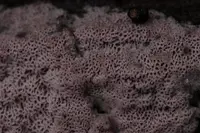
Ceriporia excelsa is a crust-forming wood-decay fungus, not a leafy houseplant. It grows as thin, spreading patches on dead wood, often forming smooth to slightly bumpy, pale fruiting crusts. The surface can range from whitish to soft yellowish or pinkish tones, closely attached to the bark. It is most often found on fallen branches or logs in forests and woodlands. This species plays an important role in breaking down lignin and cellulose, helping recycle nutrients in forest ecosystems. Because it relies on decaying wood and stable humidity, it is not a practical species for typical indoor culture, and there is little guidance on how to care for Ceriporia excelsa in home settings.

Care Difficulty
Moderate Care

Light Preference
Partial Shade

Water Requirements
Keep Soil Moist

Temperature Preference
Cool Climate

Hardiness Zone
Unknown

Soil Texture
Loamy, Organic-rich

Soil pH
Acidic (5.5–6.5)

Soil Drainage
Moist but well-drained

Fertilization
Minimal (feed rarely)
Scan your plant to receive care tips personalized for your specific plant
Available on iOS and Android
This wood-decaying fungus prefers consistently shaded to dappled forest light rather than direct sun exposure.
Moist but not waterlogged wood or bark supports healthy development of this crust fungus.
This species favors cool to mild conditions typical of temperate woodlands.
Humidity is not a major limiting factor for Ceriporia excelsa, which typically grows on outdoor wood in variable conditions.
For cultivation, Ceriporia excelsa prefers consistently moist, aerated substrate mimicking decaying wood rather than standard potting soil.
This species is generally unsuitable for conventional container growing aimed at ornamental display or long-term indoor culture.
This wood-decaying fungus naturally grows on nutrient-rich dead wood and does not benefit from routine fertilization in cultivation.
As a crust fungus forming thin patches on wood, this species does not need horticultural-style pruning.
In cultivation, this fungus is usually managed by moving or replacing colonized wood rather than true repotting.
Reproduction of Ceriporia excelsa is mainly left to natural spore dispersal rather than managed propagation.
This temperate wood-decay fungus is naturally cold hardy and usually needs no special winter care outdoors.

Plant Health Check
Not sure what's wrong with your plant? Check your plant's health inside the app.
This species forms thin, resupinate fruiting bodies that spread flat over dead wood and develop a pale cream to whitish pore surface with very small, angular pores visible under magnification.
Ceriporia excelsa is a white-rot fungus that breaks down lignin in hardwoods, leaving the wood lighter in color and more fibrous, and plays an important role in nutrient recycling in temperate forests.
Reliable identification depends on microscopic characters such as its smooth, cylindrical spores and the structure of its hyphal system, since its crust-like appearance can resemble several related polypore species.
This crust fungus is not suited to typical indoor culture. It develops naturally outdoors on dead hardwood. For anyone considering growing Ceriporia excelsa, outdoor placement on suitable logs in a shaded, humid spot is essential.
Keep your plants happy and healthy with plant identification, disease detection, and easy care guidance.

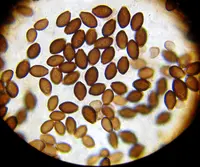
Panaeolus olivaceus
Panaeolus olivaceus
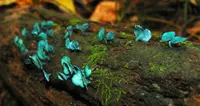
Green Wood Cup
Chlorociboria aeruginascens
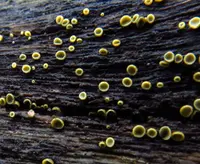
Chlorosplenium chlora
Chlorosplenium chlora
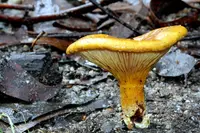
Austropaxillus infundibuliformis
Austropaxillus infundibuliformis
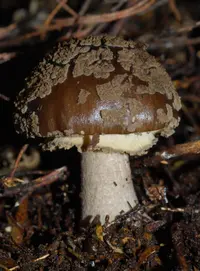
Southern Beech Amanita
Amanita nothofagi
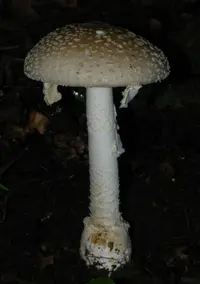
Small Funnel-Veil Amanita
Amanita multisquamosa
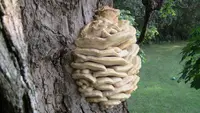
Northern Tooth
Climacodon septentrionalis
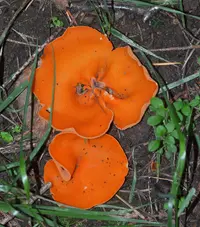
Orange peel fungus
Aleuria aurantia