Use hardwood blocks
For reliable fruiting, inoculate small, freshly cut hardwood blocks or sticks and place them in a shaded, humid box or tub so the mycelium can fully colonize a stable substrate before exposure to outdoor conditions.

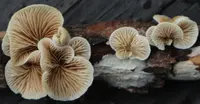
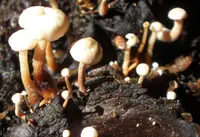
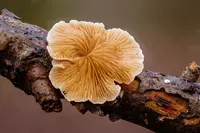
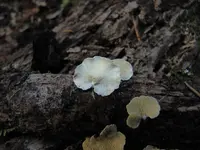
The pale oysterling, Crepidotus caspari, is a small, saprotrophic fungus that grows on decaying wood rather than in pots or garden beds. It forms pale, fan-shaped caps that sit directly on the substrate without a visible stem, often appearing in groups on damp logs or branches.
This species occurs mainly in temperate forests, where it helps break down dead wood and recycle nutrients. It prefers cool, moist, shaded environments and is sensitive to drying out, which makes deliberate cultivation challenging. For those interested in how to care for pale oysterling, it is usually best appreciated in its natural habitat or specialized fungal culture setups, not as a typical houseplant.

Care Difficulty
Moderate Care

Light Preference
Shade

Water Requirements
Keep Soil Moist

Temperature Preference
Cool Climate

Hardiness Zone
Unknown

Soil Texture
Loamy, Silty, Organic-rich

Soil pH
Acidic (5.5–6.5), Slightly acidic (6.5–7.0)

Soil Drainage
Moist but well-drained

Fertilization
Minimal (feed rarely)
Scan your plant to receive care tips personalized for your specific plant
Available on iOS and Android
This wood-inhabiting fungus prefers cool, shaded woodland light rather than direct sun exposure.
This fungus requires consistently moist, never waterlogged, woody substrate to form and sustain fruiting bodies.
This temperate woodland fungus fruits best in cool to mild conditions and is sensitive to both hard frost and strong heat.
This wood-inhabiting fungus prefers consistently moist, high-humidity conditions to fruit well.
Crepidotus caspari develops on decaying wood or woody debris rather than true garden soil, so the growing medium must mimic rotting timber.
This species can be grown in containers if those containers primarily hold hardwood-based substrate rather than soil.
This saprophytic fungus typically gains enough nutrients from decaying wood and does not need routine fertilization in cultivation.
Pruning needs for Crepidotus caspari are minimal and mostly hygienic rather than shaping.
When grown experimentally on logs or in containers, this fungus is managed by renewing substrate rather than classic repotting.
Crepidotus caspari is propagated mainly by spores and by expanding existing mycelium into fresh substrate.
In natural or outdoor culture, this fungus is generally cold tolerant and needs little targeted winter care.

Plant Health Check
Not sure what's wrong with your plant? Check your plant's health inside the app.
The cap surface often becomes distinctly gelatinous when moist, giving the fruiting bodies a soft, almost greasy texture that helps distinguish it from many other Crepidotus species with drier caps.
Its small, fan-shaped fruitbodies look similar to related species, so mycologists rely on microscopic traits such as spore size, shape, and ornamentation, plus the structure of the cap cuticle, to confirm identification.
This species typically fruits on decaying hardwood branches and twigs rather than on conifer wood, contributing to the breakdown of broadleaf litter and nutrient recycling in temperate forests.
This species is generally regarded as inedible. It is tiny, fragile, and offers no culinary value, and identification can be difficult. For safety, it should not be collected or consumed as food.
Keep your plants happy and healthy with plant identification, disease detection, and easy care guidance.