Use Decaying Wood
Establish the colony on small, half-rotted hardwood twigs or branches kept in a shaded, ventilated box, as partially decomposed wood mimics the natural substrate this fungus specializes in breaking down.

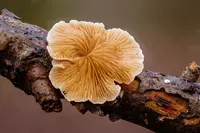
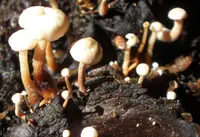
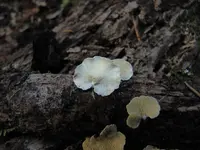
Variable oysterling, Crepidotus variabilis, is a small saprotrophic fungus, not a traditional houseplant. It grows on dead wood, leaf litter, and decaying plant material, helping break down organic matter. The fruiting bodies form tiny, fan-shaped caps with a pale, often whitish surface and fine, hairy texture, usually clustered in overlapping groups. Indoors or in cultivation, it can be challenging to maintain because it needs consistently moist, decomposing wood and high humidity rather than standard potting soil. Those who want to learn how to care for Variable Oysterling should understand it behaves more like a specialized woodland fungus than a typical ornamental plant.

Care Difficulty
Moderate Care

Light Preference
Shade

Water Requirements
Keep Soil Moist

Temperature Preference
Cool Climate

Hardiness Zone
Unknown

Soil Texture
Loamy, Silty, Organic-rich

Soil pH
Acidic (5.5–6.5), Slightly acidic (6.5–7.0)

Soil Drainage
Moist but well-drained

Fertilization
Minimal (feed rarely)
Scan your plant to receive care tips personalized for your specific plant
Available on iOS and Android
This small saprotrophic fungus prefers cool, shaded woodland conditions rather than direct sun exposure.
This wood-decaying fungus relies on consistently moist, not waterlogged, substrate rather than direct watering.
This fungus fruits best in cool to mild conditions typical of temperate woodland floors.
This wood-inhabiting fungus prefers consistently moist air similar to a damp forest floor.
This saprophytic fungus grows on dead wood, so recreate a loose, wood-rich substrate rather than typical garden soil.
This species can be grown in containers if the setup primarily supports colonized wood rather than loose potting soil.
Crepidotus variabilis is a saprophytic woodland fungus that normally gains all needed nutrients from decaying wood and leaf litter, so extra fertilization is not required.
Crepidotus variabilis is not pruned in the usual horticultural sense, as each short-lived fruiting body naturally appears and decomposes on its own.
This fungus is not suited to standard repotting; any cultivation focuses on providing fresh woody debris rather than moving established colonies.
Propagation of Crepidotus variabilis is rarely attempted by home growers and is better left to natural spore dispersal in suitable woodland conditions.
This saprophytic fungus is naturally cold hardy and requires no special winter care in outdoor, woodland-like conditions.

Plant Health Check
Not sure what's wrong with your plant? Check your plant's health inside the app.
This species produces a pale brown to ochre spore print, which often contrasts strongly with the whitish cap and is a key feature used by mycologists to distinguish it from superficially similar small white fungi.
Crepidotus variabilis characteristically fruits on dead twigs, small branches, and woody plant debris, especially of broadleaf trees, playing a specialized role in breaking down lignocellulose, the main structural component of wood.
The tiny shells of this fungus are highly ephemeral and can appear and deteriorate quickly in moist weather, so populations are often under-recorded despite the species being widespread in temperate regions.

Molecular studies have confirmed that Crepidotus variabilis belongs to the family Crepidotaceae within the order Agaricales, and its genetic data have been used as a reference point for clarifying relationships among other small, wood-inhabiting gilled fungi.
This small fungus is not recommended for eating. It is considered inedible due to its tiny size, insubstantial flesh, and potential for confusion with similar species. It has no culinary value and should be left in place.
Keep your plants happy and healthy with plant identification, disease detection, and easy care guidance.