Prepare Wood Substrate
Before inoculation, chip or shred hardwood branches into small pieces and hydrate them thoroughly so the mycelium can quickly colonize a loose, airy substrate layer.

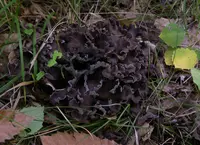
Ashen chanterelle, Craterellus cinereus, is a small, funnel-shaped wild mushroom, not a leafy plant. It has dark gray to almost black, thin, wavy caps with hollow centers and a smooth underside rather than true gills.
This species typically grows in clusters on forest floors, often among leaf litter near broadleaf trees in temperate regions of Europe and North America. It is considered a desirable edible mushroom but is more demanding to cultivate than common button mushrooms.
In nature it prefers moist, well-drained, humus-rich soils and dappled forest light, forming close associations with tree roots. Because of its specific habitat needs, how to care for Ashen chanterelle at home focuses mostly on maintaining stable humidity and access to suitable host trees outdoors, rather than typical indoor pot culture.

Care Difficulty
Hard Care

Light Preference
Shade

Water Requirements
Keep Soil Moist

Temperature Preference
Cool Climate

Hardiness Zone
Unknown

Soil Texture
Loamy, Silty, Organic-rich

Soil pH
Strongly acidic (4.5–5.5), Acidic (5.5–6.5)

Soil Drainage
Moist but well-drained

Fertilization
Minimal (feed rarely)
Scan your plant to receive care tips personalized for your specific plant
Available on iOS and Android
This forest-dwelling fungus prefers subdued, woodland-style light rather than direct sun.
Craterellus cinereus thrives in consistently moist, never waterlogged, forest soil.
This species prefers cool to mild conditions typical of shaded, temperate woodlands.
Craterellus cinereus needs consistently moist, humid conditions similar to a damp forest floor to fruit well.
This fungus requires a loose, moist, organic-rich substrate rather than standard potting soil.
Ashen chanterelle can be grown in containers, but only when conditions closely imitate a humid, shaded forest environment.
This forest-dwelling fungus usually needs little or no fertilizer when grown in a suitable woodland-style bed.
Craterellus cinereus requires no true pruning, only occasional harvesting and sanitation.
Transplanting Craterellus cinereus focuses on preserving the delicate mycelium network rather than frequent movement.
Propagation of Craterellus cinereus is slow and uncertain, so it is rarely attempted by home growers.
This fungus is naturally cold hardy in temperate forests and usually needs no special winter care.

Plant Health Check
Not sure what's wrong with your plant? Check your plant's health inside the app.
The fruiting bodies are a distinctive dark gray to nearly black, caused by dense pigment deposits in the thin, trumpet-shaped tissue rather than a thick, fleshy cap.
This species forms ectomycorrhizal associations with broadleaf trees such as beech and oak, exchanging mineral nutrients and water from the soil for sugars produced by the host tree.
The slender, hollow fruiting bodies commonly develop in dense leaf litter and moss in humid deciduous forests, which makes them surprisingly difficult to spot despite sometimes growing in large groups.

Molecular studies have shown that this gray, trumpet-like fungus is more closely related to chanterelles in the genus Cantharellus than its thin, delicate structure might suggest, leading to taxonomic re-evaluations within the family Cantharellaceae.
This species is considered an edible wild mushroom and is generally valued for its mild flavor. Correct identification is critical. Many dark, funnel-shaped fungi look similar, so beginners should consult a local expert or reliable field guide before consuming.
Keep your plants happy and healthy with plant identification, disease detection, and easy care guidance.