Correct habitat pairing
Establish fruiting beds near compatible ectomycorrhizal hosts such as birch, beech, or conifers and avoid frequent soil disturbance so the fungal mycelium can maintain stable symbiosis with the tree roots.

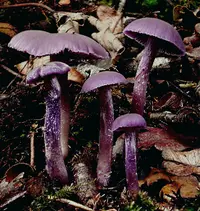
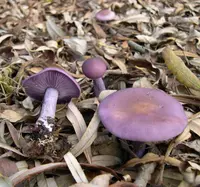
Laccaria amethystina, commonly called amethyst deceiver, is a small woodland mushroom rather than a typical houseplant or garden plant. It produces slender stems topped with violet to lilac caps that often fade to pale brown with age or dry weather.
This species grows on soil rich in leaf litter, often under deciduous trees in temperate forests across Europe, North America, and parts of Asia. It forms mycorrhiza, a symbiotic association with tree roots, which makes it difficult to cultivate at home.
Because of this close partnership with host trees, successful attempts to care for Amethyst Deceiver in pots or controlled settings are rare and usually short-lived. It prefers undisturbed, moist, well-drained woodland soil with moderate shade.

Care Difficulty
Hard Care

Light Preference
Partial Shade

Water Requirements
Keep Soil Moist

Temperature Preference
Cool Climate

Hardiness Zone
Unknown

Soil Texture
Loamy, Silty, Organic-rich

Soil pH
Acidic (5.5–6.5)

Soil Drainage
Moist but well-drained

Fertilization
Minimal (feed rarely)
Scan your plant to receive care tips personalized for your specific plant
Available on iOS and Android
This woodland fungus prefers cool, dappled light that mimics a mixed forest floor.
This mycorrhizal fungus relies on consistently moist, not waterlogged, soil around its host trees.
This species fruits best in cool to mild conditions typical of temperate forests.
This woodland fungus prefers moist, humid air similar to its natural forest floor habitat.
This species needs consistently moist, airy, organic-rich soil that mimics a leaf-litter forest floor.
This fungus is generally unsuitable for long-term container cultivation because it relies on mycorrhizal partnership with tree roots.
This woodland fungus usually grows without added fertilizer when associated with suitable host trees.
Pruning is not applicable to Laccaria amethystina because it is a mushroom, not a woody or leafy plant.
This ectomycorrhizal fungus is rarely grown in containers, so care focuses on site preparation rather than repotting.
Propagation of Laccaria amethystina in home settings is unreliable and usually left to natural spore spread and root associations.
This woodland mushroom is naturally cold hardy in much of its range and needs no specific winter care in the ground.

Plant Health Check
Not sure what's wrong with your plant? Check your plant's health inside the app.
The fruiting bodies emerge a vivid purple but gradually fade to pale lilac or almost buff as they age or dry, so color alone is not a reliable identification feature in older specimens.
This species forms ectomycorrhizal symbioses with a wide range of trees, including beech, oak, and conifers, exchanging mineral nutrients from the soil for sugars produced by the host tree.
Populations growing on contaminated soils can bioaccumulate arsenic and other heavy metals, which makes them important bioindicators but also raises concerns about harvesting them for food in polluted areas.

Genetic and chemical studies have shown that what was once treated as a single, widespread purple Laccaria has likely been confused with several similar species, leading European and North American material to be re-evaluated and, in some cases, reassigned to other taxa.
This mushroom is technically edible but not recommended for beginners. It can be confused with toxic species and may accumulate heavy metals from soil. Only experienced foragers should consider consumption, and local expert confirmation is essential.
Keep your plants happy and healthy with plant identification, disease detection, and easy care guidance.