Cattle Bush Care (Alectryon oleifolius)

Also known as: Bullock Bush
Cattle Bush

About Cattle Bush

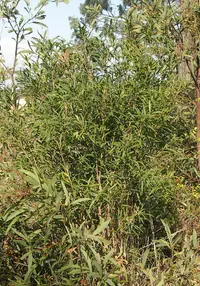
Cattle bush, Alectryon oleifolius, is a hardy shrub or small tree native to arid and semi-arid regions of inland Australia. It typically forms a dense, rounded crown with narrow, leathery, grey-green leaves that help reduce water loss in hot, dry conditions.

This species is adapted to poor, sandy or loamy soils and survives long dry periods once established. It is usually slow to moderate in growth but becomes long-lived and resilient with age.

For gardeners, its drought tolerance and low maintenance needs are the main reasons it is considered easier to manage, provided drainage is good. Those wanting to care for Cattle Bush should focus on strong light, low to moderate watering, and avoiding waterlogged soil.

Main Plant Requirements

Care Difficulty

Moderate Care

Light Preference

Full Sun

Water Requirements

Low Water

Temperature Preference

Warm Climate

Hardiness Zone

9–11

Soil Texture

Sandy, Loamy, Rocky

Soil pH

Slightly acidic (6.5–7.0), Slightly alkaline (7.0–7.5)

Soil Drainage

Well-drained

Fertilization

Minimal (feed rarely)

Get Personalized Care Plan

Scan your plant to receive care tips personalized for your specific plant

Available on iOS and Android

How to Care for the Cattle Bush

Alectryon oleifolius is a sun-tolerant shrub that thrives in bright, open sites typical of arid landscapes.

  • Provide 6–9 hours of direct sun daily; full sun promotes dense growth and flowering, especially for Cattle Bush in native-style plantings.
  • Accepts light or partial shade, but growth becomes looser and flowering may reduce if direct sun drops below about 4 hours per day.
  • In very hot regions, give some protection from intense late-afternoon summer sun to limit leaf scorch, using spacing or light overstory trees for filtered light.

This drought-adapted shrub prefers infrequent, deep watering once it is established in the landscape.

  • Use fast-draining soil; avoid sites where water sits for more than a few hours after rain to reduce root rot risk in Alectryon oleifolius.
  • During establishment, water when the top 5–8 cm of soil is dry; look for slight leaf droop or dull foliage as a cue rather than following a fixed schedule.
  • In summer heat, deep-soak then let soil fully dry; in cooler seasons, reduce frequency further, watching for yellowing, soft leaves as a sign of overwatering.

This species is adapted to hot, semi-arid climates and tolerates a broad outdoor temperature range.

  • Best growth occurs around 70–90°F (21–32°C), where foliage stays firm and extension growth is steady without stress symptoms.
  • Mature plants usually tolerate down to about 23–25°F (-5 to -4°C); younger plants are more cold-sensitive and may suffer tip damage near freezing.
  • Handles dry heat above 100°F (38°C) if roots are established, but prolonged heat with reflected surfaces can scorch leaves, so avoid planting against bare west-facing walls.

This arid-adapted shrub tolerates very low humidity, so ambient indoor air is usually acceptable.

  • Target 20–40% humidity, as higher levels are unnecessary and prolonged dampness around foliage can promote fungal issues.
  • Cattle Bush shows humidity stress more from excess moisture than dryness, with yellowing, soft leaves or stem rot in persistently humid, poorly ventilated spaces.
  • Increase air movement with an open, breezy position rather than humidifiers, and keep leaves dry by watering directly at the root zone.

This species prefers very well-drained, sandy to loamy soil that mimics dry inland habitats.

  • Use a mix of roughly 60–70% coarse sand or sandy loam with 30–40% gravelly material or fine grit to prevent waterlogging.
  • Maintain slightly acidic to neutral pH around 6.0–7.5, avoiding strongly acidic or saline substrates that hinder root function.
  • For Alectryon oleifolius in cultivation, add a modest amount of coarse compost or aged bark to improve structure without making the mix heavy or water-retentive.
  • Improve aeration by avoiding clay-based mixes, breaking up any compacted layers, and ensuring water drains freely within a few seconds of watering.

This shrub can be grown in containers when young or kept compact, provided the pot is chosen for strong drainage and stability.

  • Select a deep, heavy container that resists tipping as the woody canopy becomes increasingly top-heavy in windy positions.
  • Use a tall pot shape that allows a deep, coarse drainage layer so roots can anchor while excess water moves rapidly away from the crown.
  • Choose thick-walled clay or concrete containers in hot climates to buffer root temperature swings and reduce rapid drying of the mix.

This hardy Australian native, often called Cattle Bush, usually needs very little supplemental feeding in the ground.

  • For container or young plants, use a balanced slow-release fertilizer or light compost in early spring.
  • Apply at low to moderate rates, at about half the label strength to avoid soft, weak growth.
  • Feed once at the start of the growing season; a second light application in midsummer is usually enough.
  • Do not fertilize in late fall or winter, when growth is minimal.

Pruning Alectryon oleifolius is mainly done to maintain structure and remove problem wood rather than to control size.

  • Carry out any shaping or cleanup in late winter or very early spring before strong new growth starts.
  • Remove dead, diseased, or crossing branches with clean, sharp bypass pruners or a small pruning saw.
  • Thin congested interior shoots to improve air flow and maintain a balanced canopy outline.
  • Avoid heavy cutting into old wood; favor gradual, light reductions over several years if reshaping is needed.

This species is usually grown in the ground, so transplanting young trees correctly is more important than frequent repotting.

  • Transplant in late winter to early spring when soil is workable and heat stress is low.
  • Choose a sunny, free-draining position and dig a wide planting hole, loosening soil around the edges.
  • Move the plant with as much root ball as possible; avoid breaking main roots and keep roots shaded while exposed.
  • Water deeply after planting, then maintain even moisture for several weeks to limit transplant shock.

Propagation of Alectryon oleifolius is possible but slower and less common in home gardens, mainly done from seed.

  • Collect ripe seed, clean it, and sow in late winter to early spring in a well-drained, sandy mix.
  • Provide warmth around 68–77°F and bright, indirect light to encourage even germination.
  • Keep the medium just moist, not wet, as prolonged saturation encourages rot.
  • Seedlings should be grown on in containers until sturdy enough to plant out in their permanent position.

Established plants are fairly tolerant of dry, mild winters and usually need limited intervention in suitable climates.

  • In regions with occasional light frost, apply a 5–8 cm mulch layer over the root zone in late fall.
  • Use free-draining mulch materials and keep them slightly back from the trunk to avoid collar rot.
  • Container specimens in colder areas can be moved to a bright, cool, frost-free shelter until spring.

Care Tips

Deep root establishment

In the first 2–3 years, water less often but for longer sessions to encourage a deep, drought-resilient root system rather than frequent shallow watering that keeps roots near the surface.

Wind-hardening seedlings

If planting young stock in exposed rangeland or coastal sites, gradually increase wind exposure over 2–4 weeks or use temporary windbreak mesh so stems thicken and resist snapping once protection is removed.

Minimal disturbance mulching

Apply a coarse, inorganic mulch such as gravel or scoria in a wide ring that does not touch the trunk to reduce soil temperature swings and evaporation while still matching this species’ preference for well-aerated, low-organic soils.

Salt and drought monitoring

In semi-arid or saline areas, periodically check for salt crusts on the soil surface and lightly break them up, then give a single slow, deep irrigation to leach salts below the main root zone without returning to frequent watering.

Low-interference pruning

Limit pruning to removing dead, crossing, or rubbing branches at the end of dry seasons, making clean cuts close to the branch collar to maintain the plant’s natural wind-firm shape and reduce entry points for wood-boring insects while growing Cattle Bush.

Common Pests and Diseases

Leaf-mining moth larvae

This pest creates narrow, winding tunnels inside the leaves, which can lead to browning and premature leaf drop on stressed or young plants. Symptoms include blistered or translucent patches following the feeding tracks.

Solution

Prune off and discard mined leaves as soon as damage appears to break the life cycle. Encourage insect-eating birds, avoid overhead night lighting that attracts adult moths, and, for valuable specimens, use a targeted Bacillus thuringiensis (Bt) product on young larvae according to label directions.

Scale insects

These insects attach to twigs and leaves as small, dome-shaped or shell-like bumps and feed on sap, which can cause yellowing foliage and branch dieback in sheltered or drought-stressed Cattle Bush. Honeydew deposits may lead to black sooty mold on nearby surfaces.

Solution

Scrape or wipe off small colonies by hand, prune heavily infested twigs, and dispose of them. For larger trees, apply a horticultural oil spray during mild weather to smother scale, and maintain good plant vigor with appropriate watering to reduce susceptibility while following region-specific Cattle Bush care instructions.

Wood-boring beetles

These insects tunnel into older or weakened wood, leaving small round exit holes, frass (fine sawdust), and localized branch dieback. This pest is more common on plants stressed by drought, mechanical damage, or poor site conditions.

Solution

Prune and remove affected branches back to healthy wood, then dispose of them away from the site to limit reinfestation. Reduce plant stress through appropriate watering during extended dry periods, avoid trunk injuries, and use physical trunk guards or wraps on young stems where beetle activity is high.

Sooty mold

This disease appears as a black, powdery or velvety coating on leaves and stems that grows on honeydew excreted by sap-feeding insects such as scale or aphids. Symptoms include reduced photosynthesis and a dull, dirty appearance, but the fungus does not invade plant tissues directly.

Solution

First manage the underlying sap-feeding insects with pruning and horticultural oil where appropriate. Once insect pressure is reduced, gently wash affected foliage with water and a mild, plant-safe soap solution to remove the mold and improve light exposure.

Interesting Facts

Desert food specialist

This species is native to arid and semi-arid inland Australia and is particularly common on heavy clay soils where few trees can tolerate the combined stress of drought, heat, and soil cracking.

Salt and drought tolerant

The tree shows notable tolerance to both soil salinity and prolonged dry periods, helped by a deep root system that can access subsurface moisture in harsh inland environments.

Sheep and cattle browse

It forms an important component of native rangeland fodder in parts of Australia, where its foliage and young shoots are browsed by livestock during dry times, although overgrazing can suppress regeneration and alter stand structure.

Botan icon

Did you know?

Pollen records and remnant stands indicate that this species once formed more extensive woodlands across inland Australia, but clearing, heavy grazing pressure, and altered fire regimes have reduced many populations to scattered trees and small clumps across its former range.

FAQs about Cattle Bush

Yes, this species can be raised from fresh seed, but germination is often slow and uneven. Lightly scarify or nick the seed coat, sow in a deep, free-draining mix, and keep warm until sprouting.

Grow Healthy Plants with Botan Care

Keep your plants happy and healthy with plant identification, disease detection, and easy care guidance.


Botan plant care app — identify plants on mobile

Explore More Plants