Plan final spacing
Choose a permanent site with at least 9–12 m of clearance from buildings, septic systems, and other trees, as Arizona walnut develops a wide root zone and dense canopy that are difficult to move or work around later.

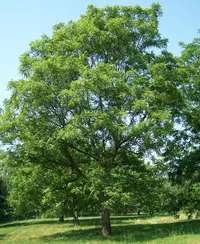
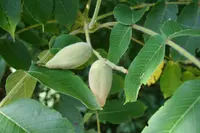
Arizona walnut, Juglans major, is a deciduous tree native to canyons and stream corridors in the southwestern United States and northern Mexico. It forms a rounded crown with a sturdy trunk and gray, furrowed bark.
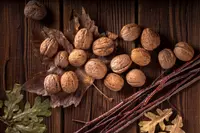
The tree carries long, pinnate leaves that create light, filtered shade and produces hard-shelled edible nuts valued by wildlife and sometimes for local use. Growth is moderate and long lived, but it needs space for its root system and canopy, which makes it better suited to larger landscapes.
Arizona walnut prefers full sun, deep soils, and consistent moisture near natural waterways, yet shows good drought tolerance once established. These traits influence how to care for Arizona walnut in home landscapes.

Care Difficulty
Moderate Care

Light Preference
Full Sun

Water Requirements
Moderate Water

Temperature Preference
Cold Hardy

Hardiness Zone
7–9

Soil Texture
Sandy, Loamy, Rocky

Soil pH
Slightly acidic (6.5–7.0), Neutral (7.0)

Soil Drainage
Well-drained

Fertilization
Minimal (feed rarely)
Scan your plant to receive care tips personalized for your specific plant
Available on iOS and Android
Juglans major needs abundant direct sun to produce strong growth and quality nuts.
Juglans major prefers deep, infrequent watering that maintains consistent but not saturated soil moisture.
This species is adapted to continental climates with cold winters and hot summers.
Juglans major handles low atmospheric moisture well and rarely needs targeted humidity management.
Juglans major prefers deep, well-drained mineral soils that stay evenly moist but never waterlogged.
This species is generally unsuitable for long-term container growing due to its eventual size and deep root system.
This desert-adapted tree needs minimal feeding, so caring for Arizona walnut focuses more on soil health than on frequent fertilizer use.
Pruning Juglans major is mainly structural and corrective, aimed at creating a healthy, stable shade tree.
This species is rarely kept long term in containers, so management focuses on careful transplanting of young trees.
Juglans major is most often propagated from seed rather than from cuttings or division.
Established Juglans major trees are cold hardy and usually need little deliberate winter care.

Plant Health Check
Not sure what's wrong with your plant? Check your plant's health inside the app.
Arizona walnut naturally occurs along desert and semi-desert waterways in the American Southwest and northern Mexico, where it anchors streambanks and tolerates both seasonal flooding and drought better than many other walnut species.
Among native North American walnuts, Arizona walnut is notably smaller, usually forming a multi-stemmed tree or large shrub, an adaptation thought to help it cope with arid, disturbance-prone riparian habitats.
Its thick-shelled nuts are heavily used by squirrels and other rodents, which both feed on stored seeds and inadvertently help disperse the species when uneaten nuts germinate away from the parent tree.

Arizona walnut hybridizes naturally with other nearby walnut species, such as Juglans microcarpa, creating intermediate forms that can make field identification challenging and illustrating ongoing gene flow within the walnut group.
This tree grows at a moderate rate, typically adding 30–60 cm per year under good conditions. It usually takes 8–12 years to form a substantial canopy and begin making a strong landscape impact.
Keep your plants happy and healthy with plant identification, disease detection, and easy care guidance.