Plan spacing early
For field planting, space trees 2.5–3 m apart in rows with 3–3.5 m between rows so each trunk develops straight, knot-free timber with good air circulation that limits fungal problems.

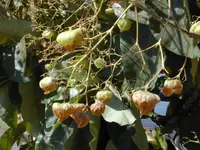
Teak, Tectona grandis, is a fast-growing tropical hardwood tree valued for its durable, oil-rich timber. It is typically grown outdoors and is not a common indoor plant. The tree has large, rough leaves and a tall, straight trunk that can reach impressive heights in suitable climates.
Teak occurs naturally in parts of South and Southeast Asia, especially in monsoon forests with distinct wet and dry seasons. It prefers warm conditions, full sun, and well-drained soil, which makes it challenging in cool or very wet regions. Understanding how to care for teak starts with recognizing its need for consistent warmth and space to develop a strong root system and stable form.

Care Difficulty
Hard Care

Light Preference
Full Sun

Water Requirements
Regular Water

Temperature Preference
Tropical / Frost Sensitive

Hardiness Zone
11–12

Soil Texture
Sandy, Loamy, Organic-rich

Soil pH
Acidic (5.5–6.5), Slightly acidic (6.5–7.0)

Soil Drainage
Moist but well-drained

Fertilization
Minimal (feed rarely)
Scan your plant to receive care tips personalized for your specific plant
Available on iOS and Android
This species needs strong light to build dense wood and healthy foliage.
Tectona grandis prefers evenly moist but not waterlogged soil, especially while young.
This tropical tree thrives in warm, stable temperatures and is highly sensitive to cold.
This species grows best in moderately humid air but adapts to many outdoor conditions.
Tectona grandis prefers deep, well-structured soil that drains freely but does not dry out too fast.
This tree can be grown in containers only on a temporary or dwarf scale due to its eventual size.
Nutrient inputs support faster juvenile growth of teak, especially in containers or poor soils.
Thoughtful pruning of Tectona grandis helps develop a strong trunk and safe, stable structure.
Transplanting young Tectona grandis carefully is important for establishing a deep, stable root system.
Tectona grandis is most often propagated from seeds, with cuttings used less frequently for uniform stock.
Tectona grandis is a tropical tree with low frost tolerance and needs careful winter management in cool climates.

Plant Health Check
Not sure what's wrong with your plant? Check your plant's health inside the app.
Teak wood is rich in silica and oily compounds that fill the vessels, which makes the timber unusually resistant to water, fungi, and many wood-boring insects compared with most other tropical hardwoods.
Unlike many tropical trees, teak is fully deciduous and sheds its large leaves in the dry season, an adaptation that helps reduce water loss in its native monsoon forests of South and Southeast Asia.
Fresh teak leaves contain tannins and other pigments that can stain water a reddish-brown color, a property traditionally used in some regions to dye fabrics and enhance the color of certain foods.

Mature teak trees can reach trunk diameters large enough to yield long, straight, defect-resistant boards, which historically made the species one of the most valued timbers for shipbuilding, especially in 18th–19th century naval fleets across the Indian Ocean and beyond.
Growth is moderate to fast in warm, frost-free climates. Young trees often add 1–2 m in height per year outdoors, slowing as they mature. In cooler or marginal areas, growth is significantly reduced.
Keep your plants happy and healthy with plant identification, disease detection, and easy care guidance.