Hairy Alectryon Care (Alectryon tomentosus)

Hairy Alectryon

About Hairy Alectryon

Hairy Alectryon (Alectryon tomentosus) is a small to medium evergreen tree native to eastern Australia, often found in rainforest edges and moist coastal forests. It usually develops a rounded crown with dense, softly hairy foliage that gives the tree its common name. New growth can appear slightly bronzed, adding subtle ornamental interest.

This species is valued mainly as a hardy garden or street tree rather than for flowers or fruit display. It adapts well to warm, frost-free climates and handles light pruning. In suitable regions, care for Hairy Alectryon is relatively straightforward if it receives reasonably fertile, well-drained soil and moderate, consistent moisture.

Main Plant Requirements

Care Difficulty

Moderate Care

Light Preference

Full Sun

Water Requirements

Moderate Water

Temperature Preference

Warm Climate

Hardiness Zone

10–11

Soil Texture

Sandy, Loamy, Organic-rich

Soil pH

Acidic (5.5–6.5), Slightly acidic (6.5–7.0)

Soil Drainage

Well-drained

Fertilization

Minimal (feed rarely)

Get Personalized Care Plan

Scan your plant to receive care tips personalized for your specific plant

Available on iOS and Android

How to Care for the Hairy Alectryon

Alectryon tomentosus grows best with bright, indirect light and some direct sun in mild climates.

  • Provide 4–6 hours of sun daily, ideally morning sun with light afternoon shade, especially in hotter inland areas.
  • Plant in a position with dappled or filtered light under taller trees if summer sun is intense, as foliage can scorch in harsh midday exposure.
  • In partial shade it will tolerate as little as 2–3 hours of direct or shifting sun, but growth of Hairy Alectryon becomes slower and more open.

Alectryon tomentosus prefers moderately moist, well-drained soil that dries slightly between waterings once established.

  • Allow the top 3–5 cm of soil to dry before deep watering, then soak the root zone rather than giving light, frequent splashes.
  • In warmer months, expect to water more often during extended dry periods; in cooler or rainy seasons, extend intervals and rely more on natural rainfall.
  • Watch for yellowing, soft leaves as a sign of overwatering and dry, curling foliage or twig dieback as indicators that the plant is staying too dry.

This species favors mild, frost-free conditions with warm summers and cool, not cold, winters.

  • Aim for 65–82°F (18–28°C) for active growth, which suits many coastal and subtropical climates.
  • Protect from temperatures below 32°F (0°C); brief light frost may damage young tips, while harder or repeated frosts can kill small plants.
  • In hot spells above 95°F (35°C), provide mulch and some afternoon shade to limit heat stress and leaf scorch, especially on young specimens.

This species grows well in moderate ambient humidity but benefits from slightly higher levels in heated or very dry homes.

  • Aim for 40–60% humidity, which suits most Hairy Alectryon plants kept in typical living spaces.
  • Tolerates short dry-air spells, but prolonged humidity below 30% can slow growth and dull foliage.
  • Watch for crispy leaf tips or edge browning as signs of low humidity stress and use a pebble tray or room humidifier if needed.

Alectryon tomentosus prefers a free-draining, slightly fertile mix that stays evenly moist but never soggy.

  • Use a loamy mix combining 50–60% high-organic potting soil with 20–30% coarse sand and 20–30% fine bark or perlite for structure.
  • Ensure rapid drainage so water runs through within seconds; avoid compacted or heavy clay-based mixes that hold water around roots.
  • Target a slightly acidic to neutral pH around 6.0–7.0, avoiding strongly alkaline or salty substrates that can impair nutrient uptake.
  • Improve aeration by blending in chunky particles such as pine bark fines or pumice, keeping at least one-third of the mix coarse.

This tree can be grown in containers for some years, provided the pot offers stable support and controlled moisture.

  • Choose a wide, heavy container to prevent wind rock as the canopy becomes broader and more top-heavy over time.
  • Select a pot depth that allows a developing taproot to extend downward without circling tightly near the base.
  • Use non-glazed terracotta or other breathable materials if excess moisture is an issue, as they allow faster evaporation from the root zone.

This species grows reasonably well in low-nutrient soils, but light feeding supports steady growth in cultivated Hairy Alectryon.

  • Apply a balanced slow-release fertilizer (around 10-10-10) at half label rate in early spring.
  • Top-dress with compost or well-rotted organic matter once a year to improve soil structure.
  • Avoid high-nitrogen products that push soft, weak growth in young trees.
  • Do not feed in winter or during drought stress to limit root damage.

Alectryon tomentosus benefits from light, structured pruning to maintain a strong framework and clearance.

  • Carry out main pruning in late winter or very early spring before active growth.
  • Remove dead, diseased, crossing, or storm-damaged branches first using clean, sharp bypass secateurs or a pruning saw.
  • Thin crowded interior shoots to improve light penetration and airflow, shaping a single clear trunk if desired.
  • Limit heavy cuts; instead, shorten long shoots gradually to guide height and canopy spread.

This tree is usually grown in the ground, so focus on careful transplanting of young specimens rather than frequent repotting.

  • Transplant in late winter to early spring when soil is workable and temperatures are mild.
  • Look for roots circling the pot, water stress, or very slow growth as signs a container plant needs a larger size every 2–3 years.
  • Gently tease out circling roots, trim broken ones cleanly, and plant at the same depth in a well-drained soil mix.
  • Water thoroughly after planting, then keep soil evenly moist and shaded for 1–2 weeks to reduce transplant shock.

Propagation of Alectryon tomentosus is usually done from seed and suits growers willing to wait for slow early growth.

  • Collect fresh, fully ripe seed and clean off any fleshy coating before sowing.
  • Sow in spring in a deep tray or pot with free-draining, sandy mix, keeping it just moist and warm (around 70–77°F).
  • Provide bright, indirect light and consistent moisture; germination can be slow and irregular.
  • Leave seedlings in their initial pot until roots fill the mix, then pot on carefully to avoid disturbing the taproot.

This subtropical tree is only lightly frost tolerant and benefits from simple winter precautions in cooler regions.

  • In ground, add a 5–8 cm mulch layer around the root zone, keeping it clear of the trunk flare.
  • Wrap young trunks with breathable horticultural fleece in areas with repeated light frosts.
  • Move container plants to a sheltered porch, greenhouse, or bright indoor spot when temperatures approach 32°F.

Care Tips

Shelter From Wind

Site young plants where they are protected from strong, drying winds or use a temporary windbreak, since flexible but relatively brittle branches can snap before the trunk has thickened.

Early Formative Pruning

In the first 3–5 years, selectively remove competing leaders and narrow crotch angles to develop a single strong trunk and well-spaced scaffold branches that will carry the canopy safely as the tree matures.

Mulch Root Zone

Apply a 5–8 cm layer of coarse organic mulch over the root zone, keeping it 5–8 cm away from the trunk, to stabilize soil moisture, moderate temperature, and encourage a wide, fibrous root system.

Low-Phosphorus Nutrition

If native to low-phosphorus soils in your area, choose slow-release fertilizers with low P content and avoid extra phosphorus to reduce the risk of root damage and nutrient imbalance.

Monitor Fruit Drop

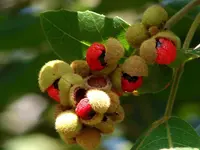
Under good conditions, flowers and developing fruits attract wildlife, so if fruit drop becomes heavy around paths or patios, schedule light, regular clean-up or site the tree away from high-traffic areas when growing Hairy Alectryon outdoors.

Common Pests and Diseases

Scale insects

This pest often settles along young stems and leaf undersides, sucking sap and causing leaf yellowing, sticky honeydew, and sooty mold on hairy foliage.

Solution

Prune out heavily infested twigs, then wipe remaining colonies with cotton pads dipped in isopropyl alcohol or spray with a light horticultural oil, ensuring good coverage of stems and leaf undersides; repeat every 7–10 days until new growth is clean and encourage natural predators by avoiding broad-spectrum insecticides nearby.

Leaf beetle larvae

These insects can skeletonize young leaves, chewing irregular holes and sometimes defoliating new flushes on small trees or nursery stock.

Solution

Inspect new growth frequently and hand-pick larvae or shake them onto a sheet for disposal; for heavier outbreaks, use a targeted biological insecticide containing Bacillus thuringiensis (Bt) on young foliage and maintain plant vigor with adequate water and mulch so it can recover new growth quickly.

Myrtle rust

This disease causes yellow to orange powdery pustules on young leaves, shoots, and sometimes stems, leading to leaf distortion and dieback in severe cases.

Solution

Promptly remove and bag affected leaves and shoot tips, avoid overhead watering, and improve airflow around the canopy; in regions where myrtle rust is established, monitor new flushes closely and consult local extension or forestry guidance about approved protective fungicide sprays for susceptible native species.

Powdery mildew

This disease forms a white, powdery coating on leaves, especially in humid, shaded, or crowded conditions, which can lead to reduced vigor and premature leaf drop.

Solution

Thin surrounding vegetation to increase light and air movement, avoid wetting foliage in the evening, and remove heavily affected leaves; if needed, apply a low-toxicity fungicidal spray such as horticultural oil or potassium bicarbonate at the first sign of infection and repeat according to label directions.

Interesting Facts

Hairy new growth

Young shoots, leaves, and fruit of this Australian rainforest tree are covered in a dense, soft hair layer, which helps protect tender tissues from desiccation and herbivory in exposed edge habitats.

Specialist butterfly host

It serves as a larval host plant for several Australian butterfly species, including certain jewell butterflies in the genus Hypochrysops, supporting their life cycles in subtropical rainforest margins.

Edge-rainforest survivor

This species naturally occurs on dry rainforest and rainforest margins in eastern Australia, showing adaptation to both semi-shaded forest interiors and more open, seasonally drier environments than many typical rainforest trees.

FAQs about Hairy Alectryon

Yes, this species adapts well to large, deep containers because of its tree form and developing root system. Use a sturdy pot, allow room for trunk thickening, and repot into larger sizes as growth accelerates.

Grow Healthy Plants with Botan Care

Keep your plants happy and healthy with plant identification, disease detection, and easy care guidance.

Botan plant care app — identify plants on mobile

Explore More Plants