Annual branch training
In late spring, gently pull overly upright young shoots toward a 45–60° angle using soft ties and stakes or clothes pins, which improves light penetration and promotes earlier, heavier fruiting.

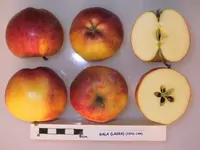
Malus domestica 'Gala' is a compact fruit tree cultivar grown for its crisp, sweet apples and reliable cropping. It is commonly used in home orchards, small yards, and educational gardens.
This cultivar forms a rounded canopy with dense branching and showy white to pink spring blossoms, followed by striped red‑yellow fruit. It originates from domesticated apple breeding lines, not a wild habitat, and is widely adapted in temperate regions.
Gala apples are considered relatively easy to grow, but productivity and fruit quality depend on good light, pollination, and basic pest management. Understanding how to care for Apple helps maintain healthy foliage, regular flowering, and consistent harvests.
It prefers full sun, evenly moist but well-drained soil, and benefits from regular pruning to balance vegetative growth and fruiting wood.

Care Difficulty
Moderate Care

Light Preference
Full Sun

Water Requirements
Regular Water

Temperature Preference
Cold Hardy

Hardiness Zone
4–8

Soil Texture
Sandy, Loamy, Clay

Soil pH
Acidic (5.5–6.5), Slightly acidic (6.5–7.0)

Soil Drainage
Moist but well-drained

Fertilization
Minimal (feed rarely)
Scan your plant to receive care tips personalized for your specific plant
Available on iOS and Android
Malus domestica 'Gala' performs best in full sun for strong growth and high fruit quality.
This apple tree prefers evenly moist, well-drained soil rather than frequent shallow watering.
This cultivar is a temperate-zone fruit tree that needs cool winters and mild to warm growing seasons.
Humidity is not a critical factor for Malus domestica 'Gala', which adapts well to typical outdoor ranges in temperate climates.
This apple tree performs best in deep, well-structured, steadily moist but free-draining mineral soil.
This cultivar can be grown in large containers for patios or small gardens if the pot size and stability are carefully managed.
This apple tree benefits from moderate, targeted feeding to support steady growth and cropping.
Pruning is essential for Malus domestica 'Gala' to maintain structure, light penetration, and healthy fruiting wood.
This tree is usually grown in the ground, so focus on correct planting and occasional transplanting of young or container-grown specimens.
Home propagation of this cultivar is specialized because fruit quality is not preserved from seed and rootstocks are often used.
This apple cultivar is generally cold hardy in typical temperate climates but benefits from simple winter care, especially when young.

Plant Health Check
Not sure what's wrong with your plant? Check your plant's health inside the app.
This cultivar was first selected in the 1930s in New Zealand from a cross between the varieties 'Kidd's Orange Red' and 'Golden Delicious', and then became widely commercialized in the 1960s–1970s.
The fruit is known for high natural sugar and relatively low acidity, which gives its mild, honey-like sweetness that stays consistent across many growing regions.
The flesh tends to stay crisp and resists turning mealy for longer than many other dessert apples, which is one reason it became a standard supermarket apple in the US and an important variety for grow Malus domestica 'Gala' commercially.

Gala apples were among the first modern apple cultivars to be extensively used as a parent in breeding programs worldwide, leading to a whole group of related commercial cultivars such as 'Royal Gala' and other Gala-type sports that dominate many global apple markets today.
Growth is moderate, usually 30–60 cm per year once established. With a suitable rootstock and good site conditions, this plant typically begins producing usable crops after 3–5 years, then increases yield as it matures.
Keep your plants happy and healthy with plant identification, disease detection, and easy care guidance.