Deep root training
During the first 3–4 years, water less often but in high volume to encourage a deep taproot, which greatly improves drought resilience when growing downy oak outdoors in dry climates.

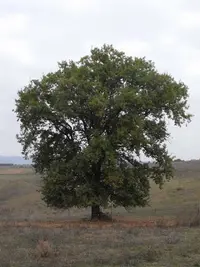
Downy oak, Quercus pubescens, is a slow-growing deciduous tree native to southern and central Europe, often found on dry, rocky hillsides and open woodlands. It develops a broad, rounded crown with thick, ridged bark and small, lobed leaves that have a soft, downy underside.
This species tolerates dry conditions and poor, lime-rich soils, which makes it relatively resilient once established but slower to adapt in wetter, heavy ground. It suits sunny, open sites and is usually grown as a landscape or habitat tree rather than a container plant. Basic knowledge of how to care for downy oak helps it develop a strong structure and long life span.

Care Difficulty
Moderate Care

Light Preference
Full Sun

Water Requirements
Low Water

Temperature Preference
Cold Hardy

Hardiness Zone
6–9

Soil Texture
Sandy, Loamy, Rocky

Soil pH
Slightly acidic (6.5–7.0), Slightly alkaline (7.0–7.5)

Soil Drainage
Well-drained

Fertilization
Minimal (feed rarely)
Scan your plant to receive care tips personalized for your specific plant
Available on iOS and Android
Quercus pubescens needs high light to form a strong, compact crown and dense foliage.
Quercus pubescens is drought-tolerant once established and prefers infrequent, deep watering.
This species is a hardy temperate oak adapted to cold winters and hot, dry summers.
This species is adaptable and usually tolerates typical outdoor humidity without special measures.
This oak prefers dry, mineral, well-drained soils that do not stay wet for long.
This species can be grown in containers when kept as a long-term juvenile or bonsai-style tree.
Mature downy oak trees in the ground usually need little or no fertilizer if soil is reasonably fertile.
Pruning Quercus pubescens focuses on safety, structure, and removal of damaged wood rather than frequent shaping.
Downy oak is rarely kept long-term in containers and is usually transplanted to its final position when still young.
Propagation of Quercus pubescens is usually done from seed and is relatively slow compared with many shrubs or perennials.
Established Quercus pubescens trees are cold hardy in much of the US and usually require minimal winter care.

Plant Health Check
Not sure what's wrong with your plant? Check your plant's health inside the app.
The leaves have a fine downy hair layer, especially on the underside, which reduces water loss and protects the leaf surface from intense Mediterranean sun and drying winds.
This oak develops a deep and wide-spreading root system that allows it to access water from deeper soil layers, making it one of the more drought-tolerant European oak species.
Downy oak thrives on limestone and other calcium-rich, often rocky soils where many tree species struggle, and its leaf litter helps maintain alkaline conditions that favor specialized woodland plants and fungi.

Downy oak forms extensive mycorrhizal associations with soil fungi, creating underground networks that improve its nutrient and water uptake and also support complex forest communities in much of southern and central Europe.
This species grows slowly to moderately, typically adding 15–30 cm per year in youth under good conditions. Growth rate declines with age. Poor soil, drought, and root disturbance reduce extension growth and can cause long periods of apparent stagnation.
Keep your plants happy and healthy with plant identification, disease detection, and easy care guidance.