


Early form training
In the first 2–3 years, select a single straight leader and remove competing stems in late winter to develop a strong central trunk that will better support the heavy canopy later in life.

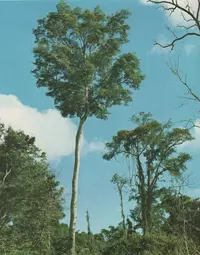
Amburana cearensis is a medium to large deciduous tree native to seasonally dry forests in Brazil and parts of northern South America. It is known for its fragrant wood and distinctive, finely divided leaves. In suitable climates it develops a broad, rounded canopy and small, pale flowers that are followed by dark seed pods. This species comes from relatively dry, well-drained habitats, so it dislikes waterlogged soil and prolonged high humidity. It is not a typical houseplant and can be challenging outside warm, frost-free regions, so most home growers only encounter guidance on how to care for Amburana cearensis in outdoor or specialized collections.

Care Difficulty
Moderate Care

Light Preference
Full Sun

Water Requirements
Moderate Water

Temperature Preference
Tropical / Frost Sensitive

Hardiness Zone
11–12

Soil Texture
Sandy, Loamy, Organic-rich

Soil pH
Slightly acidic (6.5–7.0), Neutral (7.0)

Soil Drainage
Well-drained

Fertilization
Minimal (feed rarely)
Scan your plant to receive care tips personalized for your specific plant
Available on iOS and Android
This semi-deciduous tree prefers strong light with protection from the most intense afternoon sun.
This species prefers a distinct wet–dry rhythm rather than constantly moist soil.
This tree is warm-loving and performs best in consistently mild to hot climates.
This species tolerates a wide humidity range but grows best with moderately moist air.
This tree prefers loose, well‑structured mineral soil that drains quickly yet retains some moisture.
This species can be grown in containers when managed as a young tree or bonsai‑like specimen.
This nutrient-efficient tree often grows well in the ground without supplemental feeding once established.
Pruning helps maintain structure and safety in this medium to large tree.
This species is usually grown in the ground, so management focuses on careful transplanting of young trees.
Propagation is mostly done from seed and requires warm, stable conditions.
This tropical to subtropical tree is sensitive to frost and needs protection in cooler climates.

Plant Health Check
Not sure what's wrong with your plant? Check your plant's health inside the app.
The seeds and timber release a distinct sweet aroma often compared to vanilla or tonka bean, due largely to high levels of coumarin and related aromatic compounds.
This leguminous tree forms root nodules with symbiotic bacteria that can fix atmospheric nitrogen, improving soil fertility in its native dry forests of northeastern Brazil.
In its seasonal dry habitat, the tree sheds its leaves during the pronounced dry season, reducing water loss and allowing it to withstand extended drought.

Wood from this species is valued in parts of Brazil for fine carpentry and musical instruments because it is relatively light, pleasantly scented, and dimensionally stable when properly seasoned.
Container cultivation is possible if a large, deep pot is used to accommodate the tree’s taproot and eventual size. Provide sturdy drainage, regular root pruning, and step up to larger containers as growth demands to prevent stress.
Keep your plants happy and healthy with plant identification, disease detection, and easy care guidance.

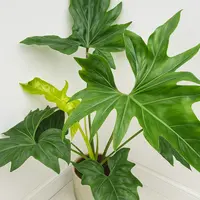
Tree Philodendron
Philodendron 'African Fantasy'
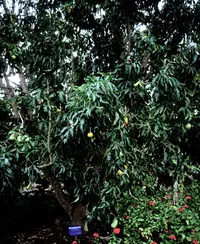
white sapote
Casimiroa edulis
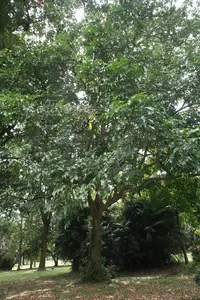
African grape
Pseudospondias microcarpa
Washington DC Dewberry
Rubus flagellaris
narrow leaf fig
Ficus longifolia
strawberryleaf raspberry
Rubus pedatus
Campomanesia xanthocarpa
Campomanesia xanthocarpa
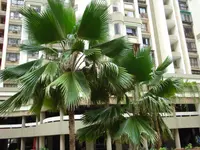
Fiji fan palm
Pritchardia pacifica