Stem training support
Install a slim moss pole or sturdy stake and loosely tie main stems with soft ties to encourage an upright, tree-like form and prevent branches from leaning or snapping as they lengthen.

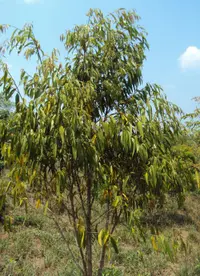
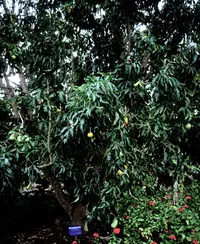
Ficus longifolia, often called narrow leaf fig, is an evergreen tree species grown indoors as a foliage houseplant. It belongs to the fig genus and is related to the popular fiddle leaf fig.
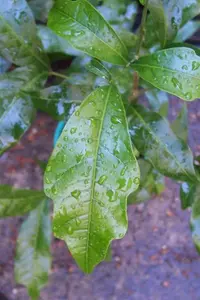
This plant forms a slim, upright trunk with long, narrow, glossy leaves that create a light, elegant canopy. In nature it occurs in parts of India and nearby regions, where it grows in warm, bright conditions.
Indoors it is valued for its refined look and relatively moderate growth rate. Stable light, consistent moisture, and well-draining soil are the main factors that influence how to care for narrow leaf fig.

Care Difficulty
Moderate Care

Light Preference
Bright Indirect Light

Water Requirements
Moderate Water

Temperature Preference
Tropical / Frost Sensitive

Hardiness Zone
10–12

Soil Texture
Loamy, Sandy, Organic-rich

Soil pH
Acidic (5.5–6.5), Slightly acidic (6.5–7.0)

Soil Drainage
Moist but well-drained

Fertilization
Light (every 4–6 weeks)
Scan your plant to receive care tips personalized for your specific plant
Available on iOS and Android
Ficus longifolia prefers bright, indirect light with some gentle direct sun.
Watering for this species focuses on consistent moisture without waterlogging the roots.
This fig prefers warm, stable conditions without sudden temperature swings.
This species prefers moderately humid air but usually adapts to typical indoor levels with some care.
Ficus longifolia grows best in a loose, aerated, and sharply draining substrate that still holds some moisture.
This species adapts very well to container growing when root space and stability are managed carefully.
Ficus longifolia responds well to modest, consistent feeding during active growth.
Pruning Ficus longifolia helps control size and maintain a clean, well-branched canopy.
Container-grown Ficus longifolia benefits from occasional repotting to refresh soil and manage root growth.
Ficus longifolia is most commonly propagated from semi-hardwood stem cuttings under warm, humid conditions.
Ficus longifolia is frost-sensitive and needs protection in regions with cold winters.

Plant Health Check
Not sure what's wrong with your plant? Check your plant's health inside the app.
In its native habitat in India and Sri Lanka, this species develops a long, narrow crown with gracefully drooping branches, which is why cultivated forms show such elongated, willow-like foliage compared to many other fig trees.
Ficus longifolia comes from regions with strong monsoon seasonality, so it is adapted to warm, humid summers and somewhat drier, cooler winters, which explains its tolerance of short, mild dry spells once established.
Like other true figs, this species relies on a highly specialized fig wasp for sexual reproduction in the wild, with pollination taking place inside the enclosed inflorescences that look like small fruits.
Brown tips or edges usually result from low humidity, salt buildup from fertilizer, or inconsistent watering. Use filtered water if possible, flush the soil occasionally, and keep humidity moderate to reduce further browning.
Keep your plants happy and healthy with plant identification, disease detection, and easy care guidance.