Tree Philodendron Care (Philodendron 'African Fantasy')

About Tree Philodendron

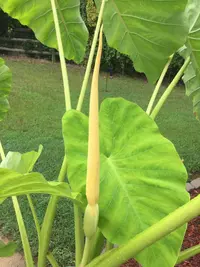
Philodendron 'African Fantasy' is a decorative tree philodendron type grown mainly as a foliage houseplant. It is valued for its deeply lobed leaves and lush, architectural form. Native tree philodendrons come from tropical regions of South America, where they grow in warm, humid forests with bright but filtered light.

This cultivar typically forms a stout trunk over time and carries large, textured leaves that give an indoor space a bold, tropical character. It is generally considered moderate in difficulty, as it tolerates some neglect but reacts poorly to heavy overwatering, cold drafts, or very low light.

Those learning how to care for Tree Philodendron should note that it prefers stable warmth, bright indirect light, and well‑draining, slightly airy potting soil that does not stay soggy for long periods.

Main Plant Requirements

Care Difficulty

Moderate Care

Light Preference

Bright Indirect Light

Water Requirements

Moderate Water

Temperature Preference

Tropical / Frost Sensitive

Hardiness Zone

10–11

Soil Texture

Loamy, Peaty, Organic-rich

Soil pH

Acidic (5.5–6.5), Slightly acidic (6.5–7.0)

Soil Drainage

Moist but well-drained

Fertilization

Light (every 4–6 weeks)

Get Personalized Care Plan

Scan your plant to receive care tips personalized for your specific plant

Available on iOS and Android

How to Care for the Tree Philodendron

Philodendron 'African Fantasy' grows best in bright, filtered light that mimics a forest understory.

  • Provide 6–8 hours of bright, indirect light daily, such as near an east window or under light tree shade outdoors.
  • Allow soft morning sun but protect from direct midday or afternoon sun, which can cause yellow patches or crisp brown edges on leaves.
  • In lower light or deeper shade, expect slower growth and longer internodes; supplement with grow lights in winter for consistent Tree Philodendron indoor care.

Philodendron 'African Fantasy' prefers evenly moist but not saturated soil, with short drying periods between waterings.

  • Water when the top 2–4 cm of soil feels dry, using enough water so excess drains freely from the root zone.
  • Reduce watering in cooler, darker seasons as evaporation slows, but never allow the root ball to stay dry and hard for long periods.
  • Watch for yellow, mushy leaves and a sour smell as signs of overwatering, and for drooping, thin, curling leaves as signs of underwatering.

This philodendron prefers warm, stable temperatures without sudden swings or drafts.

  • Aim for 65–80°F (18–27°C) for steady growth, with the strongest performance usually around 70–75°F (21–24°C).
  • Avoid temperatures below 55°F (13°C); brief dips may stunt growth, and exposure near 40°F (4°C) can cause leaf damage or tissue death.
  • In hotter periods above 85°F (29°C), provide shade, extra airflow, and slightly higher humidity to reduce heat stress and leaf scorch risk.

This hybrid prefers moderately humid air to maintain healthy foliage and steady growth.

  • Aim for 50–70% humidity, similar to the range used for Tree Philodendron indoor care.
  • It tolerates short periods at 35–40%, but leaf edges may brown and tips may crisp if kept too dry.
  • Watch for curling leaves, slowed growth, and dull surfaces as signs of humidity stress.
  • Increase humidity with a nearby humidifier, grouped plants, or a pebble tray placed under but not touching the pot base.

Philodendron 'African Fantasy' grows best in a loose, airy, organic-rich substrate that drains quickly yet retains moderate moisture.

  • Use a mix of roughly 40% peat or coco coir, 30% fine bark, 20% perlite, and 10% compost for structure and nutrients.
  • Ensure rapid drainage so water runs through in seconds and the mix feels moist but never waterlogged after watering.
  • Target a slightly acidic pH around 5.5–6.5, which supports nutrient availability and root health.
  • Improve aeration by increasing perlite or bark if the mix compacts, and avoid heavy garden soil or potting blends dominated by fine peat.

This philodendron adapts well to container growing when the pot is chosen and managed for root health and plant stability.

  • Select a slightly heavier pot material, such as ceramic, to counterbalance the plant’s upright, potentially top-heavy growth.
  • Choose a container that is wider than deep to give lateral root spread and reduce the risk of tipping.
  • Raise the pot on feet or a stand so drainage holes stay clear and excess water can escape quickly from the saucer.

Philodendron 'African Fantasy' benefits from moderate feeding during active growth to support foliage size and color, similar to other Tree Philodendron types.

  • Use a balanced liquid fertilizer (such as 10-10-10 or 20-20-20) diluted to 1/4–1/2 strength.
  • Apply every 4–6 weeks in spring and summer on already-moist soil to avoid root burn.
  • Pause or reduce feeding to 1 light application in late fall and none in deepest winter.
  • Organic options like diluted fish emulsion or compost tea can replace one synthetic feeding cycle.

Philodendron 'African Fantasy' responds well to light structural pruning that maintains size and removes weak growth.

  • Best time is late winter to early spring, just before strong new growth begins.
  • Use sharp, clean bypass pruners to cut above a node, angling the blade slightly outward.
  • Remove yellow, dead, or damaged leaves and any crossing or congested stems to improve airflow.
  • Shorten overly long stems to shape the plant and encourage fuller, bushier growth from lower nodes.

This plant prefers gradual upsizing rather than frequent repotting, as slightly snug roots support stable growth.

  • Repot every 2–3 years, or when roots circle the pot, emerge from drainage holes, or growth slows despite good care.
  • Plan repotting for spring, using a container 2–5 cm wider with drainage and a chunky aroid mix with bark and perlite.
  • Water well 1 day before repotting, then gently loosen the root ball, trimming only rotten or dead roots.
  • After transplanting, water thoroughly once, keep in bright indirect light, and avoid fertilizing for 3–4 weeks to reduce stress.

Philodendron 'African Fantasy' is most reliably propagated from stem cuttings taken during active growth.

  • Take 10–15 cm stem cuttings in late spring or summer, each with at least 1 node and preferably 1–2 leaves.
  • Remove lower leaves, then place the node in water or a moist, well-drained mix of perlite and peat or coco coir.
  • Maintain warmth around 70–80°F, high humidity, and bright indirect light to encourage root formation.
  • Once roots reach about 3–5 cm, pot cuttings into an aroid mix and keep slightly more humid for several weeks.

This philodendron is frost sensitive and needs sheltered conditions in cold climates, especially when grown in containers.

  • Keep temperatures above 55°F; growth slows notably below this range and tissue damage occurs near freezing.
  • Move container plants indoors or into a heated greenhouse before first frost, providing bright indirect light.
  • Outdoors in mild zones, apply a 5–8 cm mulch layer around the root zone, keeping mulch off the stem.
  • Reduce watering in winter so the top 3–5 cm of soil dry between waterings, preventing cold, soggy roots.

Care Tips

Encourage Bushier Growth

Pinch or cut just above a node on overly long vines to encourage branching and a fuller plant, and use clean, sharp scissors or pruners to reduce the risk of infection.

Support Semi-Climbing Habit

Provide a moss pole or coco pole and loosely tie stems with soft plant ties so aerial roots can attach, which leads to larger, better-shaped leaves over time.

Rotate For Even Variegation

Quarter-turn the pot every 1–2 weeks so all sides receive similar light, which helps maintain balanced variegation and prevents one-sided, lopsided growth.

Quarantine And Inspect New Plants

Keep any new plants in a separate area for 2–3 weeks and inspect leaves, stems, and leaf undersides with a hand lens if possible to catch pests before they reach your Philodendron 'African Fantasy'.

Seasonal Growth Check

At the end of winter, remove weak, pale stems and any leaves heavily shaded or damaged, then adjust the plant’s position and support so it is ready for strong spring growth when growing Tree Philodendron.

Common Pests and Diseases

Spider mites

This pest thrives in warm, dry indoor air and feeds on the undersides of leaves, causing pale speckling and fine webbing on Philodendron 'African Fantasy'. Symptoms include slowed growth and a dull, dusty look to the foliage.

Solution

Rinse leaves thoroughly with lukewarm water, including the undersides, then wipe with a soft cloth to remove mites and webbing. Increase humidity, isolate the plant, and repeat treatments with insecticidal soap or a neem oil spray every 5–7 days until no new damage appears.

Mealybugs

These insects hide in leaf axils and along stems, appearing as white, cottony clusters that suck sap and excrete sticky honeydew. Symptoms include distorted new growth and a sticky or sooty film on leaves.

Solution

Remove visible insects with a cotton swab dipped in 70% isopropyl alcohol, then shower the plant to dislodge remaining pests. Follow up with targeted applications of insecticidal soap or neem oil to all leaf surfaces and crevices once a week for several weeks, while keeping the plant isolated and monitoring for reinfestation as part of standard Philodendron 'African Fantasy' plant care.

Bacterial leaf spot

This disease causes water-soaked, translucent patches that turn brown with yellow margins, often starting along leaf edges or at mechanical injury sites. Symptoms include rapid spread of spots in warm, humid conditions and possible leaf drop.

Solution

Remove and discard affected leaves promptly, sterilizing pruning tools with 70% alcohol between cuts. Improve air circulation, avoid wetting foliage, water only at the soil level, and keep the plant on the drier side of its normal schedule; in severe cases, discard heavily infected plants to protect healthy ones nearby.

Erwinia stem and petiole rot

This disease leads to soft, mushy, foul-smelling rot at the base of petioles or along stems, often following overwatering or physical damage. Symptoms include sudden collapse of leaves and rapid spread of wet, darkened tissue.

Solution

Isolate the plant immediately, remove all affected tissue with sterilized tools, and discard any parts with a strong odor or extensive rot. Allow the remaining plant to dry slightly, improve drainage and airflow, and only re-pot salvaged healthy sections into fresh, sterile mix; severely affected specimens are best discarded to prevent spread.

Fungus gnat larvae

This pest develops in consistently moist potting mix, where larvae feed on fine roots and organic matter, which can stress young or recently repotted Philodendron 'African Fantasy'. Symptoms include tiny flying adults near the soil surface and slowed growth or mild yellowing due to root disturbance.

Solution

Let the top 3–4 cm of soil dry between waterings to disrupt the life cycle and place yellow sticky traps to catch adults. For persistent issues, drench the soil with a biological control such as Bacillus thuringiensis israelensis (BTI) or use a sand or fine gravel top-dressing to reduce egg laying while adjusting watering practices to avoid chronically wet soil.

Interesting Facts

Hybrid parentage background

This cultivar is believed to originate from complex Philodendron hybridization rather than a single wild species, which is why its exact parent species are usually not listed in scientific references.

Variable leaf coloration

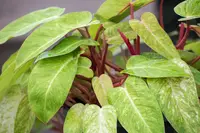
Mature plants can show subtle mottling and variation in green tones on the leaves, a trait linked to its hybrid origin and not seen in a uniform way in wild Philodendron species.

Limited formal documentation

Despite its popularity in collections, this cultivar has very limited coverage in formal botanical literature and is mainly documented through horticultural trade sources and grower records.

FAQs about Tree Philodendron

Brown, crispy edges usually come from low humidity, underwatering, or exposure to hot or cold drafts. Excess fertilizer salts can also scorch margins. Rinse the soil, adjust watering, and move the plant away from direct airflow sources.

Grow Healthy Plants with Botan Care

Keep your plants happy and healthy with plant identification, disease detection, and easy care guidance.

Botan plant care app — identify plants on mobile

Explore More Plants