


Support heavy bloomstalks
Install discreet stakes or a low hoop support when flower stalks first elongate so the tall, top-heavy scapes do not bend or snap in wind or heavy rain.

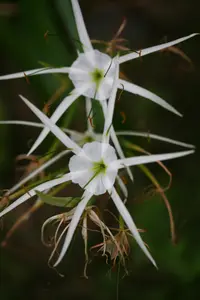
Beach spiderlily, Hymenocallis littoralis, is a bulb-forming perennial from coastal regions of Central and South America. It is often grown for its showy, fragrant, spider-like white flowers and glossy strap-shaped leaves.
The plant forms clumps and sends up tall flower stalks, giving it an architectural, tropical look in gardens or containers. It suits growers who want an ornamental bulb that blooms reliably when kept warm.
This species prefers bright light, evenly moist but well-drained soil, and protection from frost. Once the basic needs are understood, it is relatively straightforward to care for beach spiderlily.

Care Difficulty
Moderate Care

Light Preference
Full Sun

Water Requirements
Keep Soil Moist

Temperature Preference
Tropical / Frost Sensitive

Hardiness Zone
9–11

Soil Texture
Sandy, Loamy, Organic-rich

Soil pH
Acidic (5.5–6.5), Slightly acidic (6.5–7.0)

Soil Drainage
Moist but well-drained

Fertilization
Light (every 4–6 weeks)
Scan your plant to receive care tips personalized for your specific plant
Available on iOS and Android
This coastal bulb prefers bright, gentle light with some protection from harsh midday sun.
This species prefers consistently moist but not waterlogged soil during active growth.
This tropical coastal plant thrives in warm, frost-free conditions with only mild temperature swings.
This coastal species prefers moderately humid air but usually adapts to typical household levels.
Hymenocallis littoralis grows best in moist, airy, organic-rich soil that drains quickly.
This species is well suited to container growing when given a stable, well-drained setup.
This coastal bulb benefits from moderate, structured feeding to support foliage and flowering.
Pruning needs for Hymenocallis littoralis are light and mainly hygienic rather than shaping-focused.
Transplanting or repotting this bulb is infrequent and mainly needed when clumps become crowded or growth slows noticeably.
Division of mature bulbs is the most reliable method for expanding clumps of this species.
This tropical bulb is frost-sensitive and needs clear winter management in regions with cold temperatures.

Plant Health Check
Not sure what's wrong with your plant? Check your plant's health inside the app.
This species naturally occurs along tropical seashores, often growing in sandy, saline soils that many other bulb plants cannot tolerate, which is reflected in its species name littoralis, meaning shore-dwelling.
The flowers open fully and release their strongest fragrance in the evening and at night, an adaptation that helps attract nocturnal pollinators such as moths in its native coastal habitats.
Its showy white flowers have long, narrow tepals and a central cup-like structure formed by fused staminal filaments, a characteristic floral pattern of the genus that gives the plant its common name beach spiderlily.

This species has been widely planted on tropical and subtropical coasts around the world as an ornamental and for dune stabilization, because its robust bulbs and fibrous roots help bind loose coastal sands and tolerate salt-laden winds.
Lack of flowering usually relates to insufficient maturity, low light, or bulbs planted too deeply. Overcrowded clumps can also reduce blooms. Divide congested bulbs, maintain a consistent rest period, and avoid excessive nitrogen fertilizer, which encourages leaves over flowers.
Keep your plants happy and healthy with plant identification, disease detection, and easy care guidance.

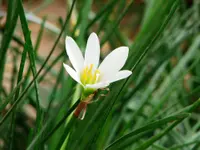
Autumn zephyrlily
Zephyranthes candida
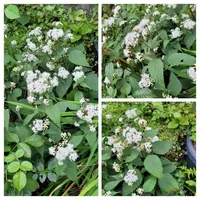
White Snakeroot
Ageratina altissima 'Chocolate'
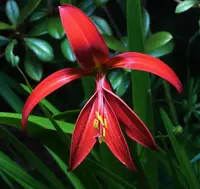
Jacobean lily
Sprekelia formosissima
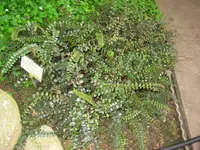
button fern
Hemionitis rotundifolia
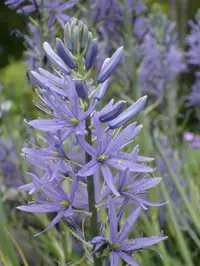
large camas
Camassia leichtlinii
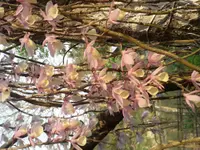
Hooded orchid
Dendrobium aphyllum

Campomanesia xanthocarpa
Campomanesia xanthocarpa
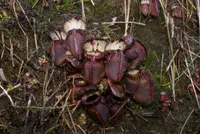
Australian pitcher plant
Cephalotus follicularis