Pinch For Bushiness
Pinch out the soft tips of young stems in late spring to encourage branching and a fuller, more compact clump that shows foliage color better.

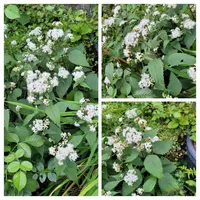
White snakeroot, Ageratina altissima 'Chocolate', is a shade-tolerant perennial grown mainly for its dark, chocolate-colored foliage and late-season white flower clusters. It forms upright clumps that give steady structure in mixed borders and woodland-style plantings.
This plant is native to eastern North America, where it grows in open woods and along shaded edges. It adapts fairly well to average garden soils and is generally hardy, but can self-seed and spread if conditions suit it.
Understanding how to care for White Snakeroot starts with providing partial shade, consistent moisture, and soil that drains well but does not dry out for long periods.

Care Difficulty
Moderate Care

Light Preference
Partial Sun

Water Requirements
Moderate Water

Temperature Preference
Cold Hardy

Hardiness Zone
4–8

Soil Texture
Loamy, Clay, Organic-rich

Soil pH
Acidic (5.5–6.5), Slightly acidic (6.5–7.0)

Soil Drainage
Moist but well-drained

Fertilization
Minimal (feed rarely)
Scan your plant to receive care tips personalized for your specific plant
Available on iOS and Android
This shade-tolerant perennial prefers bright, gentle light rather than intense, all-day sun.
This plant prefers evenly moist but not saturated soil, especially during its main growing season.
This hardy perennial is adapted to outdoor temperature swings typical of temperate climates.
This plant handles typical outdoor humidity and rarely needs special humidity management.
This perennial prefers moist, well-aerated, humus-rich soil that drains steadily without drying out quickly.
This species can grow successfully in containers when the pot and substrate are chosen to support its tall, spreading growth.
This native perennial usually needs minimal feeding in garden soil, but light fertilization supports strong growth in containers.
Thoughtful pruning keeps Ageratina altissima 'Chocolate' compact, healthy, and floriferous.
This perennial is most often grown in beds and borders, where it needs transplanting only when crowded or poorly placed.
Ageratina altissima 'Chocolate' is commonly propagated by division, with seed and cuttings as secondary methods.
This perennial is cold hardy in much of the US and usually needs only basic winter care in the ground.

Plant Health Check
Not sure what's wrong with your plant? Check your plant's health inside the app.
The deep purple-brown leaves result from higher concentrations of anthocyanin pigments compared with typical white snakeroot, which allows this cultivar to maintain its color best in brighter light conditions.
This selection was bred specifically for consistent dark foliage and compact habit, so plants raised from vegetative division reliably maintain the same leaf color and overall form as the parent plant.
Its small white flower clusters open late in the growing season and provide nectar and pollen for native bees, flies, and butterflies at a time when many other garden perennials have already finished flowering, making it useful when planning how to take care of White Snakeroot in pollinator-friendly designs.

Like the wild-type white snakeroot, this cultivar contains toxic compounds known as tremetol in its tissues, which can enter the food chain if grazed by livestock and historically caused a poisoning syndrome called milk sickness when people drank contaminated milk.
All parts of this species contain toxic compounds called tremetol. Ingesting fresh or dried material can poison livestock, pets, and humans, potentially causing vomiting, weakness, and in severe cases tremors and organ damage. It should never be eaten.
Keep your plants happy and healthy with plant identification, disease detection, and easy care guidance.