Staggered Succession Sowing
Sow small batches of seed every 1–2 weeks over early spring to extend the flowering display and avoid having all plants age and decline at the same time.

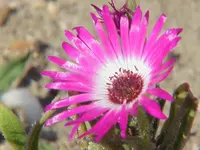
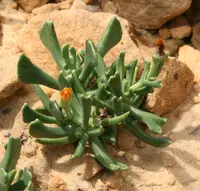
Livingstone daisy, Cleretum bellidiforme, is a low-growing annual succulent valued for its bright, daisy-like flowers that open fully in sun. It forms compact mats of fleshy, spoon-shaped leaves that help it tolerate dry conditions and poor, sandy soils.
This species is native to the winter-rainfall regions of South Africa, where it thrives in open, sunny habitats. Because it prefers strong light, fast-draining soil, and moderate watering, it suits rock gardens, containers, and coastal areas.
Gardeners often look up how to care for Livingstone Daisy because it delivers intense color with relatively low maintenance when its basic sun and drainage needs are met.

Care Difficulty
Easy Care

Light Preference
Full Sun

Water Requirements
Low Water

Temperature Preference
Tropical / Frost Sensitive

Hardiness Zone
9–11

Soil Texture
Sandy, Loamy, Rocky

Soil pH
Acidic (5.5–6.5), Slightly acidic (6.5–7.0)

Soil Drainage
Well-drained

Fertilization
Minimal (feed rarely)
Scan your plant to receive care tips personalized for your specific plant
Available on iOS and Android
This sun-loving annual thrives in bright, direct light for strong flowering and compact growth.
This drought-tolerant annual prefers infrequent, deep watering in sharply draining soil.
This plant favors mild, dry conditions and is usually grown as a warm-season annual.
Cleretum bellidiforme handles dry air well, so humidity usually needs no special adjustment indoors or outdoors.
Cleretum bellidiforme prefers very free-draining, sandy soil that dries quickly between waterings.
This species is well suited to container growing where sharp drainage and shallow, spreading growth can be controlled.
Cleretum bellidiforme benefits from light feeding during its active spring–summer growth but does not need heavy fertilization.
Pruning Cleretum bellidiforme is simple and focuses on tidying the plant and supporting repeat flowering.
This annual is usually grown in beds or containers and is transplanted rather than repeatedly repotted.
Cleretum bellidiforme is most commonly propagated from seed, which allows large, uniform displays.
In most climates Cleretum bellidiforme is treated as a frost-tender annual and does not need extensive winter care.

Plant Health Check
Not sure what's wrong with your plant? Check your plant's health inside the app.
This annual daisy is one of the signature species of South Africa’s Namaqualand spring-flower displays, forming dense, brightly colored carpets after winter rains in otherwise arid landscapes.
The flowers usually open fully only in bright direct sun and close again under cloud, shade, or at night, an energy-saving response that also protects pollen from cold and moisture.
Wild populations show striking natural variation in petal color, from white and yellow to orange, pink, red, and bicolored forms, which has made the species a popular subject for ornamental selection and breeding.

In its native range, this species often germinates in the cool, moist conditions of late winter, then completes its entire life cycle rapidly before summer drought, synchronizing flowering with a brief period when pollinators and water are both available.
Lack of flowers is usually due to insufficient light, overly rich or wet soil, or excessive nitrogen fertilizer. Old, spent plants also bloom less. Deadhead faded flowers and avoid heavy feeding to keep blooms coming.
Keep your plants happy and healthy with plant identification, disease detection, and easy care guidance.