Early support training
Install a sturdy moss pole or textured plank when the plant is still young and loosely tie new vines every 10–15 cm of growth so aerial roots can attach and leaves size up rather than staying small and sparse.


Philodendron inaequilaterum is a climbing aroid with large, often asymmetrical leaves and a vining growth habit. It is typically grown as a foliage plant for its bold, architectural look.
This species is native to tropical forests of Central and South America, where it lives as an epiphyte or climbs tree trunks in warm, humid shade. Its robust roots and adaptable growth make it moderately easy for experienced collectors, but it can be challenging for beginners.
Stable warmth, filtered light, and evenly moist, airy soil support healthy growth and simplify how to care for Philodendron inaequilaterum.

Care Difficulty
Moderate Care

Light Preference
Bright Indirect Light

Water Requirements
Moderate Water

Temperature Preference
Tropical / Frost Sensitive

Hardiness Zone
10–11

Soil Texture
Loamy, Peaty, Organic-rich

Soil pH
Acidic (5.5–6.5), Slightly acidic (6.5–7.0)

Soil Drainage
Moist but well-drained

Fertilization
Light (every 4–6 weeks)
Scan your plant to receive care tips personalized for your specific plant
Available on iOS and Android
Provide bright, indirect light that mimics a filtered tropical canopy.
Maintain evenly moist but not waterlogged soil to support healthy growth.
Keep conditions warm and stable to match this species’ tropical origin.
This species prefers moderately high humidity for steady growth.
Use a loose, airy, organic-rich mix that drains quickly yet holds some moisture.
This species is well suited to container culture when the pot supports its climbing habit.
Healthy, steady growth in Philodendron inaequilaterum benefits from moderate, diluted feeding during the active season.
Thoughtful pruning keeps Philodendron inaequilaterum manageable, healthy, and well-shaped indoors.
Container-grown plants benefit from periodic repotting to maintain root health and stable growth.
New plants are most commonly produced from stem cuttings taken from healthy vines.
This species is tropical and requires careful winter management in climates with cool or freezing conditions.

Plant Health Check
Not sure what's wrong with your plant? Check your plant's health inside the app.
The species name inaequilaterum refers to its distinctly unequal leaf halves, where one side of the leaf blade is noticeably wider or shaped differently than the other, a diagnostic feature used by botanists to identify it.
This species is native to tropical forests of Central America, including countries such as Costa Rica and Panama, where it grows as a climbing hemiepiphyte on trees in warm, humid lowland and premontane habitats.
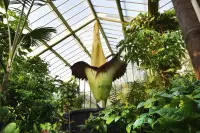
Like other aroids, it produces an inflorescence made of a spadix surrounded by a spathe, but the exact proportions, color, and arrangement of these parts are used by taxonomists to distinguish it from closely related philodendron species when studying Philodendron inaequilaterum care instructions in context of its natural reproduction.
Growth is moderate. In stable warmth and humidity, new leaves appear every few weeks during the active season, adding roughly 10–30 cm of vine length per year. Growth slows noticeably in cooler temperatures or low light.
Keep your plants happy and healthy with plant identification, disease detection, and easy care guidance.