Protective wind screening
Install a porous windbreak such as shade cloth or slatted fencing on exposed sites to reduce frond shredding and spear damage while still allowing adequate air movement around the palm.

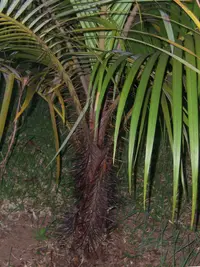
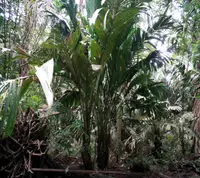
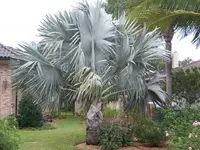
Acanthophoenix rubra, commonly called Barbel palm, is a single-stemmed palm known for its slender trunk and elegant, arching feather-like fronds. It grows slowly and can eventually form a tall, upright specimen.
This palm is native to the island of Réunion in the Indian Ocean, where it grows in warm, humid, montane forests. In cultivation it is considered challenging, mainly due to its need for consistent warmth, moisture, and protection from cold and drying winds.
Gardeners who learn how to care for Barbel palm usually focus on providing bright filtered light, evenly moist but well-drained soil, and shelter from temperature extremes.

Care Difficulty
Hard Care

Light Preference
Full Sun

Water Requirements
Regular Water

Temperature Preference
Tropical / Frost Sensitive

Hardiness Zone
11–12

Soil Texture
Sandy, Loamy, Organic-rich

Soil pH
Acidic (5.5–6.5), Slightly acidic (6.5–7.0)

Soil Drainage
Moist but well-drained

Fertilization
Moderate (every 2–4 weeks)
Scan your plant to receive care tips personalized for your specific plant
Available on iOS and Android
This species prefers bright, warm conditions similar to a tropical coastal habitat.
Acanthophoenix rubra prefers evenly moist, fast-draining soil without prolonged dryness or waterlogging.
This palm thrives in stable, warm, frost-free climates year-round.
This palm prefers consistently humid air and reacts poorly to very dry conditions.
This species needs fast-draining, airy soil that retains some moisture but never stays saturated.
This palm can be grown in containers, especially in cooler climates or where garden space is limited.
This palm responds well to modest, consistent feeding during warm growth periods.
Acanthophoenix rubra needs only light, hygiene-focused pruning to stay healthy.
This palm dislikes disturbance, so repotting or transplanting should be infrequent and carefully planned.
Propagation of this species is usually done from seeds and is slow but reliable with stable warmth.
This palm is frost sensitive and needs careful winter management in most temperate climates.

Plant Health Check
Not sure what's wrong with your plant? Check your plant's health inside the app.
This species is listed as Critically Endangered on the IUCN Red List due mainly to habitat loss and degradation of its native lowland rainforest on Mauritius and nearby islets.
In the wild, it naturally occurs on steep, volcanic slopes and ravines, where it experiences frequent cloud cover, high rainfall, and well-drained, often rocky soils.
The palm develops a single, slender trunk armed with sharp black spines, an adaptation that likely reduces damage from herbivores in its native habitat.
This palm is one of very few endemic Mauritian palms that survived large-scale deforestation and species introductions, making it an important focus of ongoing in situ and ex situ conservation programs aimed at preserving the island’s original palm flora.
Growth is moderate rather than fast. In warm, frost-free climates with consistent moisture and nutrition, it may add around 15–30 cm of trunk per year once established. Cooler temperatures or dry conditions slow development noticeably.
Keep your plants happy and healthy with plant identification, disease detection, and easy care guidance.