


Cool-night routine
Maintain a distinct night temperature drop of about 9–14°F by placing the plant in the coolest room or near a slightly open window at night during the growing season to support flower spike initiation.

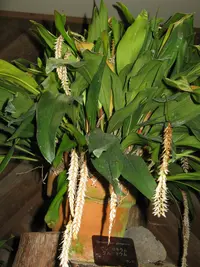
Coelogyne glumacea, commonly called the Hay-scented orchid, is an epiphytic orchid that often grows on trees or rocks in humid forests of Southeast Asia. It forms clumps of ribbed pseudobulbs, each carrying narrow leaves, and produces elegant, pale flowers with a light hay-like fragrance. The plant has a relatively compact growth habit, which makes it suitable for experienced indoor orchid growers with limited space. It prefers bright, filtered light, regular moisture, and good air movement around the roots. Understanding how to care for Hay-scented orchid helps keep it healthy and encourages repeat flowering over the years.

Care Difficulty
Moderate Care

Light Preference
Bright Indirect Light

Water Requirements
Keep Soil Moist

Temperature Preference
Tropical / Frost Sensitive

Hardiness Zone
12–13

Soil Texture
Peaty, Organic-rich

Soil pH
Acidic (5.5–6.5)

Soil Drainage
Moist but well-drained

Fertilization
Light (every 4–6 weeks)
Scan your plant to receive care tips personalized for your specific plant
Available on iOS and Android
This orchid prefers bright, filtered light that mimics a lightly shaded forest canopy.
This species prefers evenly moist conditions during active growth but is sensitive to stagnant water.
This orchid grows best in intermediate to warm conditions with only mild temperature swings.
This orchid prefers consistently moist air and reacts quickly to dry indoor conditions.
This epiphytic orchid needs a very open, airy medium rather than dense mineral soil.
This species grows well in containers when the pot stabilizes its arching growth and preserves airy roots.
This orchid benefits from light, consistent feeding during active growth to support healthy canes and flowering.
Coelogyne glumacea needs only minimal pruning focused on hygiene and flowered growths.
Repotting keeps this sympodial orchid healthy by renewing its airy medium and preventing root crowding.
This orchid is most reliably propagated by division of mature clumps rather than by seed.
This tropical orchid is not frost hardy and needs mild, protected conditions in winter.

Plant Health Check
Not sure what's wrong with your plant? Check your plant's health inside the app.
The flowers of this species release a distinct fragrance often compared to dried hay, especially in warm, still air, which is reflected in its common name hay-scented orchid.
This orchid naturally grows as an epiphyte on trees in cool, moist montane forests of Southeast Asia, typically at higher elevations where temperatures are mild and humidity remains high year-round.
Its flowering stems tend to arch or hang, producing multiple creamy to yellowish flowers in a row, an adaptation that helps display blooms below tree branches where pollinators move.
Lack of flowering is usually due to insufficient light, overly warm winter conditions, or skipping a slight dry rest after new growth matures. Old, exhausted pseudobulbs and heavy, nitrogen-rich feeding can also reduce flower production.
Keep your plants happy and healthy with plant identification, disease detection, and easy care guidance.

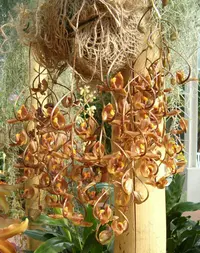
Gongora galeata
Gongora galeata
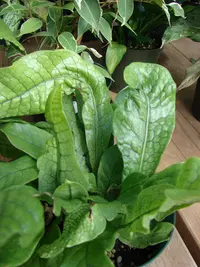
Microsorum musifolium
Microsorum musifolium
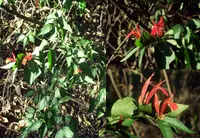
Justicia brasiliana
Justicia brasiliana
Anthurium faustomirandae
Anthurium faustomirandae
Scaphyglottis prolifera
Scaphyglottis prolifera
Echeveria affinis
Echeveria affinis

shortstem philodendron
Philodendron fragrantissimum
Fairy bentspur orchid
Campylocentrum micranthum