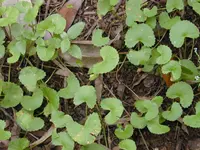
box-leaved barberry Care (Berberis microphylla)

Also known as: Magellan barberry, Calafate
box-leaved barberry

About box-leaved barberry

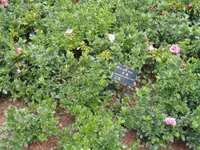
Box-leaved barberry, Berberis microphylla, is a compact, evergreen shrub valued for its dense, fine-textured foliage and small, glossy leaves. It often forms low, rounded mounds that work well as hedging or structural accents in gardens.

This species is native to southern South America, including Patagonia, where it grows in cool, often windy conditions. It is generally hardy and adaptable, tolerating poor soils and coastal exposure, which makes it relatively easy to establish.

Its small spines, modest growth rate, and tolerance of pruning help gardeners care for box-leaved barberry in tight or formal spaces. It typically prefers well-drained soil and a position with good light, from bright partial shade to full sun.

Main Plant Requirements

Care Difficulty

Easy Care

Light Preference

Full Sun

Water Requirements

Low Water

Temperature Preference

Cold Hardy

Hardiness Zone

6–9

Soil Texture

Sandy, Loamy, Rocky

Soil pH

Acidic (5.5–6.5), Slightly acidic (6.5–7.0)

Soil Drainage

Well-drained

Fertilization

Minimal (feed rarely)

Get Personalized Care Plan

Scan your plant to receive care tips personalized for your specific plant

Available on iOS and Android

How to Care for the box-leaved barberry

This compact shrub grows best in bright outdoor light with cool roots and good air movement.

  • Provide 6–8 hours of direct sun daily; morning and midday sun promote dense growth and strong autumn color in box-leaved barberry.
  • Tolerates light or open shade for part of the day, but dense shade leads to sparse, leggy shoots and reduced flowering and fruiting.
  • In hot inland summers, aim for full sun until early afternoon, then light shade to limit leaf scorch and excessive soil drying.

This shrub prefers evenly moist but not saturated soil, especially during establishment.

  • Water when the top 3–5 cm of soil feels dry, applying a deep soak rather than frequent light splashes to encourage deep rooting.
  • Reduce watering in cool, rainy seasons and on established plants; increase only during extended drought or extreme heat when foliage starts to dull or slightly wilt.
  • Ensure sharply draining soil; persistent wetness, sour smell, or blackening roots indicate overwatering, while crisp leaf edges and premature leaf drop suggest underwatering.

This hardy shrub thrives in cool to moderate outdoor climates and tolerates significant winter cold.

  • Optimal growing temperatures are around 50–75°F (10–24°C), with strong performance in regions that have distinct, cool winters.
  • Berberis microphylla withstands at least 0°F (-18°C), often lower, but newly planted shrubs benefit from mulch to buffer freeze–thaw cycles.
  • In summer, it tolerates 85–90°F (29–32°C) if soil is not allowed to dry out completely; prolonged heat above this can cause stress, leaf drop, and weaker growth.

Humidity is rarely limiting for Berberis microphylla grown outdoors in typical garden conditions.

Berberis microphylla prefers well-structured, free-draining mineral soil to avoid root problems.

  • Use a loamy or sandy-loam soil with moderate organic matter, not pure compost.
  • Aim for slightly acidic to neutral pH, roughly 6.0–7.5, to support balanced nutrient uptake.
  • Blend in coarse sand or fine gravel to improve drainage on heavier clay sites.
  • Avoid compacted, waterlogged, or peat-heavy mixes that hold water around the roots for long periods.

This species can be grown in containers when given a stable, well-drained setup suited to its woody root system.

  • Choose a wide, heavy container to counterbalance the shrub’s branching top and prevent tipping in wind.
  • Select a pot deep enough to accommodate a woody root ball, leaving space for several years of radial spread.
  • Use thick-walled or ceramic pots in sunny sites to reduce rapid drying and provide root-zone temperature stability.

Berberis microphylla grows well in average soil and benefits from light, targeted feeding rather than heavy fertilization.

  • Apply a balanced slow-release granular fertilizer (e.g., 10-10-10) once in early spring as new growth starts.
  • In richer soils, use a thin layer of compost around the root zone instead of synthetic products.
  • Avoid summer high-dose feeding; use half-strength rates if plants show nutrient deficiency only.
  • Do not fertilize in late fall or winter, to prevent soft growth that may be damaged by cold.

Pruning Berberis microphylla helps maintain a dense, healthy structure and supports flowering.

  • Carry out main pruning in late winter or very early spring before buds fully break.
  • Remove dead, diseased, crossing, or inward-growing branches with clean, sharp bypass pruners.
  • Shorten overly long shoots to keep the shrub compact, preserving some 1–2-year-old wood for flowers and berries.
  • Use gradual thinning cuts rather than shearing alone to maintain airflow and natural shape.

This shrub is usually grown in the ground, so care focuses on thoughtful transplanting rather than frequent repotting.

  • Plan transplanting for early spring or early fall, when temperatures are mild and soil is workable.
  • Look for signs such as poor vigor, crowding, or roots circling in the container before moving box-leaved barberry.
  • Dig a wide planting hole, disturb circling roots gently, and keep the original soil level at the surface.
  • Water deeply after transplanting, then keep soil evenly moist and shaded for 1–2 weeks to limit transplant shock.

Berberis microphylla is commonly propagated from semi-ripe cuttings and sometimes from seed for larger batches.

  • Take semi-ripe cuttings in mid to late summer, 8–10 cm long, from healthy non-flowering shoots.
  • Remove lower leaves, dip bases in rooting hormone, and insert into a free-draining mix kept slightly moist.
  • Provide bright, indirect light and high humidity, using a propagator lid or plastic cover with ventilation.
  • For seed, stratify in moist medium at 35–40°F for several weeks, then sow in a cool, bright place.

This species is generally cold hardy and needs only light winter care in most temperate gardens.

  • Tolerates typical frosts once established, but young plants benefit from extra protection in the first 1–2 winters.
  • Apply a 5–8 cm mulch layer around the root zone in late fall, keeping material off the main stems.
  • In very cold or exposed sites, create a windbreak or wrap small shrubs loosely with burlap to limit desiccation.

Care Tips

Windbreak placement

In exposed sites, plant on the leeward side of fences or hedges so the shrub acts as a low windbreak without suffering from constant drying winds itself.

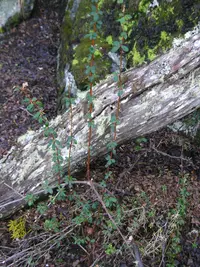
Mulch for berry set

Apply a 5–7 cm ring of long-lasting mulch such as bark or wood chips around, but not touching, the base to stabilize soil moisture and encourage more reliable flowering and fruiting.

Bird-friendly spacing

Space plants 60–90 cm apart in a staggered row to create a dense, thorny thicket that provides shelter for small birds while also forming an effective barrier hedge.

Low-input hedge renewal

For overgrown hedges, renovate by cutting back 1 in 3 of the oldest stems at ground level each winter over 3 years instead of removing all growth at once, which maintains cover and reduces plant stress.

Safe handling routine

Use sturdy gloves and long sleeves whenever handling or shaping the shrub, and keep a dedicated pair of pruners for caring for box-leaved barberry so hidden thorns do not contaminate tools used on softer-stemmed plants.

Common Pests and Diseases

Berberis sawfly

This pest feeds on the leaves, often skeletonizing foliage and leaving only veins, which can severely weaken hedges and specimen shrubs.

Solution

Hand-pick larvae where feasible and prune out heavily infested shoots, then dispose of them in the trash. For larger populations, use a targeted biological insecticide containing Bacillus thuringiensis (Bt) or a low-impact insecticidal soap sprayed thoroughly on the undersides of leaves, repeating as needed according to label directions.

Aphids

These insects cluster on young shoots and undersides of leaves, sucking sap and causing curling, distortion, sticky honeydew, and sometimes sooty mold growth.

Solution

Spray infested shoots with a strong jet of water to dislodge colonies, then use insecticidal soap or a horticultural oil, ensuring full coverage of new growth. Encourage natural predators such as lady beetles by avoiding broad-spectrum insecticides that would harm beneficial insects.

Powdery mildew

This disease appears as white, powdery patches on leaves and young stems, which may lead to yellowing and premature leaf drop in humid or shaded conditions.

Solution

Improve air circulation by thinning dense branches and avoid overhead watering, especially late in the day. Remove and discard affected leaves and apply a labeled fungicide such as a sulfur or potassium bicarbonate product at the first signs of disease, following label intervals.

Leaf spot

Symptoms include small brown or purplish spots on leaves that may merge into larger blotches, sometimes causing partial defoliation in wet seasons.

Solution

Remove and destroy fallen and heavily spotted leaves to reduce the source of reinfection, and avoid wetting foliage when watering. In landscapes with repeated problems, apply a preventive fungicide in spring during prolonged wet weather, focusing on thorough coverage of the canopy.

Scale insects

These insects appear as small, flat or domed bumps on stems and leaves, sucking sap and leading to yellowed foliage, reduced vigor, and sticky honeydew deposits.

Solution

Prune out and discard heavily infested twigs, then treat remaining plants with horticultural oil during the crawler stage or as a dormant-season spray, coating stems and leaf undersides. For persistent infestations, repeat oil applications as directed on the label and monitor new growth closely as part of Berberis microphylla care.

Interesting Facts

Magellanic barberry berries

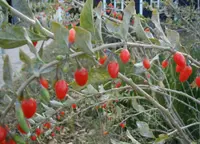
This species produces small dark blue to almost black berries with a waxy bloom that makes them look pale blue. The fruit is edible and distinctly acidic, traditionally used in jams and jellies in southern Chile and Argentina.

Southernmost shrublands

As a native of Patagonia and Tierra del Fuego, this shrub is part of some of the southernmost natural woody vegetation on land worldwide. It tolerates cold, windy, oceanic climates and poor, often shallow soils in these subantarctic regions.

Spines and tiny leaves

The plant has rigid three-part spines and very small, thick leaves that reduce water loss and protect it from grazing animals in harsh, exposed habitats. This combination of armature and microphyll leaves is a key adaptation to the windy, cool steppe and coastal environments where it grows.

Botan icon

Did you know?

In its native range, this species helps support local bird communities, as birds feed on the berries and disperse the seeds, contributing to the regeneration of Patagonian shrubland ecosystems.

FAQs about box-leaved barberry

This species is evergreen in mild climates, typically retaining its small, glossy leaves year-round. In colder areas it may behave semi-evergreen, with some leaf drop after severe frost or drying winter winds, then refoliating in spring.

Grow Healthy Plants with Botan Care

Keep your plants happy and healthy with plant identification, disease detection, and easy care guidance.

Botan plant care app — identify plants on mobile

Explore More Plants