Stake Early Leader
Install a sturdy stake and loosely tie the young main stem while it is under 1.5–2 m tall to encourage a straight central leader and reduce wind damage risk later.

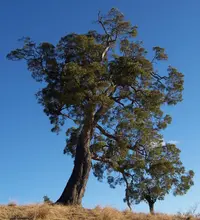
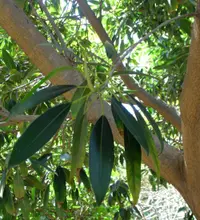
Highland tamarind, Acacia heterophylla, is an evergreen legume tree native to Réunion Island in the Indian Ocean. It is related to many Australian acacias. The tree has a light, open crown with narrow, leaf-like phyllodes and small, pale yellow puffball flowers, giving it a fine, feathery look when mature. In suitable climates it grows quickly and can become a medium to large ornamental shade tree. It prefers mild, frost-free conditions, good light, and well-drained soil, so it is easier in warm coastal or subtropical regions than in cold areas. Understanding how to care for highland tamarind starts with recognizing its need for consistent moisture without waterlogging and protection from hard freezes.

Care Difficulty
Moderate Care

Light Preference
Full Sun

Water Requirements
Moderate Water

Temperature Preference
Warm Climate

Hardiness Zone
10–11

Soil Texture
Sandy, Loamy, Rocky

Soil pH
Acidic (5.5–6.5), Slightly acidic (6.5–7.0)

Soil Drainage
Well-drained

Fertilization
Minimal (feed rarely)
Scan your plant to receive care tips personalized for your specific plant
Available on iOS and Android
Acacia heterophylla grows best in bright, open conditions with protection from harsh extremes of sun exposure.
Acacia heterophylla prefers moderately dry conditions and is sensitive to prolonged soil saturation.
This species prefers mild, frost-free climates with steady temperatures for strongest growth.
This species grows well in relatively dry homes and does not have strict humidity demands.
Acacia heterophylla prefers a light, fast-draining mix that avoids prolonged root saturation.
This tree can be grown in containers when its eventual size and root vigor are managed.
Acacia heterophylla grows in low-nutrient soils, so use light feeding to support container or landscape specimens without forcing soft, weak growth.
Acacia heterophylla responds well to light, targeted pruning that maintains a single trunk and stable canopy.
Young Acacia heterophylla can start in containers but usually perform best once transplanted to a permanent ground position.
New Acacia heterophylla plants are most reliably produced from seed under warm, bright conditions.
This species is frost sensitive and benefits from thoughtful winter protection in cool climates.

Plant Health Check
Not sure what's wrong with your plant? Check your plant's health inside the app.
This species is native almost exclusively to Réunion in the Mascarene Islands, where it is one of the few truly indigenous tree-forming legumes in high-elevation wet forests.
Genetic studies show that this species is closely related to Australian Acacia species, supporting the idea that its ancestors arrived to Réunion by long‑distance dispersal across the Indian Ocean.
Seedlings first produce true bipinnate leaves, but adult trees mostly carry phyllodes, which are leaf-like flattened petioles that reduce water loss and withstand strong trade winds at higher elevations.

Acacia heterophylla is one of the very few tree species that naturally dominate montane cloud forests on a small volcanic island, forming near-monospecific stands that strongly influence local water capture and nutrient cycling in Réunion’s upland ecosystems.
Growth is moderate to fast in warm, frost‑free climates, often adding 30–60 cm per year when young. Rate depends on soil depth, water availability, and nutrient levels. Container plants grow more slowly due to limited root space.
Keep your plants happy and healthy with plant identification, disease detection, and easy care guidance.