Hardy Aloe Care (Aloiampelos striatula)

Hardy Aloe

About Hardy Aloe

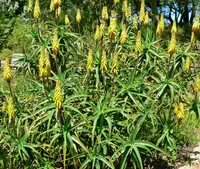
Hardy aloe, Aloiampelos striatula, is a shrubby, evergreen succulent known for its narrow, toothed leaves and tall spikes of tubular yellow to orange flowers. It forms dense clumps with a branching, upright habit, giving it a structural, almost architectural look in gardens and containers.

This species is native to cooler, high-altitude regions of South Africa, where it tolerates light frost better than many other aloes. Its drought tolerance and resilience make it relatively straightforward to care for Hardy Aloe in mild climates.

It generally prefers bright light, very well-drained gritty soil, and infrequent watering, especially in cooler conditions.

Main Plant Requirements

Care Difficulty

Easy Care

Light Preference

Full Sun

Water Requirements

Low Water

Temperature Preference

Warm Climate

Hardiness Zone

7–10

Soil Texture

Sandy, Loamy, Rocky

Soil pH

Slightly acidic (6.5–7.0), Neutral (7.0)

Soil Drainage

Well-drained

Fertilization

Minimal (feed rarely)

Get Personalized Care Plan

Scan your plant to receive care tips personalized for your specific plant

Available on iOS and Android

How to Care for the Hardy Aloe

Aloiampelos striatula thrives in bright, mainly direct sun with some protection in extreme heat.

  • Provide 4–6 hours of direct sun daily, ideally morning sun with light afternoon shade, especially in hot, inland climates.
  • Tolerates light or dappled shade for part of the day, but stems may stretch and flowering can decrease if light drops below roughly 3–4 hours of sun.
  • In very strong summer sun, especially reflected off walls or paving, monitor for leaf scorch and offer slight shade or filtered light during midafternoon.

This succulent prefers infrequent, deep watering and dries well between soakings.

  • Outdoors in well-drained soil, water only when the top 5–7 cm feels dry and foliage just starts to look slightly less firm.
  • Reduce watering strongly in cool or rainy seasons; Aloiampelos striatula tolerates brief drought better than standing in wet soil.
  • Watch for yellowing, soft, or collapsing stems as signs of overwatering and root problems, while wrinkled, curling leaves usually indicate the need for a thorough soak.

This species is relatively cold tolerant but grows best in mild, frost-limited conditions.

  • Active growth is strongest around 65–80°F (18–27°C), with good performance in typical coastal or mild inland climates.
  • Mature plants can survive short dips to about 20–25°F (-6 to -4°C) if soil drains well, but repeated hard frosts can damage soft tips.
  • Handles dry heat up to 95–100°F (35–38°C) if roots are established, yet benefits from mulch and some afternoon shade during prolonged hot spells.

This species tolerates a wide humidity range and rarely needs special humidity management indoors.

  • Maintain 30–50% humidity, similar to most heated homes, without deliberate humidifying.
  • Expect strong tolerance of dry air; issues usually arise only with very hot, stagnant rooms.
  • Watch for tip browning and shriveling during prolonged heat plus very low humidity, and increase air movement rather than using a humidifier for Hardy Aloe.

Soil for Aloiampelos striatula must drain rapidly while still anchoring the plant securely.

  • Use a gritty, lean mix such as 50–60% cactus mix blended with coarse sand, pumice, or perlite for fast drainage.
  • Aim for slightly acidic to neutral pH around 6.0–7.0, avoiding strongly alkaline or saline substrates.
  • Add only a small portion of compost or fine bark to prevent compaction while providing modest nutrients.
  • Avoid heavy clay, peat-heavy, or water-retentive potting mixes that stay wet for more than 2–3 days after watering.

This species grows well in containers when the pot controls moisture and supports its shrubby form.

  • Choose a wide, heavy container to counterbalance the arching, woody stems and prevent tipping in wind or on balconies.
  • Select unglazed terracotta in wetter climates to speed evaporation, or a slightly less porous material in very dry regions to slow moisture loss.
  • Ensure large drainage holes and, if possible, feet or pot risers so excess water exits quickly and does not pool under the container.

This drought-tolerant succulent needs only light feeding to support steady growth in containers or poor soils.

  • Use a balanced liquid fertilizer (for example 10-10-10) at 1/4–1/2 strength, or a light layer of compost for in-ground plants.
  • Feed every 4–6 weeks during the warm growing season if growth appears weak or soil is very lean.
  • Apply a small amount of slow-release fertilizer once in spring for container Hardy Aloe, following label rates carefully.
  • Stop feeding in late fall and winter to avoid soft, cold-sensitive growth and fertilizer salt buildup.

Pruning Aloiampelos striatula helps maintain a compact, well-branched shrub and sustains flowering performance.

  • Plan main pruning in late winter or early spring before strong new growth begins.
  • Cut out dead, damaged, or diseased stems at the base using clean, sharp pruners.
  • Thin crowded or very long stems to improve light penetration and airflow and to control height.
  • Shorten leggy shoots above a node to encourage branching and more flower-bearing tips.

This species tolerates confined roots well, so repotting or transplanting is infrequent but sometimes useful.

  • Repot or move the plant when roots circle the pot, emerge from drainage holes, or growth becomes noticeably slower.
  • Choose late spring or early summer so warm temperatures support root recovery and new growth.
  • Expect to repot containers about every 3–4 years into a pot only 2–5 cm wider, using a fast-draining succulent mix.
  • Minimize root stress by watering 1–2 days before moving, handling the root ball gently, and shading the plant for a few days afterward.

New Aloiampelos striatula plants are most often produced from stem cuttings, with division and seed used less commonly.

  • Take non-flowering stem cuttings in late spring or summer, 8–12 cm long, with several nodes.
  • Allow cut ends to dry and callus for 1–3 days, then insert into barely moist, gritty, fast-draining mix.
  • Keep in bright, indirect light at 70–80°F, watering lightly only after the mix is nearly dry to prevent rot.
  • For division, separate well-rooted offsets and replant immediately, or sow fresh seed in warm, bright conditions for slower increase.

This aloe is relatively cold tolerant outdoors in mild climates but still benefits from simple winter precautions.

  • Mature plants tolerate light frosts, roughly down to about 20–25°F, but young plants are more vulnerable.
  • In cold regions, grow in containers and move indoors or into a bright, frost-free greenhouse before hard freezes.
  • Reduce watering sharply in winter so the soil stays mostly dry, lowering the risk of root rot in cold conditions.
  • In the ground, add a 5–8 cm layer of dry mulch around the root zone in colder climates, keeping it off the stems.

Care Tips

Use rocky mulch

Top-dress the root zone with 1–2 in of coarse gravel or small rocks to keep the stem base dry, reduce soil splash on the leaves, and stabilize the plant on slopes.

Wind-hardening outdoors

In windy climates, gradually expose young plants to stronger wind over 1–2 weeks so stems thicken and stay upright rather than snapping in sudden gusts.

Controlled clump renewal

Every 3–4 years, remove a few of the oldest, most woody stems at the base to stimulate fresh shoots and keep the clump dense instead of congested.

Propagation from prunings

When shaping the plant, save firm, pencil-thick stem cuttings, let them callus for several days, then root them in a dry, gritty mix to expand your planting or replace leggy specimens.

Winter rain management

In regions with cold, wet winters, angle containers slightly or plant on a low mound so excess rain drains away from the crown, which reduces rot risk when growing Hardy Aloe in marginal climates.

Common Pests and Diseases

Aloe mite

This pest causes abnormal swollen, warty growths (galls) on stems, leaf bases, and sometimes flower stalks, often with distorted or clustered tissue. Symptoms include rough, corky patches that do not rub off and slowly spread over time.

Solution

Remove and destroy all affected stem sections well back into healthy tissue using sterile tools, then disinfect blades after each cut. Improve airflow, avoid overhead watering, and isolate affected plants; for severe or spreading cases, use a targeted miticide labeled for eriophyid mites and repeat according to label directions.

Aloe rust

This disease produces small yellow spots on leaves that turn brown, then black, often with raised pustules on the underside of the leaf. Symptoms include scattered dark rust-like lesions that may merge and cause premature leaf yellowing.

Solution

Cut off and discard affected leaves to reduce spore spread, ensuring tools are cleaned with alcohol between plants. Keep foliage dry, increase spacing and airflow, and if needed apply a sulfur- or copper-based fungicide labeled for ornamental succulents, following all safety directions.

Aloe leaf spot

This disease causes round to irregular brown or tan spots on leaves, often with a darker edge and sometimes a pale halo. Symptoms include gradually expanding lesions that can coalesce and weaken older leaves, especially in humid or wet conditions.

Solution

Remove heavily spotted leaves and avoid wetting the foliage, especially in the evening. Improve drainage and air circulation, and in persistent cases use a broad-spectrum fungicide appropriate for succulents, rotating products if treatments are repeated to reduce resistance.

Mealybugs

These insects appear as small cottony white clusters at leaf bases, along stems, and sometimes on roots, feeding on sap and causing stunted growth and sticky honeydew. This pest often hides in tight crevices of the branching stems of this aloe species.

Solution

Physically remove visible colonies with a cotton swab dipped in 70% isopropyl alcohol, then rinse the plant with a firm stream of water to dislodge remaining insects. For ongoing infestations, apply an insecticidal soap or neem oil spray to all plant surfaces every 7–10 days until no new mealybugs appear, and consider repotting to inspect and clean roots if decline continues.

Scale insects

These insects form small, hard, dome-shaped bumps on stems and leaf bases, feeding on sap and causing yellowing and weak growth. This pest can form dense patches along the ridged stems, making Aloiampelos striatula care more difficult if not detected early.

Solution

Gently scrape or wipe off scale with a soft brush or cloth, then treat remaining insects with horticultural oil or insecticidal soap, coating stems thoroughly. Repeat treatments every 10–14 days until new growth is clean, and keep the plant in good light and well-drained soil to support recovery.

Interesting Facts

Striped climbing stems

This species has distinctly striped, ridged green stems that can scramble or climb through surrounding shrubs, an adaptation that helps it reach better light in rocky, semi-arid habitats of South Africa and Lesotho.

Cold-tolerant aloe relative

Unlike many succulent relatives that are damaged by light frost, this plant can survive brief drops below freezing when kept dry, which is one reason it is often recommended for growing Hardy Aloe in milder temperate climates.

Nectar-rich tubular flowers

Its long, tubular orange-yellow flowers are produced in upright clusters and provide abundant nectar that attracts sunbirds in its native range and hummingbirds in suitable introduced regions.

Botan icon

Did you know?

In parts of its native range, this species often forms dense, shrubby colonies on rocky slopes, where its extensive root system helps stabilize thin soils and reduce erosion in windy, high-altitude environments.

FAQs about Hardy Aloe

Insufficient light, young age, or nutrient-rich soil are common reasons. This species flowers best in full sun, with lean, well-drained substrate and slight stress. Avoid heavy fertilizing and ensure plants are mature before expecting blooms.

Grow Healthy Plants with Botan Care

Keep your plants happy and healthy with plant identification, disease detection, and easy care guidance.

Botan plant care app — identify plants on mobile

Explore More Plants