Rubus caucasicus Care

Rubus caucasicus

About Rubus caucasicus

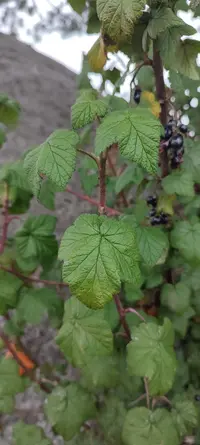
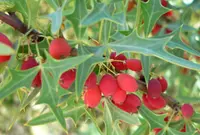
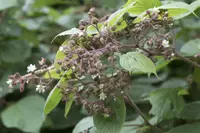
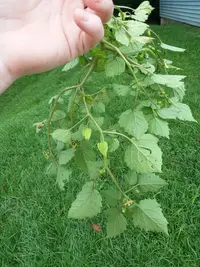
Rubus caucasicus is a deciduous, cold-hardy bramble in the rose family, related to raspberries and blackberries. It typically forms arching or scrambling canes with prickles and compound leaves. Clusters of white to pale pink flowers are followed by edible berry-like fruits, often attractive to wildlife. This species is native to the Caucasus region and nearby areas, where it grows in woodland edges, thickets, and disturbed sites. It can spread by suckers and tip-layering, so it may need space and periodic control in gardens. To care for Rubus caucasicus, provide sun to light shade, moderate moisture, and well-drained, reasonably fertile soil.

Main Plant Requirements

Care Difficulty

Moderate Care

Light Preference

Full Sun

Water Requirements

Moderate Water

Temperature Preference

Cold Hardy

Hardiness Zone

5–8

Soil Texture

Sandy, Loamy, Organic-rich

Soil pH

Acidic (5.5–6.5), Slightly acidic (6.5–7.0)

Soil Drainage

Moist but well-drained

Fertilization

Minimal (feed rarely)

Get Personalized Care Plan

Scan your plant to receive care tips personalized for your specific plant

Available on iOS and Android

How to Care for the Rubus caucasicus

This vigorous bramble prefers bright, open conditions but copes with some shade, especially in warmer climates.

  • Provide 6–8 hours of direct sun daily, ideally with morning sun and light afternoon shade in hot regions to reduce leaf scorch and fruit shrivel.
  • Tolerates partial shade (3–5 hours sun), but Rubus caucasicus may produce fewer, less sweet fruits if light is limited.
  • Avoid deep shade under dense trees; long, weak canes, sparse flowering, and pale foliage indicate insufficient light, especially in spring and early summer.

This shrub needs consistently moist, well-drained soil, especially during active growth and fruiting.

  • Before watering, let the top 3–5 cm of soil dry, then water deeply so moisture reaches the root zone, rather than giving frequent shallow drinks.
  • Increase watering frequency in late spring and summer dry spells; reduce in fall and winter once growth slows, relying more on natural rainfall if adequate.
  • Ensure free-draining soil; soggy ground causes yellowing leaves, wilting with wet soil, and root rot, while crisp edges and drooping in dry soil indicate underwatering.

This hardy bramble tolerates cold winters but grows best in moderate, temperate conditions.

  • Active growth and flowering are strongest at 60–75°F (16–24°C), with stable spring temperatures giving the most reliable cane and flower development.
  • Established plants usually survive down to about 0°F (-18°C) with mulched roots, but young canes benefit from protection during sudden hard frosts.
  • Summer heat up to about 85–90°F (29–32°C) is tolerated if soil moisture is maintained; above this, provide mulch and avoid heat-reflecting walls to limit stress.

This shrub tolerates a broad range of outdoor humidity but grows best with moderate ambient moisture.

  • Aim for 40–60% humidity in sheltered sites, avoiding very arid, hot wind exposure where leaves dry rapidly.
  • Leaf edges browning, slow new growth, and premature fruit shrivel indicate humidity stress combined with drought.
  • Increase local humidity by mulching the root zone 5–8 cm deep and using nearby planting density as a windbreak.

Rubus caucasicus prefers deep, moist, well-drained loam with high organic content.

  • Use a mix of garden loam, compost, and coarse sand or fine grit to create a crumbly, well-structured soil that holds moisture but does not become heavy.
  • Maintain pH around 6.0–6.8; in alkaline soil, incorporate elemental sulfur and extra organic matter to improve nutrient availability.
  • Improve drainage and aeration in dense clay by raising the planting area, adding 30–40% compost, and blending in coarse material such as grit or bark fines.
  • Avoid compacted, waterlogged, or very shallow soils, which restrict root growth, reduce oxygen, and increase the risk of root rot.

This species can be grown in large outdoor containers if managed for root space and stability.

  • Select a heavy, wide-based pot to counterbalance arching canes and prevent wind tipping as growth becomes top-heavy.
  • Choose a container at least 40–50 cm deep to allow strong root development and more stable moisture between waterings.
  • Ensure multiple large drainage holes and elevate the pot slightly on feet or blocks so excess water exits quickly after rain or irrigation.

This vigorous bramble usually performs well in average garden soil, but moderate feeding supports better growth and fruiting in Rubus caucasicus.

  • Apply a balanced granular or slow-release fertilizer (around 10-10-10) at 50–75% label strength in early spring, just before new growth starts.
  • Supplement with a light layer of well-rotted compost around the root zone to improve soil structure and nutrient availability.
  • If growth is weak, repeat a light feeding in midsummer, keeping fertilizer off the canes and foliage.
  • Stop feeding in late summer so shoots harden before winter, and do not fertilize during winter dormancy.

Pruning is important to manage vigor, improve air flow, and maintain a productive framework in Rubus caucasicus.

  • Use clean, sharp bypass pruners to remove dead, diseased, or damaged canes whenever they are noticed.
  • In late winter or very early spring, cut out older, exhausted canes at ground level to favor strong new shoots.
  • Thin crowded canes so remaining stems are well spaced, improving light and reducing fungal problems.
  • Shorten excessively long canes to maintain the desired shape and make harvest and maintenance easier.

This species is mainly grown in the ground, so transplanting established plants is more relevant than container repotting.

  • Transplant in late winter or early spring while plants are dormant, choosing a sunny site with well-drained soil.
  • Lift plants with a generous root ball, keeping as many fibrous roots as possible to limit transplant shock.
  • Trim back top growth slightly after moving to balance the reduced root system and support recovery.
  • Water deeply after planting, then keep soil evenly moist for several weeks until new growth shows successful establishment.

Rubus caucasicus is commonly propagated to expand productive plantings or replace aging canes.

  • Use tip layering in late spring or summer by pegging young cane tips into moist soil until roots form, then sever and replant.
  • Take semi-ripe stem cuttings in early summer, using a rooting hormone and a free-draining, moist medium under bright, indirect light.
  • Divide well-established clumps in early spring while dormant, replanting divisions promptly at the same depth.
  • Sow fresh seed in autumn outdoors or after a cold stratification period to improve germination rates.

This bramble is generally hardy in temperate climates and usually needs only light winter care once established.

  • In late autumn, apply a 5–8 cm mulch of composted bark or leaves over the root zone, keeping it away from cane bases.
  • In very cold or exposed sites, loosely tie canes together and use a breathable fleece barrier to reduce wind damage.
  • For container-grown plants, move pots to a sheltered, unheated spot and insulate containers to prevent root freezing.

Care Tips

Cane renewal management

After fruiting, remove spent 2-year-old canes at ground level and thin crowded new canes to 4–6 of the strongest per linear foot to maintain productivity and airflow.

Targeted trellis training

Install a sturdy wire or post-and-rail system and tie canes loosely in fan or T-shapes with soft ties so fruiting laterals are well spaced and easy to harvest and inspect for pests.

Weed and sucker control

Use a 5–8 cm organic mulch strip and promptly cut or dig out root suckers that emerge beyond the intended row to prevent a dense thicket that competes with the main plants.

Sanitation for disease

Collect and remove dropped leaves, mummified fruit, and pruned cane pieces from the planting area to reduce overwintering fungal spores and insect habitat when growing Rubus caucasicus.

Winter cane protection

In colder regions, gently arch and tie flexible canes closer to the ground and mulch the crown heavily so snow cover and insulation reduce winterkill of buds and young wood.

Common Pests and Diseases

Raspberry beetle

This pest lays eggs in flowers, and the larvae feed inside developing fruits, leading to misshapen, dry, or wormy berries. Symptoms include small brown patches on the fruit and premature fruit drop.

Solution

Remove and destroy infested fruits during harvest to break the life cycle, and keep the area around plants clean of fallen berries and plant debris. In small plantings, use fine mesh netting over plants during flowering to reduce egg-laying, and encourage insect-eating birds and predatory beetles by maintaining diverse vegetation nearby.

Aphids

These insects cluster on young shoots and the undersides of leaves, sucking sap and causing leaf curling, distortion, and sticky honeydew that can lead to sooty mold. Symptoms include weak new growth and sometimes stunted canes.

Solution

Spray colonies off with a firm stream of water, focusing on shoot tips and leaf undersides, and repeat as needed. For persistent infestations, use insecticidal soap or a ready-to-use horticultural oil, applying in the early morning or evening to avoid leaf burn and to protect beneficial insects as much as possible.

Spur blight

This disease affects leaves and canes, causing brown or purplish lesions around leaf bases and buds, especially on the mid and lower parts of canes. Symptoms include dead or weakened buds and poor new shoot development from infected areas.

Solution

Prune out and remove infected canes during dry weather, cutting well below visible lesions, and dispose of them away from the planting. Improve airflow by thinning crowded canes, avoid overhead watering, and keep foliage as dry as possible; apply a labeled fungicide only if the disease recurs despite good cultural practices.

Anthracnose

This disease produces small, sunken, grayish spots with darker margins on canes and sometimes on leaves, which can merge into larger cankers. Symptoms include weakened canes that may crack, die back, or produce reduced and poor-quality fruit.

Solution

Cut out and discard heavily infected canes in late winter or early spring, and avoid injuring canes during training or harvesting to limit infection sites. Maintain good spacing, remove old fruited canes promptly after harvest, and consider a preventive fungicide spray in early spring if the plant has a history of recurrent anthracnose as part of broader Rubus caucasicus care instructions.

Cane blight

This disease infects through wounds on canes, leading to brown, sunken lesions, sudden wilting of side shoots, and partial cane dieback. Symptoms include brittle, cracked bark and canes that fail to leaf out fully in spring.

Solution

Prune out infected cane sections well below the damaged tissue, sterilizing tools between cuts, and remove old fruited canes immediately after harvest to limit inoculum. Avoid heavy nitrogen fertilization that encourages very soft, injury-prone growth, and time pruning for dry weather so cuts heal quickly without prolonged moisture exposure.

Interesting Facts

Caucasus mountain native

This bramble species occurs naturally in the Caucasus region and adjoining areas, where it typically grows on forest edges, thickets, and rocky slopes in cool to mild climates.

Cold-tolerant bramble

Rubus caucasicus is adapted to relatively harsh winters in its native range and can tolerate substantial frost, which is useful for breeders interested in improving cold hardiness in cultivated blackberries.

Genetic resource for breeding

Plant breeders have used wild Rubus species from the Caucasus, including R. caucasicus, as genetic material to introduce disease resistance and improved hardiness into modern blackberry and raspberry cultivars.

FAQs about Rubus caucasicus

This bramble spreads by arching canes and suckering roots, so it can become extensive if unmanaged. Use root barriers, regular pruning, and removal of unwanted shoots to keep it within a defined planting area.

Grow Healthy Plants with Botan Care

Keep your plants happy and healthy with plant identification, disease detection, and easy care guidance.

Botan plant care app — identify plants on mobile

Explore More Plants