silvery stelis Care (Stelis argentata)

silvery stelis

About silvery stelis

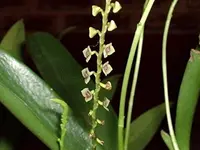
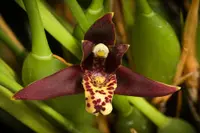
Silvery stelis, Stelis argentata, is a small epiphytic orchid that usually grows on trees in humid cloud forests. It forms compact clumps of slender, upright leaves with many tiny, silvery flowers along delicate stems.

This species comes from Central and South America, where it enjoys cool to mild, moist conditions and consistent air movement. Its fine roots and small size make it more sensitive to drying out or overheating than many common houseplants.

Stelis argentata suits growers who can provide stable humidity, gentle airflow, and soft, filtered light. Those conditions make it easier to care for silvery stelis indoors or in a sheltered greenhouse.


Main Plant Requirements

Care Difficulty

Hard Care

Light Preference

Bright Indirect Light

Water Requirements

Keep Soil Moist

Temperature Preference

Tropical / Frost Sensitive

Hardiness Zone

Unknown

Soil Texture

Peaty, Organic-rich, Loamy

Soil pH

Acidic (5.5–6.5)

Soil Drainage

Moist but well-drained

Fertilization

Light (every 4–6 weeks)

Get Personalized Care Plan

Scan your plant to receive care tips personalized for your specific plant

Available on iOS and Android

How to Care for the silvery stelis

This cloud-forest orchid prefers cool, soft light that mimics a bright, shaded understory.

  • Provide bright, indirect light or light shade, such as dappled light under 30–50% shade cloth, for 8–10 hours per day.
  • Allow only gentle morning sun; avoid direct midday or afternoon sun, which can scorch silvery stelis leaves and cause bleaching or dry brown patches.
  • In summer, move slightly deeper into shade; in winter, shift closer to a bright window or brighter greenhouse zone to compensate for shorter days.

This species needs consistently moist but airy conditions that never stay soggy.

  • Water when the top 1–2 cm of the medium feels just barely dry, aiming for evenly moist roots rather than wet, dripping substrate.
  • Use a very free-draining orchid mix; allow excess water to run off fully to reduce root rot risk and discourage fungus gnats.
  • In warmer, brighter months, watering frequency increases; in cooler seasons, extend intervals and watch leaves for signs of stress such as wrinkling (too dry) or yellowing, limp growth (too wet).

This orchid prefers cool to intermediate temperatures with minimal daily extremes.

  • Ideal growth occurs around 60–75°F (16–24°C), with a gentle day–night drop of about 5–10°F (3–6°C) to support steady development.
  • Protect plants from temperatures below 45°F (7°C); prolonged exposure near this minimum can slow growth and increase disease risk, and frost will kill foliage.
  • Tolerates short warm spells up to about 80–82°F (27–28°C) if humidity stays high and air moves gently; above this, increase shading and ventilation to prevent heat stress.

This orchid prefers consistently moist air and reacts quickly to dry indoor conditions.

  • Aim for 70–90% humidity, as silvery stelis is a cloud-forest species adapted to cool, saturated air.
  • Leaf edges curling, yellowing tips, and stalled growth indicate humidity stress rather than underwatering.
  • Use a small humidifier, grouped plants, and an evaporative tray near the plant; avoid misting in stagnant air to limit fungal issues.

Stelis argentata is an epiphytic orchid that performs best in a very airy, fast-draining medium rather than dense potting soil.

  • Use a fine to medium orchid mix based on bark, sphagnum moss, and perlite to provide high aeration and moisture retention without waterlogging.
  • Target a slightly acidic pH around 5.5–6.5, which supports nutrient uptake and discourages mineral buildup on delicate roots.
  • Avoid compact peat-based potting soil or heavy garden soil, which suffocate roots and quickly lead to rot in this species.
  • Improve drainage and structure by adding extra fine bark or perlite if water takes more than a few seconds to pass through the medium.

This species is suitable for container growing, especially in small orchid pots or mounts with a catch pot.

  • Choose a shallow, snug container that just fits the root mass to keep the fine roots evenly moist but never waterlogged.
  • Select slotted or net orchid pots when possible to maximize side aeration and prevent the medium staying cold and stagnant.
  • Use a stable, heavier outer cachepot or tray setup so the light inner pot or mount does not tip as the foliage develops.

Stelis argentata is a light feeder that benefits from modest, diluted nutrition during active growth.

  • Use a balanced orchid fertilizer (around 20-20-20) diluted to 1/4–1/2 strength in low-mineral water.
  • Feed every 3–4 weeks in spring and summer while growth is active, then pause or feed once after 6–8 weeks in fall.
  • Avoid heavy compost or slow-release pellets that can burn fine roots; use liquid or soluble products instead.
  • Rinse the medium with plain water monthly to reduce salt buildup, which can stress silvery stelis.

Stelis argentata needs only light, hygienic pruning to maintain tidy growth and flowering.

  • Best time for minor pruning is after a flush of blooms, removing finished flower spikes at the base.
  • Snip off dead, yellowed, or damaged leaves and stems to limit disease and focus energy on healthy growth.
  • Thin crowded shoots gently to improve air flow around the plant, which supports healthier foliage.
  • Use clean, sharp scissors or small pruning snips disinfected with alcohol before and after use.

This orchid appreciates infrequent but careful repotting to keep its fine roots healthy and well aerated.

  • Repot every 2–3 years in spring, or when roots circle the pot, growth slows, or the medium has broken down.
  • Choose a small, snug container with fine orchid bark and sphagnum mix that drains quickly but retains some moisture.
  • Lift the plant gently, tease out old, decaying medium, and trim dead roots, keeping live roots as intact as possible.
  • Replant at the same depth, firm the mix lightly, water well, then keep slightly shaded and evenly moist while it recovers.

Stelis argentata is usually propagated by careful division of mature clumps rather than from seed.

  • Best season for division is spring, timed with repotting, when new root growth is just starting.
  • Remove the plant from its pot and divide into sections with at least 3–5 healthy growths and a good root mass.
  • Use a sterile knife or scissors, dust cut surfaces with powdered fungicide or cinnamon, and pot each division separately.
  • Provide high humidity, bright filtered light, and evenly moist medium to support rooting and new shoot development.

This orchid prefers mild, frost-free winter conditions and needs protection in colder climates.

  • Keep indoor temperatures around 55–65°F in winter, avoiding cold drafts and sudden temperature swings.
  • Move container plants indoors before temperatures drop near 40°F, using bright, indirect light.
  • Maintain slightly drier conditions than in summer, but do not allow the medium to dry out completely.
  • Avoid placing the plant against cold window glass; use a tray with pebbles and water to support humidity.

Care Tips

Mounting technique

Grow the plant on a fine-grade cork or tree-fern slab with a thin layer of long-fiber sphagnum around the roots, then secure it gently with soft horticultural wire or nylon thread to keep the root zone evenly moist but well aerated.

Cool-down nights

If indoor conditions stay warm, move the plant at night to a cooler room or near a slightly open screened window for a 5–10°F drop, which supports better flowering and overall vigor.

Targeted air movement

Position a small, low-speed fan to create very gentle, indirect airflow across the plant to dry leaf surfaces after misting and reduce fungal spotting without chilling the foliage.

Water quality control

Use rainwater, reverse-osmosis, or low-mineral distilled water and periodically flush the mount or pot thoroughly to prevent harmful salt buildup on the fine roots.

Gentle inspection routine

Set a monthly routine for close inspection with a hand lens to spot early signs of mites, scale, or rot, which allows for prompt, minimal treatment and more precise Stelis argentata plant care.

Common Pests and Diseases

Spider mites

This pest often appears in warm, dry, low-airflow orchid setups and can cause fine stippling and dull, silvery foliage on the thin leaves. Symptoms include very fine webbing between leaves and along stems, with gradual leaf yellowing and drop in severe cases.

Solution

Increase humidity and airflow around the plant, then rinse both sides of the leaves gently but thoroughly with lukewarm water to remove mites and webbing. Follow with repeated applications of insecticidal soap or a horticultural oil labeled for orchids every 5–7 days, and isolate the plant from other orchids until no new damage appears.

Scale insects

These insects attach along the slender stems and leaf bases, forming small, dome-shaped bumps that suck sap and weaken the plant. Symptoms include sticky honeydew, sooty mold growth on nearby surfaces, and gradual decline in vigor.

Solution

Manually remove visible insects with a cotton swab dipped in isopropyl alcohol, focusing on the undersides of leaves and along the rhizome. After mechanical removal, apply insecticidal soap or a low-toxicity systemic product suitable for orchids, and repeat at intervals while monitoring new growth closely as part of long-term Stelis argentata plant care.

Soft rot (bacterial)

This disease favors constantly wet, stagnant conditions around tightly packed stems and moss, leading to water-soaked, mushy tissue with a foul odor. Symptoms include rapid collapse of leaves or stems, often starting at the base or where water sits for long periods.

Solution

Immediately cut out all affected tissue with a sterile blade, discarding it away from other plants, and dust cut surfaces lightly with ground cinnamon or a labeled bactericide. Improve air movement, avoid water sitting in the leaf bases, water early in the day, and keep the plant on the drier side until new, firm growth is stable.

Leaf spot fungus

This disease develops under cool, overly shaded, and persistently damp conditions, creating small dark spots that may merge into larger patches on the thin leaves. Symptoms include slow expansion of spots and eventual yellowing or premature leaf drop.

Solution

Remove and discard heavily spotted leaves and any fallen debris from around the mount or pot, and increase light slightly and airflow to help leaves dry faster after watering. If new spots continue to appear, apply a fungicide labeled for orchids at the recommended interval and adjust watering so foliage is not left wet for long periods.

Mealybugs

These insects hide in tight leaf junctions and around the base of the plant, producing white, cottony clusters and feeding on sap, which can stunt new growth. Symptoms include deformed new leaves, sticky residue, and slow overall growth of this fine-rooted orchid.

Solution

Inspect regularly and remove visible pests with a cotton swab dipped in isopropyl alcohol, then rinse the plant gently to dislodge hidden insects. For persistent infestations, use repeated treatments with insecticidal soap or a systemic insecticide suitable for epiphytic orchids, and quarantine the plant away from other species while monitoring new growth.

Interesting Facts

Cloud-forest micro-orchid

Stelis argentata is native to cool, moist cloud forests in the Andes of Ecuador and Peru, where it grows as an epiphyte on trees rather than in soil. It experiences constant air movement, high humidity, and filtered light under dense forest canopies.

Masses of tiny flowers

The plant produces many very small, silvery to pale flowers arranged tightly along slender, upright inflorescences. Each flower is short-lived, but they open in succession so a single spike can remain showy for an extended period.

Silver sheen adaptation

The characteristic silvery appearance of the flowers comes from their translucent, light-scattering tissues rather than from pigments alone. This sheen likely helps the blooms stand out in low-light, misty conditions of the cloud forest understory.

Botan icon

Did you know?

Stelis argentata belongs to a large and diverse group of miniature orchids that play a role in specialized pollination networks, often involving tiny flies or other small insects that can navigate the tightly packed flowers along the spike.

FAQs about silvery stelis

Lack of blooms usually comes from insufficient humidity, weak light, or inadequate feeding. Maintain high humidity, moderate but consistent light, and use a balanced orchid fertilizer at low strength to support flowering over time.

Grow Healthy Plants with Botan Care

Keep your plants happy and healthy with plant identification, disease detection, and easy care guidance.

Botan plant care app — identify plants on mobile

Explore More Plants