Root-zone mulching
Apply a 5–8 cm layer of coarse organic mulch around the root zone, keeping it 5–10 cm away from the trunk base, to stabilize soil moisture and protect the very shallow feeder roots from heat and mechanical damage.

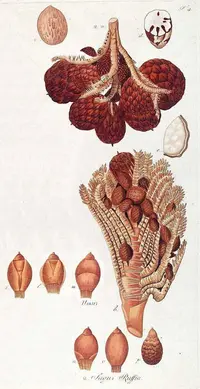
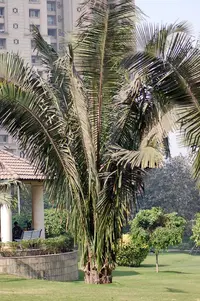
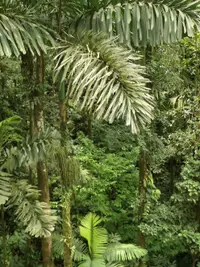
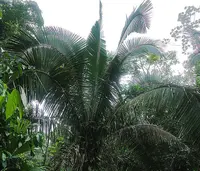
Raphia farinifera, commonly called raffia palm, is a large, trunk-forming palm known for its extremely long, pinnate leaves and fibrous leaf sheaths used for raffia fiber. In nature it grows along rivers, wetlands, and coastal lowlands in tropical Africa and Madagascar, where it forms dense stands. The plant has a slow to moderate growth rate and can become very large, which makes long-term container culture challenging. It prefers warm conditions, consistently moist but not stagnant soil, and bright light with some protection from harsh sun. For most home growers, understanding how to care for raffia palm starts with recognizing its need for space, humidity, and stable warmth.

Care Difficulty
Hard Care

Light Preference
Partial Shade

Water Requirements
Aquatic

Temperature Preference
Tropical / Frost Sensitive

Hardiness Zone
11–12

Soil Texture
Loamy, Silty, Organic-rich

Soil pH
Acidic (5.5–6.5), Slightly acidic (6.5–7.0)

Soil Drainage
Waterlogged tolerant

Fertilization
Minimal (feed rarely)
Scan your plant to receive care tips personalized for your specific plant
Available on iOS and Android
This large tropical palm prefers bright, indirect light with some protection from harsh midday sun.
This species naturally grows in swampy or river-edge habitats and prefers consistently moist conditions without stagnation.
This palm thrives in warm, frost-free climates that resemble its lowland tropical origin.
This palm needs consistently high humidity to mimic its swamp-edge habitat.
Soil for this palm must stay moist yet aerated, with a structure that resists compaction.
This species is marginally suitable for containers and is best kept potted only while young or in cooler climates.
Nutrient-rich but well-drained soil supports strong growth in raffia palm, but container or landscape specimens benefit from modest feeding.
Raphia farinifera responds best to light, maintenance-focused pruning rather than shaping cuts.
This large palm is usually grown in the ground; any repotting or transplanting of Raphia farinifera must minimize root disturbance.
Raphia farinifera is typically propagated from seed and is slow, so propagation is considered advanced rather than routine.
This tropical palm is frost sensitive and needs careful winter management outside frost-free regions.

Plant Health Check
Not sure what's wrong with your plant? Check your plant's health inside the app.
This species is the primary commercial source of raffia fiber, which comes from its leaf sheaths and is widely used for weaving mats, hats, bags, and tying plants in horticulture.
Its leaves are among the longest in the plant kingdom, often reaching more than 15 m in length in suitable tropical conditions, giving the crown a very distinctive, arching appearance.
The palm is monocarpic, meaning the stem flowers only once at the end of its life, producing a huge inflorescence with many branching flower clusters before gradually dying back.

In parts of East Africa and Madagascar, this palm is tapped for its sweet sap, which can be fermented to produce traditional palm wine, making it an important local resource beyond its fiber.
Growth is relatively fast in true tropical climates, often 60–120 cm per year once established. In marginal or cooler areas, expect slower extension and smaller overall size due to reduced warmth, moisture, and rooting space.
Keep your plants happy and healthy with plant identification, disease detection, and easy care guidance.