


Salinity Management
Periodically top-water with diluted seawater or marine salt solution (around 10–20 g/L) to maintain the high salinity these halophytes prefer and to discourage many common soil-borne pathogens that struggle in salty conditions.

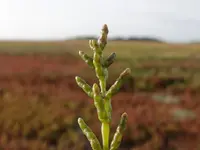
Glaucous glasswort, Salicornia obscura, is a small, succulent halophyte that naturally grows in coastal salt marshes and saline flats. It forms low, jointed, leafless stems with a bluish-green, waxy coating.
This plant is adapted to salty, periodically flooded soils and often grows in dense patches along shorelines. Its compact habit and tolerance of salt and occasional drought make it interesting for specialized gardens.
In cultivation, it prefers full sun, consistent moisture, and very well-drained, sandy or gritty substrates with added salt. Understanding how to care for Glaucous Glasswort starts with recreating its bright, coastal, saline conditions.

Care Difficulty
Moderate Care

Light Preference
Full Sun

Water Requirements
Aquatic

Temperature Preference
Warm Climate

Hardiness Zone
8–11

Soil Texture
Sandy, Silty

Soil pH
Neutral (7.0), Slightly alkaline (7.0–7.5)

Soil Drainage
Waterlogged tolerant

Fertilization
Minimal (feed rarely)
Scan your plant to receive care tips personalized for your specific plant
Available on iOS and Android
Salicornia obscura thrives in strong, direct sun typical of open coastal and salt marsh habitats.
This halophytic plant evolved for waterlogged, saline environments, so its watering needs differ from typical garden species.
This coastal annual prefers mild to warm conditions and tolerates a moderate temperature range.
This coastal halophyte handles a wide humidity range but prefers moderately moist air.
This salt-marsh species requires very sandy, fast-draining soil that never stays waterlogged.
This species is suitable for container growing when the pot is set up to mimic its naturally fast-draining, coastal habitat.
This halophytic coastal annual usually grows in nutrient-poor soils and needs little to no additional fertilizer.
Pruning Salicornia obscura is minimal and mainly supports tidy growth and plant health.
Management focuses more on transplanting young plants than long-term container culture.
Salicornia obscura is commonly propagated from seed for uniform stands and habitat restoration.
This species is typically grown as an annual in temperate climates, so winter care needs are low.

Plant Health Check
Not sure what's wrong with your plant? Check your plant's health inside the app.
This species is naturally restricted to coastal and inland saline habitats of western North America, especially California and adjacent regions, rather than having a broad global distribution like several related glassworts.
Compared with many other Salicornia species that are mainly coastal, this plant often occurs in inland salt flats and alkaline basins, where it tolerates both high soil salinity and periodic drying.
By concentrating salts in its succulent jointed stems and then shedding biomass, this annual species helps recycle and redistribute salts on the soil surface, subtly influencing how salt crusts form in its habitat.
Yes, the young, tender stems are edible and often used as a salty vegetable or garnish. Harvest from clean, unpolluted coastal areas, rinse well, and eat lightly cooked or raw in small amounts if new to it.
Keep your plants happy and healthy with plant identification, disease detection, and easy care guidance.

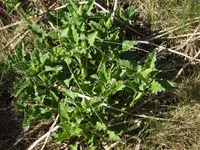
Good King Henry
Blitum bonus-henricus
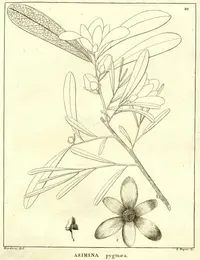
Dwarf pawpaw
Asimina pygmaea
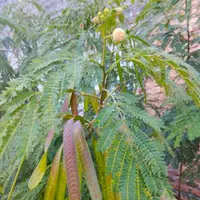
white leadtree
Leucaena leucocephala
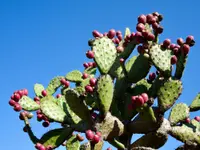
Prickly pear
Opuntia ficus-indica
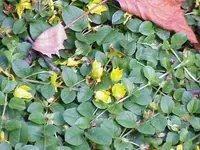
Creeping jenny
Lysimachia nummularia
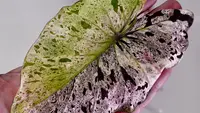
Elephant's Ear
Colocasia esculenta 'Mojito'
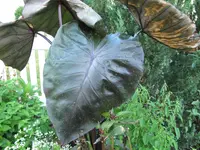
Elephant Ear
Colocasia esculenta Royal Hawaiian Black Coral
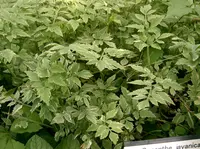
Java waterdropwort
Oenanthe javanica