Sand-stabilizing support
Plant into or beside low dune mounds or sandy berms so the roots help bind the sand while the stems can crawl over the surface without being buried too deeply by shifting material.

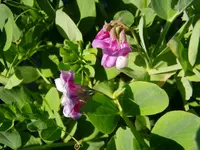
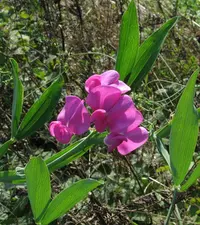
Beach pea, Lathyrus japonicus, is a low, scrambling perennial legume that typically forms dense mats along sandy coasts and dunes. Its stems bear paired leaflets and tendrils, with showy purple to pink pea-like flowers followed by rounded pods.
This species naturally occurs on seashores of cooler temperate regions, often just above the high-tide line where few other plants tolerate the conditions. It is valued for stabilizing sandy soils and coping with salt spray, wind, and drought once established.
These traits can make how to care for beach pea relatively straightforward outdoors in suitable climates, provided it receives sun, well-drained sandy soil, and moderate moisture during establishment.

Care Difficulty
Moderate Care

Light Preference
Full Sun

Water Requirements
Moderate Water

Temperature Preference
Cold Hardy

Hardiness Zone
3–8

Soil Texture
Sandy, Loamy

Soil pH
Slightly acidic (6.5–7.0), Neutral (7.0)

Soil Drainage
Well-drained

Fertilization
Minimal (feed rarely)
Scan your plant to receive care tips personalized for your specific plant
Available on iOS and Android
This coastal legume thrives in strong light that mimics open, sunny shorelines.
This species prefers evenly moist but fast-draining sandy soil with brief dry periods between waterings.
This plant is adapted to cool to mild maritime climates with good air movement.
This coastal legume handles a wide humidity range and rarely needs special adjustments in typical outdoor conditions.
This dune-adapted perennial prefers loose, fast-draining, sandy soil that mimics its natural beach habitat.
This species can be grown in containers if the pot setup mimics its deep, sandy, free-draining coastal substrate.
This coastal legume usually grows well in poor soils, so beach pea needs only minimal fertilization in cultivation.
Pruning Lathyrus japonicus is mainly about tidying and maintaining flowering vigor.
This species is usually grown in the ground, with transplanting focused on young plants rather than frequent repotting.
Lathyrus japonicus is most commonly propagated from seed, with simple requirements for successful germination.
This coastal perennial is cold hardy in much of its range and usually needs minimal winter care in the ground.

Plant Health Check
Not sure what's wrong with your plant? Check your plant's health inside the app.
This coastal species spreads by creeping rhizomes that bind loose sand, helping to stabilize dunes and reduce erosion along shorelines in cool-temperate regions of the Northern Hemisphere.
The plant tolerates both salt spray and repeated sand burial, and its stems can elongate through accumulating sand, allowing it to survive in highly dynamic beach environments.
Like many legumes, it forms nodules on its roots that house nitrogen-fixing bacteria, which convert atmospheric nitrogen into forms usable by plants and enrich nutrient-poor sandy soils.

The seeds are very buoyant and can remain viable after long periods in seawater, which allows this species to disperse over long distances by ocean currents and colonize widely separated coastlines.
Poor flowering often comes from too much shade, excess nitrogen, or young age. Ensure full sun, lean sandy soil, and avoid heavy fertilizing. Flowers usually increase once roots are established and soil is not overly rich.
Keep your plants happy and healthy with plant identification, disease detection, and easy care guidance.