Spring division timing
Lift and divide clumps every 3–4 years in early spring just as new growth appears, replanting only the healthiest outer segments to keep plants vigorous and flowering well.

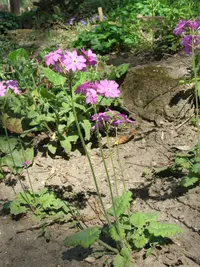
Siberian primrose (Primula cortusoides) is a small, herbaceous perennial grown mainly for its bright spring flowers. It forms low clumps of soft, rounded leaves with flower stems that rise above the foliage. Clusters of pink to lilac, sometimes white, blooms give it a delicate, woodland look.
This species is native to cool, moist regions of northeastern Europe and northern Asia, where it often grows in meadows and along streams. It prefers cool conditions, consistently moist but not waterlogged soil, and light shade, which shapes how to care for siberian primrose in gardens or containers.

Care Difficulty
Moderate Care

Light Preference
Partial Shade

Water Requirements
Keep Soil Moist

Temperature Preference
Cool Climate

Hardiness Zone
4–7

Soil Texture
Loamy, Peaty, Organic-rich

Soil pH
Acidic (5.5–6.5)

Soil Drainage
Moist but well-drained

Fertilization
Light (every 4–6 weeks)
Scan your plant to receive care tips personalized for your specific plant
Available on iOS and Android
Primula cortusoides prefers cool, soft light that mimics woodland edges.
Primula cortusoides needs consistently moist but not waterlogged soil to perform well.
This primrose prefers cool conditions and struggles in prolonged heat.
This species benefits from moderately moist air and suffers in very dry rooms.
Primula cortusoides prefers cool, moist, airy soil that never becomes waterlogged.
This primula is suitable for cool, shaded containers outdoors.
Primula cortusoides benefits from light, consistent feeding during its active spring and early summer growth.
Pruning Primula cortusoides is simple and focuses on tidiness and sustaining flowering.
This primula is more often transplanted in garden beds than grown long term in containers.
Primula cortusoides is commonly propagated by division and from seed under cool, moist conditions.
This primula is cold hardy but benefits from simple winter care in colder regions.

Plant Health Check
Not sure what's wrong with your plant? Check your plant's health inside the app.
This species is native to moist woodland and shaded meadow habitats across parts of Siberia and northeastern Asia, where it experiences long, cold winters and short, cool summers.
In its native range it often flowers soon after snowmelt, producing rose-pink clusters of blooms before surrounding vegetation fully leafs out, which helps it capture early-season pollinators.
Its softly hairy, heart-shaped leaves with scalloped edges resemble those of some woodland herbs, which has contributed to its use as an ornamental in cool, shaded garden borders.

Primula cortusoides has been important for breeding work within the primrose group, contributing its cold-hardy, shade-tolerant genetics to garden hybrids adapted to cooler climates.
Lack of blooms usually comes from insufficient winter chill, too much heat, or recent division. Plants also skip flowering if overcrowded or depleted; dividing clumps and applying a light spring fertilizer often restores normal blooming.
Keep your plants happy and healthy with plant identification, disease detection, and easy care guidance.