mottled dutchman's pipe Care (Aristolochia labiata)

mottled dutchman's pipe

About mottled dutchman's pipe

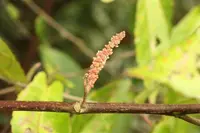
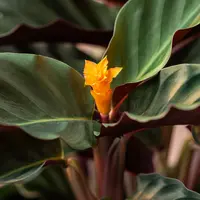
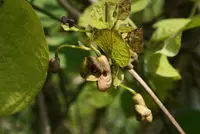
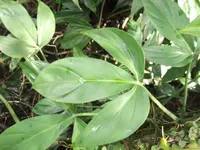
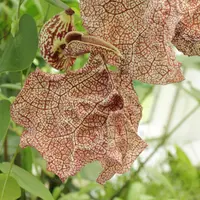
Mottled dutchman's pipe, Aristolochia labiata, is a vigorous tropical vine known for its unusual, pipe-shaped flowers with mottled burgundy and cream patterns. The large blooms often have a long, decorative tail and appear against dense, green foliage on twining stems.

This species is native to Brazil and nearby regions, where it grows in warm, humid forests and scrambles over trees or structures. It can be an attractive ornamental for sheltered gardens or large containers.

The plant prefers consistent moisture, rich well-drained soil, and bright filtered light, which makes greenhouse or patio cultivation easier than fully exposed sites. Gardeners who care for mottled dutchman's pipe should also allow enough space and support for its vigorous climbing habit.

Main Plant Requirements

Care Difficulty

Moderate Care

Light Preference

Partial Sun

Water Requirements

Regular Water

Temperature Preference

Tropical / Frost Sensitive

Hardiness Zone

10–11

Soil Texture

Loamy, Sandy, Organic-rich

Soil pH

Acidic (5.5–6.5), Slightly acidic (6.5–7.0)

Soil Drainage

Moist but well-drained

Fertilization

Light (every 4–6 weeks)

Get Personalized Care Plan

Scan your plant to receive care tips personalized for your specific plant

Available on iOS and Android

How to Care for the mottled dutchman's pipe

This tropical vine prefers bright, indirect light with some protection from harsh midday sun.

  • Provide 4–6 hours of gentle morning sun or bright, filtered light under high trees or a pergola, especially when caring for mottled dutchman's pipe outdoors.
  • Allow dappled or partial shade during hot afternoons; strong full sun in summer can scorch leaves and fade flowers, especially in exposed southern or western aspects.
  • In cooler seasons, increase light exposure by trimming nearby shade or using reflective surfaces, as overly deep shade leads to weak, elongated growth and reduced flowering.

This species prefers consistently moist but not waterlogged soil throughout the growing season.

  • Water when the top 3–5 cm of soil feels slightly dry, aiming for evenly moist soil around the root zone rather than alternating between soggy and bone dry.
  • Improve drainage with organic matter or loose, well-structured soil so excess water can exit quickly, reducing risk of root rot, yellowing leaves, and sour odors from overwatering.
  • In hot, active growth periods, increase watering frequency, then reduce in cooler months; dull, drooping leaves and dry, brittle tendrils usually indicate that Aristolochia labiata is staying too dry.

This vine grows best in warm, frost-free conditions with stable temperatures.

  • Aim for 65–85°F (18–29°C) for active growth; cooler than 60°F (16°C) slows development and can reduce flowering over time.
  • Protect the plant from temperatures below 40°F (4°C); repeated exposure near freezing or any frost can damage foliage, stems, and roots, especially in exposed garden sites.
  • In hot regions, short periods up to about 95°F (35°C) are tolerated if soil moisture is consistent and the roots are mulched, but combine shade and airflow to prevent heat stress and leaf scorch.

This vine prefers moderately humid air but usually adapts to typical indoor levels.

  • Aim for 50–60% humidity for best growth, especially in heated or air-conditioned rooms.
  • Dry air can cause browned leaf edges and slower growth on mottled dutchman’s pipe, indicating humidity stress.
  • Increase humidity with a nearby room humidifier or by grouping plants, rather than misting leaves directly.

This species needs a loose, well-draining, organic-rich substrate to support vigorous vining growth.

  • Use a mix of roughly 50% peat- or coco-based potting mix, 25% compost, and 25% perlite or fine bark to keep soil airy.
  • Aim for slightly acidic to neutral pH, around 6.0–7.0, which suits Aristolochia labiata in containers or raised beds.
  • Ensure fast drainage so water runs through in seconds; never allow soil to stay waterlogged or foul-smelling.
  • In heavy native soil, improve aeration by mixing in coarse sand or fine bark before planting to prevent root suffocation.

This species is well suited to container growing when the pot supports its climbing, fast-growing habit.

  • Choose a deep, heavy container that resists tipping and stabilizes the vigorous vine as it climbs a support.
  • Provide a sturdy trellis or frame fixed directly in the pot so stems anchor securely and do not rock the root ball.
  • Select thicker-walled or glazed pots in hot climates to slow moisture loss and keep root-zone temperatures more even.

This vigorous vine benefits from modest feeding to support leafy growth and flowering without becoming overly lush.

  • Use a balanced liquid fertilizer (such as 10-10-10) at 1/2 strength every 4–6 weeks during spring and summer.
  • Alternatively, apply a thin layer of compost or a low-dose slow-release fertilizer once at the start of the growing season.
  • Reduce feeding in fall and stop in winter when growth slows or the plant is semi-dormant.
  • In containers, flush the soil with plain water occasionally to limit salt buildup around mottled dutchman's pipe roots.

Pruning helps manage size and encourage a well-branched, flowering framework on Aristolochia labiata.

  • Prune in late winter or early spring before strong new growth begins.
  • Remove dead, damaged, or crossing stems using clean, sharp bypass pruners for smooth cuts.
  • Shorten overly long, tangled vines to shape the plant and improve light and airflow through the canopy.
  • After flowering, lightly thin crowded shoots so remaining stems can put more energy into healthy growth.

This twining vine handles transplanting well when moved carefully during active but not extreme growth.

  • Plan transplanting or container repotting in early spring, just as new growth starts and temperatures are mild.
  • Look for roots circling the pot, water running straight through, or slowed growth as cues to move up 1 pot size every 2–3 years.
  • Gently loosen circling roots and place the rootball at the same soil level in well-drained, fertile soil with a sturdy support.
  • Water thoroughly after moving, shade from strong sun for a few days, and keep soil evenly moist to reduce root stress.

Aristolochia labiata is commonly propagated by seeds and semi-ripe cuttings under warm, humid conditions.

  • Sow fresh seeds in spring in a moist, free-draining mix at 70–80°F; maintain steady moisture and bright, indirect light.
  • Take 8–12 in semi-ripe stem cuttings in late spring or early summer, each with several nodes.
  • Remove lower leaves, dip the cut base in rooting hormone, and insert into a sterile, moist medium such as perlite and peat.
  • Cover cuttings with a clear dome or plastic to hold high humidity, venting regularly to prevent fungal problems.

This tropical vine is frost-sensitive and needs protection in regions with cold winters.

  • In USDA zones below 10, grow in containers and move indoors or to a heated greenhouse before temperatures fall below 50°F.
  • Provide bright, indirect light indoors and reduce watering so soil stays slightly moist, never soggy.
  • In mild climates, apply a 5–8 cm mulch layer around the root zone to moderate soil temperature and moisture.
  • Remove or replace mulch in spring and gradually reintroduce plants to stronger outdoor light and airflow.

Care Tips

Sturdy trellis selection

Use a rigid, weather-resistant trellis or wire mesh at least 1.8–2.4 m tall, as the vine becomes heavy and needs strong vertical or horizontal support that will not sag or collapse over time.

Guided stem training

As new shoots reach 20–30 cm, gently spiral them onto the support and tie loosely with soft plant ties or garden twine so the vine anchors securely and develops an even, well-covered framework.

Flowering space management

Position the main flowering stems where the large blooms can hang freely, away from tight fences or narrow walkways, to prevent bruising of the flowers and to keep pathways clear.

Root-zone mulching

Apply a 3–5 cm layer of fine bark or leaf mold around the base, keeping it a few cm away from the stem, to keep roots cool, conserve moisture, and reduce weed competition while growing mottled dutchman's pipe outdoors.

Regular structural checks

Inspect attachments, ties, and support structures at least once each growing season, adjusting or replacing ties that are cutting into stems and reinforcing any weak points before the vine becomes thicker and heavier.

Common Pests and Diseases

Leaf miner larvae

This pest lives inside the leaf tissue and creates pale, winding tunnels that can cause distortion and early leaf drop on young vines. Symptoms include thin, serpentine trails that turn brown as the tissue dies.

Solution

Remove and destroy leaves with fresh mines to physically reduce the population, and encourage natural predators by avoiding broad-spectrum insecticides. For heavier infestations, apply a targeted systemic insecticide or neem-based product to new growth, following label directions and avoiding treatment during peak pollinator activity.

Spider mites

These insects feed on the undersides of leaves, causing fine stippling, yellowing, and in severe cases webbing on the vines, especially in hot, dry conditions. Symptoms include dull, dusty-looking foliage that may drop prematurely.

Solution

Rinse the foliage thoroughly with a strong but gentle stream of water, focusing on the underside of leaves, and repeat several times over 1–2 weeks. Increase humidity around the plant and, if needed, use insecticidal soap or horticultural oil, making sure to cover all leaf surfaces and stems.

Caterpillar chewing

This pest feeds on the leaves and young shoots, leaving irregular holes or nearly skeletonized foliage, particularly on outdoor vines that host butterfly larvae. Symptoms include missing leaf margins and clusters of droppings on lower leaves or the soil surface.

Solution

Hand-pick caterpillars from the vines and relocate them away from the plant if butterfly conservation is a goal, or prune heavily damaged shoots to encourage fresh growth. For severe defoliation in non-conservation plantings, use Bacillus thuringiensis (Bt) on young caterpillars, applying in the evening and avoiding drift to nearby host plants.

Powdery mildew

This disease produces a white, powdery coating on upper leaf surfaces and sometimes on stems, leading to yellowing and reduced vigor. Symptoms include distorted new growth and leaves that may dry out and drop if humidity stays high with poor air movement.

Solution

Prune to improve air circulation through the vine canopy and avoid wetting foliage when watering, especially late in the day. Remove and discard heavily infected leaves, and if needed apply a sulfur, potassium bicarbonate, or horticultural oil product labeled for powdery mildew, coating both upper and lower leaf surfaces.

Leaf spot

This disease causes small brown, purple, or black spots on leaves that may expand and merge, leading to premature leaf drop on stressed vines. Symptoms include lesions often with a darker border and a yellow halo around the affected area.

Solution

Remove and dispose of affected leaves and fallen debris to reduce the source of reinfection, and avoid overhead watering that keeps foliage wet. Improve spacing and airflow, and in persistent cases use a copper-based or chlorothalonil fungicide according to label instructions, focusing on new and recently expanded leaves.

Interesting Facts

Deceptive carnivore mimic

The flowers mimic the smell and appearance of decaying organic matter to attract small flies, but instead of digesting them, the plant only traps them temporarily to achieve pollination.

One-way insect trap

The inner surface of the floral tube has downward-pointing hairs that prevent insects from leaving until the flower’s receptive phase ends, then the hairs wilt and release the pollen-dusted visitors.

Distinctive mottled corolla

Its large, heart-shaped corolla is maroon to purple with pale, irregular mottling and a yellowish throat, a highly specialized visual signal for its specific fly pollinators and a key identification feature used in Aristolochia labiata plant care descriptions.

Botan icon

Did you know?

Aristolochia labiata is native to Atlantic forest regions of Brazil, where habitat loss and fragmentation have reduced many of its natural populations, making conservation of both the vine and its specialized pollinators increasingly important for long-term survival.

FAQs about mottled dutchman's pipe

This species is a twining vine that climbs rather than creeping along the ground. It wraps around trellises, arbors, or nearby shrubs. Provide sturdy vertical support, otherwise stems may tangle on themselves or sprawl untidily over neighboring plants.

Grow Healthy Plants with Botan Care

Keep your plants happy and healthy with plant identification, disease detection, and easy care guidance.

Botan plant care app — identify plants on mobile

Explore More Plants