


Early support training
Install a sturdy trellis or wire mesh at planting time and loosely tie young vines with soft ties every 15–20 cm of growth to encourage strong, upright stems and even coverage.

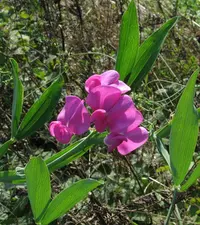
Perennial pea, Lathyrus latifolius, is a hardy, climbing flowering plant grown mainly for its long-lasting clusters of pink, white, or rose pea-shaped blooms. It scrambles over fences, trellises, or shrubs using tendrils, forming dense, leafy vines.
This species is native to parts of Europe but has naturalized widely in temperate regions, including many areas of North America. It is valued in gardens because it is long lived and generally easy to establish.
Perennial pea tolerates a range of soils if drainage is good and usually prefers full sun with moderate moisture. Understanding how to care for perennial pea starts with giving it support to climb and enough space to spread.

Care Difficulty
Easy Care

Light Preference
Full Sun

Water Requirements
Moderate Water

Temperature Preference
Cold Hardy

Hardiness Zone
3–9

Soil Texture
Sandy, Loamy, Organic-rich

Soil pH
Acidic (5.5–6.5), Slightly acidic (6.5–7.0)

Soil Drainage
Well-drained

Fertilization
Minimal (feed rarely)
Scan your plant to receive care tips personalized for your specific plant
Available on iOS and Android
This climbing perennial performs best with strong outdoor light for abundant flowering.
This species prefers evenly moist, well-drained soil rather than extreme wet or dry conditions.
This hardy perennial tolerates a wide temperature range but grows fastest in mild conditions.
This species handles a wide humidity range and rarely needs special humidity management outdoors.
Lathyrus latifolius thrives in loose, well-drained, moderately fertile soil.
This species can grow successfully in containers if given adequate depth and stable support.
Lathyrus latifolius benefits from modest feeding to support flowering but does not need heavy fertilization.
Pruning Lathyrus latifolius helps maintain a tidy shape and encourages strong flowering.
Lathyrus latifolius is usually grown in the ground, so transplanting is more common than repotting.
Lathyrus latifolius is most commonly propagated by seeds, with division as an option for established clumps.
This hardy perennial usually needs minimal winter care in most temperate climates.

Plant Health Check
Not sure what's wrong with your plant? Check your plant's health inside the app.
This perennial sweet pea survives winter by storing energy in a deep, hardy root system, allowing the same plant to resprout and flower for many years once established.
Unlike the highly scented annual sweet pea, its pink to white flowers are typically unscented, despite their similar appearance, which helps distinguish it from Lathyrus odoratus in gardens and in the wild.
The plant climbs using specialized leaf tendrils that coil around supports, enabling stems to reach 1.5–2 m and form dense vertical displays on fences, shrubs, or trellises when growing perennial pea outdoors.

In several regions, especially parts of Europe and North America, escaped garden populations of this species have formed persistent roadside and railway bank colonies, where the plant can spread vegetatively and by long-lived seed, leading some local authorities to monitor or manage it as a mildly invasive ornamental.
Lack of flowers often results from too much shade, excessive nitrogen fertilizer, or young plants not yet mature. Ensure full sun, moderate fertility, and avoid hard pruning in early spring when buds are forming.
Keep your plants happy and healthy with plant identification, disease detection, and easy care guidance.

Philodendron tripartitum
Philodendron tripartitum

African-lily
Agapanthus praecox
 POPULAR
shingles plant
Monstera dubia
Stoep Jacaranda
Plectranthus saccatus
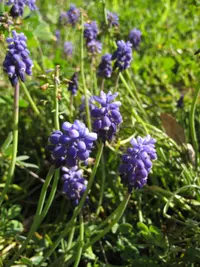
common grape hyacinth
Muscari botryoides

Philodendron ornatum
Philodendron ornatum
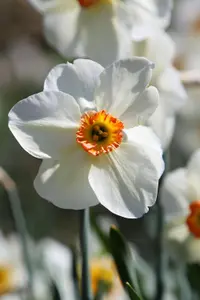
poet's narcissus
Narcissus poeticus
southern balsampear
Momordica balsamina