Agave inaequidens Care

Agave inaequidens

About Agave inaequidens

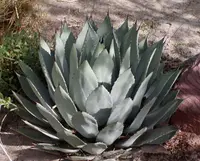
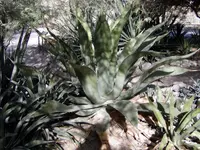
Agave inaequidens is a large, slow-growing succulent native to highland regions of central and western Mexico. It forms an impressive rosette of thick, blue-green leaves with strong teeth along the margins. Mature plants can reach substantial size and eventually produce a tall flowering stalk before dying, leaving offsets around the base. This species is adapted to dry, rocky slopes and open, sunny habitats. It is generally hardy and low maintenance if given sharp-draining soil and bright light, but needs protection from prolonged frost and excess moisture. For gardeners seeking to care for Agave inaequidens, the main challenges are providing enough sun, avoiding overwatering, and allowing sufficient space for its mature size.

Main Plant Requirements

Care Difficulty

Moderate Care

Light Preference

Full Sun

Water Requirements

Low Water

Temperature Preference

Tropical / Frost Sensitive

Hardiness Zone

9–11

Soil Texture

Sandy, Loamy, Rocky

Soil pH

Slightly acidic (6.5–7.0), Neutral (7.0)

Soil Drainage

Well-drained

Fertilization

Minimal (feed rarely)

Get Personalized Care Plan

Scan your plant to receive care tips personalized for your specific plant

Available on iOS and Android

How to Care for the Agave inaequidens

This highland agave prefers strong, direct sun but adapts to some light shade in hot regions.

  • Provide 6–8 hours of direct sun daily; full sun is ideal in cooler coastal or high-altitude climates.
  • In very hot, low-desert areas, give morning sun with light afternoon shade to prevent leaf scorch and excessive bleaching.
  • Young plants and recent transplants benefit from 2–4 weeks of filtered light or 30–40% shade cloth while acclimating to outdoor sun levels.

This species is drought-adapted and should be watered deeply but infrequently to avoid root rot.

  • Allow the top 5–8 cm of soil to dry completely, then water thoroughly so it drains quickly through the root zone.
  • In spring–summer, expect watering roughly every 10–21 days in very free-draining soil; in fall–winter, water only when leaves start to slightly wrinkle.
  • Use fast-draining, gritty soil on a slope or raised mound; symptoms of overwatering include yellowing, soft leaves and a sulfur smell near the crown.

This agave prefers warm, dry conditions and does best with mild winters and hot, sunny summers.

  • Aim for active growth in 70–90°F (21–32°C); plants tolerate brief heat up to about 100–105°F (38–41°C) if soil is very well drained.
  • Protect from hard frost; leaf damage often starts below 28°F (-2°C), and extended exposure below 25°F (-4°C) can kill the core.
  • In regions with cold winters, grow Agave inaequidens in the ground only in sheltered microclimates or provide frost cloth during cold snaps.

This species handles typical indoor humidity well and rarely needs adjustments.

  • Preferred humidity is 30–50%, matching dry to average indoor air in many homes.
  • Agave inaequidens tolerates very dry air; wilted, pale, or papery leaf tips usually indicate underwatering or root issues, not low humidity.
  • Avoid humidifiers or pebble trays; focus on strong light and infrequent, deep watering instead of raising humidity.

Soil for this agave must be very fast-draining and mineral-rich to prevent root and crown rot.

  • Use a gritty mix such as 50–70% mineral material (pumice, coarse sand, small gravel, perlite) with 30–50% cactus potting mix.
  • Target slightly acidic to neutral pH around 6.0–7.0, which supports nutrient uptake without encouraging excessive microbial decay.
  • Increase aeration by avoiding fine peat and dense compost; aim for chunky particles that leave visible air gaps in the mix.
  • Avoid compacted, clay-heavy, or water-retentive soils, which trap moisture around the roots and quickly lead to rot.

This species is suitable for container growing when the pot is managed to stay dry and stable between waterings.

  • Choose a wide, heavy container that prevents tipping as the rosette becomes large and top-heavy.
  • Select unglazed clay if possible, as it allows moisture to evaporate faster from the root zone than plastic or glazed ceramic.
  • Ensure large, unobstructed drainage holes so water exits within seconds and does not pool at the base of the pot.

This drought-adapted species needs only light, targeted feeding in containers or very poor soils.

  • Use a low-dose balanced NPK succulent fertilizer or slow-release granules, formulated for cacti and agaves.
  • Feed Agave inaequidens once in late spring and once in mid-summer during active growth.
  • Dilute liquid products to 25–50% of the label rate to avoid salt buildup in the soil.
  • Stop fertilizing in late summer and do not feed in winter dormancy.

Pruning for this species focuses on safety and hygiene rather than shaping.

  • In late winter or early spring, remove dead, dried, or pest-damaged leaves at the base.
  • Cut close to the stem with clean, sharp shears or a pruning saw, avoiding injury to healthy tissue.
  • Take out collapsed or crowded lower leaves to improve airflow and access around the rosette.
  • Use long sleeves and eye protection, as Agave inaequidens has rigid, spine-tipped leaves.

Container-grown plants and young transplants need careful handling due to the large, rigid rosette.

  • Look for roots circling the pot drainage holes, slow growth despite good light, or the plant becoming top-heavy.
  • Plan repotting or outdoor transplanting in late spring, after frost risk has passed and soils warm.
  • Move Agave inaequidens every 3–5 years into a pot only 2–5 cm wider, using gritty, fast-draining mix.
  • Support the rosette with thick gloves, disturb roots as little as possible, and keep soil barely moist for 1–2 weeks.

This agave is usually propagated vegetatively, with seed used mainly for larger-scale or breeding work.

  • Separate offsets in late spring when they have several roots and at least 10–15 cm of leaf length.
  • Let cut or broken surfaces dry 2–5 days to callus, reducing rot risk before planting.
  • Set pups in a coarse, mineral substrate under bright, indirect light and keep slightly moist until rooted.
  • Sow seeds warm (70–80°F) on a sandy mix, maintaining light moisture and good air flow for steady germination.

Cold tolerance is moderate, so attention in winter is important, especially in container culture.

  • Expect leaf damage below about 25°F and serious injury with prolonged hard freezes.
  • In-ground plants in marginal climates benefit from a 5–8 cm gravel or coarse sand mulch around the crown.
  • Shield the rosette from persistent winter rain to limit rot, using a simple overhead cover if needed.
  • Move container plants indoors to a bright, cool, very dry spot when repeated freezes are forecast.

Care Tips

Rock mulch ring

Create a 10–20 cm ring of coarse gravel or rocks around the base to keep leaves off wet soil, reduce crown rot risk, and stabilize the heavy rosette in windy sites.

Pup management

Inspect the base annually and remove excess offsets with a clean, sharp knife so the main plant has good air flow and enough space to develop its full architectural form.

Safe handling gear

Use thick leather gloves, long sleeves, and eye protection when working around the plant, and approach from the side, not above, to avoid the stiff, sharp leaf tips.

Slope and drainage

On heavy or poorly drained soils, plant on a raised mound or gentle slope so winter and storm water runs away from the crown, which is essential for long-term Agave inaequidens care.

Cold snap protection

Before an expected hard frost, wrap the core of the rosette loosely with breathable frost cloth and place a flat stone or plastic cover above the crown to keep water and ice out of the leaf bases.

Common Pests and Diseases

Agave snout weevil

This pest is a large dark weevil whose larvae tunnel into the agave core, causing collapse of the rosette. Symptoms include wilting outer leaves, foul smell at the base, and plants that suddenly topple despite previously looking healthy.

Solution

Remove and destroy any infested plants, including the root, to prevent larvae from completing their life cycle, and promptly discard severely affected crowns away from other agaves. For nearby healthy plants, avoid wounding the base, keep soil well-drained, and use a systemic insecticide labeled for agaves as a preventative treatment during warm months when adults are active.

Agave mite

These microscopic eriophyid mites feed in protected leaf crevices and around the growing point, often spreading through nursery stock. Symptoms include distorted new leaves, corky or scabby patches near the center, and irregular dark streaks or spots that do not rub off.

Solution

Discard heavily affected plants, since mites hide deep in the meristem where treatment is unreliable, and do not reuse offsets from symptomatic specimens. For valuable plants with early symptoms, remove and dispose of the most affected leaves, isolate the plant from other agaves, and apply a miticide specifically labeled for eriophyid mites, repeating according to label directions.

Black sooty mold

This disease is a secondary fungus that grows on honeydew secreted by sap-feeding insects, forming a dark, soot-like coating on leaves. Symptoms include black superficial film that dulls the glaucous leaf surface and can reduce photosynthesis if extensive.

Solution

Identify and control the underlying insect, usually scale or mealybug, by wiping colonies with cotton dipped in alcohol or using an appropriate systemic insecticide. Once the insects are controlled, gently wash the leaves with lukewarm water and a mild, dilute soap solution, then rinse well so the leaf surface is clean and can dry quickly in bright, airy conditions.

Scale insects

These insects are small, immobile sap-feeders that attach to leaves and the lower stem, often along the leaf margins or midrib. Symptoms include yellowing or stippling around feeding sites, small dome-shaped shells, and sometimes sticky honeydew on or below the plant.

Solution

For light infestations, physically remove scales by gently scraping with a soft brush or cloth and swabbing clusters with isopropyl alcohol. In more established colonies, combine mechanical removal with a systemic insecticide labeled for ornamental succulents, and improve air movement and light levels to reduce reinfestation risk while monitoring nearby agaves for early signs of scale.

Leaf spot

This disease is typically caused by fungal pathogens that attack thick leaves during humid or rainy periods, especially when water pools in the rosette. Symptoms include small water-soaked lesions that enlarge into tan, brown, or black spots with distinct edges, sometimes with a yellow halo.

Solution

Remove and discard affected leaves if possible, cutting with a clean tool and avoiding damage to healthy tissue, then keep the rosette dry by watering at the soil level and ensuring good drainage around the plant. In regions with frequent humidity, apply a broad-spectrum fungicide labeled for ornamental succulents at the first sign of spotting and space plants so air can move freely between rosettes, which supports practical Agave inaequidens care instructions.

Interesting Facts

Traditional mezcal source

This species is one of the main agaves used to produce mezcal in parts of Michoacán, where mature rosettes are harvested after many years of growth for their high-sugar hearts.

High elevation native

It naturally occurs on volcanic slopes and pine-oak forests of central-western Mexico, often between roughly 1,800–2,400 m, which contributes to its tolerance of cooler, drier mountain conditions.

Mass-flowering strategy

The plant is monocarpic, forming a large rosette for many years and then producing a tall flowering stalk once before dying, a strategy that channels decades of stored resources into a single, massive bloom event.

Botan icon

Did you know?

In some regions of central Mexico, large populations of this species are managed in traditional agroforestry systems known as metepantles, where agaves are planted in contour lines with trees and crops to reduce soil erosion, store water, and provide both fiber and mezcal agave heads for local communities.

FAQs about Agave inaequidens

This species forms a very large rosette, often 1.5–2.5 m across, with leaves 90–150 cm long. In ideal conditions the flowering stalk can exceed 5 m, so it needs significant horizontal and vertical space outdoors.

Grow Healthy Plants with Botan Care

Keep your plants happy and healthy with plant identification, disease detection, and easy care guidance.

Botan plant care app — identify plants on mobile

Explore More Plants