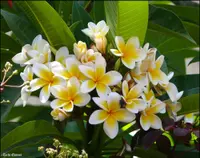
Snake orchid Care (Cymbidium suave)

Also known as: Grassy boat-lip orchid
Snake orchid

About Snake orchid

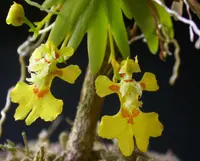
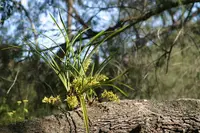
Snake orchid, Cymbidium suave, is an epiphytic or lithophytic orchid native to eastern Australia, often found growing on trees or rocks in open forests. It forms long, slender, grass-like leaves and dense clusters of small, greenish-yellow flowers with a sweet, noticeable fragrance. The plant tends to grow in clumps, creating attractive arching foliage that suits hanging baskets or mounted displays indoors. It is considered moderate in difficulty, as it dislikes extremes in temperature, dryness, or constant wetness. It prefers bright, filtered light, good air movement, and evenly moist, free-draining media, which are key points in how to care for Snake orchid.

Main Plant Requirements

Care Difficulty

Moderate Care

Light Preference

Partial Shade

Water Requirements

Moderate Water

Temperature Preference

Cool Climate

Hardiness Zone

9–11

Soil Texture

Sandy, Loamy, Organic-rich

Soil pH

Acidic (5.5–6.5)

Soil Drainage

Moist but well-drained

Fertilization

Light (every 4–6 weeks)

Get Personalized Care Plan

Scan your plant to receive care tips personalized for your specific plant

Available on iOS and Android

How to Care for the Snake orchid

Cymbidium suave prefers bright, filtered light that mimics bright woodland edges or high tree canopies.

  • Provide 4–6 hours of gentle morning sun with dappled or filtered light for the rest of the day, avoiding harsh midday and late afternoon sun.
  • Tolerates light to medium partial shade, but very deep shade causes weak, floppy growth and poor flowering in Snake orchid.
  • Outdoors, adjust seasonally: give slightly more light in autumn–winter for bud formation, and more protection from intense sun in late spring–summer to prevent leaf scorch.

Watering for Cymbidium suave should keep the root zone lightly moist, never saturated or bone dry.

  • Allow the top 2–3 cm of mix or soil to dry before watering again, using a thorough soak that drains freely away from the roots.
  • Increase watering in active growth and warm weather, then reduce slightly in cooler months, while still preventing the root mass from fully drying out.
  • Watch for stress signs: yellowing, limp, or blackened pseudobulbs suggest overwatering and poor drainage, while wrinkled pseudobulbs and folding leaves indicate underwatering.

This species prefers mild, temperate conditions with cool nights to support flowering.

  • Aim for 60–75°F (16–24°C) during active growth, with night temperatures around 50–60°F (10–16°C) to encourage strong roots and spikes.
  • Tolerates brief drops to about 35–37°F (2–3°C) if kept dry and sheltered, but regular frost or hard freezes can damage foliage and pseudobulbs.
  • In hot weather above 86°F (30°C), provide extra shade and airflow; prolonged heat over 95°F (35°C) can stress plants and reduce future flowering.

This species prefers moderate, steady humidity and tolerates brief drier spells if watered correctly.

  • Aim for 40–60% humidity; avoid persistently below 30% to prevent leaf-tip browning and shriveling pseudobulbs.
  • Snake orchid tolerates typical indoor air but shows humidity stress as limp, wrinkled pseudobulbs and dull, folded leaves.
  • Increase humidity by grouping plants, placing pots on a pebble-and-water tray without submerging the base, or using a small room humidifier nearby.

This orchid grows best in a very open, fast-draining, organic-based medium that keeps roots aerated.

  • Use a coarse mix of medium orchid bark, chunky perlite or pumice, and a small amount of sphagnum or coco chips for moisture retention.
  • Maintain a slightly acidic to neutral pH around 5.5–6.5, which supports nutrient uptake and healthy root growth in Cymbidium suave.
  • Ensure large air spaces in the mix so water drains within seconds; roots should be moist after watering but never waterlogged.
  • Avoid fine peat, heavy garden soil, or compacted mixes that hold water around the roots and quickly lead to rot.

This species is suitable for container growing when given a deep, very free-draining setup.

  • Choose a tall, narrow pot to accommodate its downward-growing roots and keep the root mass evenly moist but not saturated.
  • Select rigid plastic or glazed ceramic pots if exposure is windy, as the foliage can make containers top-heavy outdoors.
  • Raise the pot slightly on feet or bricks so drainage holes remain clear and runoff water does not pool under the container.

Cymbidium suave benefits from modest, careful feeding in containers but established plants in the ground often need little extra nutrition.

  • Use a balanced, dilute liquid fertilizer (around 1/4–1/2 strength) or weak organic compost extract during active growth in spring–summer.
  • Feed plants every 3–4 weeks while new leaves and pseudobulbs develop, then extend to 6–8 weeks late in the season.
  • Reduce or stop feeding in autumn–winter when growth slows, as Snake orchid prefers a relatively lean rest period.
  • In pots, flush the medium with plain water every 4–6 weeks to prevent salt buildup from repeated fertilization.

Pruning needs for Cymbidium suave are light and focus mainly on hygiene and flowering performance.

  • Cut spent flower spikes at the base after blooming using clean, sharp scissors or pruners to redirect energy to new growth.
  • Remove dead, yellowed, or damaged leaves and shriveled pseudobulbs at any time to improve airflow and reduce disease risk.
  • Thin very crowded clumps during division, keeping healthy, firm pseudobulbs to maintain a balanced, compact shape.
  • Always sterilize cutting tools before use to limit transmission of fungal or bacterial problems between plants.

Transplanting or repotting this species is infrequent and should be done only when clearly needed to limit stress on the orchid.

  • Look for roots circling the pot, medium breaking down, or slow, declining growth as cues the plant needs a new container or division.
  • Plan repotting or transplanting for late winter to early spring, just after flowering and before strong new root growth begins.
  • Expect to move container plants every 3–4 years, keeping divisions fairly large to maintain vigor and flowering potential.
  • Handle roots gently, trim only dead tissue, and keep the orchid slightly shaded and evenly moist for 2–3 weeks after disturbance to aid recovery.

Propagation of Cymbidium suave is typically done by division rather than by seed in home conditions.

  • Carry out division in late winter or early spring, just after flowering and before strong new roots emerge.
  • Lift the clump and separate sections with at least 3–4 healthy pseudobulbs and a good root system per division.
  • Replant divisions into a free-draining orchid mix, keeping rhizomes just at the surface and watering lightly at first.
  • Maintain bright, indirect light, moderate humidity, and stable 60–75°F temperatures to support new root formation and shoot growth.

This species is relatively cool-tolerant but still benefits from basic winter management in cultivation.

  • In the ground, add 5–8 cm of loose mulch around the root zone in late autumn, keeping it away from the pseudobulb bases.
  • Container plants in regions below about 30°F should be moved to a cool, bright, frost-free area for winter.
  • Avoid waterlogged media in cold weather; allow the mix to dry slightly between waterings to limit root rot risk.

Care Tips

Mounting substrate choice

Use coarse, long-fiber sphagnum or fine-grade orchid bark mixed with a little charcoal when mounting, which mimics the plant’s natural habit in tree hollows and keeps the fine roots aerated but stable.

Shading during heat

In hot spells above 90°F, add 30–50% shade cloth or move the plant to a brighter but indirect position to prevent leaf scorch and stress that can reduce future flowering.

Cool-night promotion

In late summer to autumn, provide a distinct temperature drop of 10–15°F at night by placing the plant outdoors or near a cool, screened window to support spike initiation.

Secure spike support

As flower spikes elongate, tie them loosely to thin bamboo or plastic stakes using soft ties, starting when spikes are 10–15 cm long, to prevent wind or handling damage to the slender stems.

Airflow for health

Position the plant where it receives constant gentle air movement from an oscillating fan or open screened window, which helps dry leaf surfaces, reduces fungal problems, and improves overall vigor when growing Snake orchid.

Common Pests and Diseases

Soft scale

This pest feeds on sap along the pseudobulbs and leaf sheaths, often hiding in the tight, grassy foliage typical of this species. Symptoms include sticky honeydew, sooty mold on leaves, and slow decline in vigor.

Solution

Use a cotton swab dipped in isopropyl alcohol to wipe visible scale from pseudobulbs and leaf bases, then wash foliage with lukewarm soapy water and rinse well. Improve air movement, avoid excess nitrogen fertilization, and, if populations persist, use a labeled horticultural oil or insecticidal soap, making sure spray penetrates into the dense foliage clumps.

Orchid mealybugs

These insects often nest in the leaf axils and under dry sheathing bracts of the slender pseudobulbs, where they suck sap and excrete honeydew. Symptoms include white cottony clumps, deformed new growth, and sticky residue attracting sooty mold.

Solution

Isolate the plant, remove loose bracts, and dab visible mealybugs with isopropyl alcohol, then gently wash the foliage and pseudobulbs. Repeat inspections weekly and, for heavier infestations, apply insecticidal soap or systemic insect control labeled for orchids, ensuring coverage inside the tight foliage bases typical of Cymbidium suave care instructions.

Brown cymbidium scale

This pest is a cymbidium‑associated armored scale that attaches firmly to pseudobulbs and leaves, causing yellow spotting and gradual weakening of the plant. Symptoms include hard, brown scale bumps that do not wipe off easily and patchy chlorosis on older foliage.

Solution

Scrape or rub off individual scales with a soft toothbrush or cloth, then wash the plant thoroughly with soapy water and rinse. Increase light and air movement, avoid overfeeding, and if the infestation is established, use repeated applications of horticultural oil at label rates, targeting both upper and lower leaf surfaces and the lower parts of pseudobulbs.

Cymbidium mosaic virus

This disease is an orchid virus that can occur in cymbidiums, leading to streaking, blotching, or mosaic patterns on leaves and reduced flower quality over time. Symptoms include distorted or color‑broken flowers and persistent irregular dark markings on foliage.

Solution

There is no cure, so management focuses on prevention and containment: discard severely affected plants, and always sterilize cutting tools between plants using flame, bleach solution, or isopropyl alcohol. Control sap‑sucking insects, avoid reusing contaminated potting media, and source new plants from reputable, virus‑tested suppliers.

Leaf spot fungi

These diseases are favored by crowded clumps and poor air movement around the narrow leaves, causing small dark spots that may enlarge and coalesce on older foliage. Symptoms include tan to brown lesions, sometimes with yellow halos, often starting on lower or inner leaves in dense plants or in mounted specimens with poor drying conditions.

Solution

Remove and discard heavily spotted leaves, and space plants so leaves dry quickly after watering. Water early in the day, keep foliage as dry as practical, and apply a broad‑spectrum fungicide labeled for orchids if new spots continue to appear, ensuring good airflow and avoiding overhead watering during cool periods.

Interesting Facts

Hollow cane fragrance

This species has slender, hollow stems that can trap and slowly release its sweet, honeyed scent, which is especially noticeable in still evening air in its native Australian forests.

Tree-dwelling specialist

It is primarily epiphytic, meaning it anchors to tree branches and trunks rather than growing in soil, often favoring eucalypts in dry sclerophyll forests of eastern Australia.

Narrow autumn flowering

In its natural range it flowers in a relatively tight seasonal window, typically late summer to autumn, which helps synchronize pollinator visits to its many small greenish-yellow blooms.

Botan icon

Did you know?

Cymbidium suave is unusual among cymbidiums because its roots and old leaf sheaths can form dense, woody masses that Aboriginal Australians traditionally used as a natural fire starter, taking advantage of the dry, fibrous material’s ability to ignite readily when exposed to sparks.

FAQs about Snake orchid

Lack of flowers usually comes from insufficient light, too-warm winter nights, or skipping a cool, dry rest. Slightly cooler, drier conditions in late autumn and winter, followed by brighter light and balanced feeding, often restore blooming.

Grow Healthy Plants with Botan Care

Keep your plants happy and healthy with plant identification, disease detection, and easy care guidance.


Botan plant care app — identify plants on mobile

Explore More Plants