Ribbon Fan Palm Care (Livistona decora)

Ribbon Fan Palm

About Ribbon Fan Palm

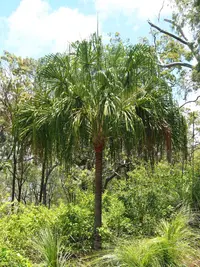
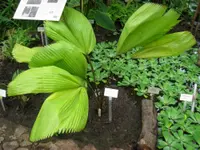
Ribbon fan palm, Livistona decora, is a slow-growing, single-trunk palm known for its long, narrow, ribbon-like leaf segments that form an elegant fan shape. Mature plants develop a tall, slender trunk topped with a full, drooping crown that moves easily in light wind.

This species is native to coastal Queensland in Australia, where it grows in warm, humid conditions and well-drained soils. It is generally considered a durable palm but needs protection from hard frost, strong drying winds, and deep shade to stay healthy.

For those learning how to care for Ribbon Fan Palm, consistent warmth, bright light, and evenly moist but not waterlogged soil are the main points to understand.


Main Plant Requirements

Care Difficulty

Moderate Care

Light Preference

Full Sun

Water Requirements

Moderate Water

Temperature Preference

Warm Climate

Hardiness Zone

9–11

Soil Texture

Sandy, Loamy, Organic-rich

Soil pH

Acidic (5.5–6.5), Slightly acidic (6.5–7.0)

Soil Drainage

Moist but well-drained

Fertilization

Minimal (feed rarely)

Get Personalized Care Plan

Scan your plant to receive care tips personalized for your specific plant

Available on iOS and Android

How to Care for the Ribbon Fan Palm

This palm prefers bright, direct to lightly filtered sun with some protection from the harshest afternoon rays.

  • Provide 4–6 hours of direct morning sun, plus bright light for the rest of the day; light shade during hot afternoons helps prevent leaf scorch.
  • Young Ribbon Fan Palm plants handle partial shade, but older specimens grow denser crowns and stronger trunks in higher light.
  • In hot summers, watch for bleached, crispy leaf tips as a sign of too much intense sun; in deep shade, expect slow growth and sparse, stretched fronds.

This species prefers evenly moist but not waterlogged soil, with short dry periods between thorough waterings.

  • Water when the top 3–5 cm of soil feels dry, soaking the root zone deeply, then allow excess to drain away completely.
  • In warm growing seasons, monitor more often and increase volume rather than frequency; in cool or dormant periods, extend the drying interval.
  • Yellowing, soft bases and foul smell suggest overwatering or poor drainage; dry, browning leaf tips and folding fronds indicate Livistona decora is staying too dry.

This palm thrives in warm, mild climates with only brief exposure to cooler temperatures.

  • Aim for 65–85°F (18–29°C) for active growth; it tolerates short warm spells up to about 95°F (35°C) if soil moisture is adequate.
  • Protect from frost, since leaf damage can occur just below 32°F (0°C); sustained cold below 25°F (−4°C) can injure or kill young plants.
  • In regions with cool winters, growth slows noticeably; avoid cold winds and sudden temperature drops by planting in a sheltered, south- or east-facing position.

This palm prefers moderate humidity but usually adapts to typical indoor levels if not extremely dry.

  • Aim for 40–60% humidity to reduce leaf tip browning and maintain steady growth when caring for Ribbon Fan Palm.
  • It tolerates short periods of drier air, but very low humidity combined with heat can cause crispy tips and marginal leaf scorch.
  • Increase humidity by grouping plants, placing the pot on a pebble tray with water below the pot base, or running a small humidifier nearby.

This species prefers a deep, well‑drained, slightly moist substrate that does not stay waterlogged.

  • Use a mix of 50–60% loam or peat‑based potting medium, 20–30% coarse sand, and 10–20% perlite or fine bark to create a moderately sandy, open structure.
  • Aim for slightly acidic to neutral pH around 6.0–7.0, which supports nutrient availability and root health for Livistona decora.
  • Ensure rapid drainage through the profile; water should pass through in seconds, not minutes, and the surface should dry slightly between waterings.
  • Avoid heavy clay, compacted, or constantly soggy substrates, which reduce aeration and can lead to root rot and stunted growth.

This palm is suitable for large containers if given enough root depth and stability.

  • Choose a tall, heavy pot that lowers the center of gravity so the long arching fronds do not tip the container in wind.
  • Select a container material that matches your climate, using heavier ceramic or concrete outdoors to buffer moisture swings and heat stress.
  • Leave a 3–5 cm gap below the rim to keep water from spilling over when deep watering, ensuring the full soil column is evenly moistened.

Livistona decora responds well to moderate, controlled feeding during the warm growing season.

  • Use a balanced NPK fertilizer (such as 10-10-10 or 14-14-14) or a quality slow-release palm formula for container and landscape plants.
  • Feed every 8–10 weeks in spring and summer, lightly scratching granules into the topsoil and watering in thoroughly.
  • Apply at 1/2–3/4 the labeled rate for palms to limit salt buildup and reduce risk of fertilizer burn on roots and leaf tips.
  • Stop feeding in fall and winter, when growth slows, and rely on existing soil nutrients while caring for Ribbon Fan Palm.

Livistona decora benefits from light, selective pruning to keep the crown healthy and safe.

  • Perform pruning in late winter or early spring, before strong new growth, to reduce stress on the palm.
  • Remove only dead, brown, or badly damaged fronds, cutting close to the trunk without nicking the bark.
  • Leave green or mostly green fronds, even if older, since they still contribute to photosynthesis and overall vigor.
  • Use clean, sharp loppers or a pruning saw, disinfecting blades between cuts to limit disease spread and preserve a balanced canopy.

Livistona decora forms a strong root system and dislikes frequent disturbance, so repot or transplant only when necessary.

  • Check for roots circling the pot, bulging container sides, or very slow growth as indicators that a larger pot or planting site is needed.
  • Plan repotting or transplanting for late spring to early summer, when warm soil supports rapid root recovery.
  • Move up only 1 pot size, using a deep, well-drained mix, and keep the original soil level at the same height on the trunk.
  • Water thoroughly after moving, then keep soil evenly moist and shade the plant for 1–2 weeks to reduce transplant shock.

Livistona decora is usually propagated from seed, which can be slow but is the most reliable method.

  • Sow fresh, cleaned seeds in late spring or early summer, using a sterile, free-draining seed mix with high aeration.
  • Soak seeds in warm water for 24–48 hours before sowing to soften the seed coat and improve germination.
  • Maintain a temperature of 75–85°F, consistent moisture, and bright, indirect light; germination may take several weeks to months.
  • Transplant seedlings carefully into individual pots once they form 2–3 true leaves, disturbing roots as little as possible.

Livistona decora has some cold tolerance but benefits from thoughtful winter care in cooler regions.

  • In-ground plants in mild climates handle brief dips near 25°F, but sustained freezing harms foliage and young trunks.
  • Apply 5–8 cm of organic mulch around the root zone, keeping it slightly away from the trunk to insulate soil.
  • Wrap the crown and trunk of young palms with breathable frost cloth during hard freezes to limit tissue damage.
  • Move container plants indoors or into a sheltered, bright, frost-free area when night temperatures fall below 32°F.

Care Tips

Root ball stability

Stake young plants with 2–3 robust stakes placed outside the root ball and tied loosely with soft, flat ties so wind movement flexes the stem slightly without rocking the roots, which helps the palm establish a deep, stable root system.

Frond management

Remove only fully brown, dead fronds and leave slightly green or yellowing fronds attached, since premature removal can reduce the palm’s energy reserves and slow recovery after transplanting or storm damage.

Wind acclimation

Before planting in a windy site, harden off container-grown plants by gradually exposing them to stronger wind over 2–3 weeks so the trunk and petioles thicken and are less prone to tearing once in the ground.

Mulch ring setup

Maintain a 5–10 cm deep, wide mulch ring that stops 5–8 cm short of the trunk to keep roots cool and moist while avoiding rot and rodent damage at the crown base when growing Ribbon Fan Palm outdoors.

Salt and spray tolerance

In coastal landscapes, periodically hose off foliage with fresh water to remove salt spray and dust, which reduces leaf tip burn and helps the palm maintain efficient photosynthesis under marine conditions.

Common Pests and Diseases

Palm leaf spot

This disease causes tan to dark brown spots that may have yellow halos on the leaflets, often starting on older fronds. Symptoms include spotting that can merge into larger dead patches, giving the ribbon-like leaf segments a tattered look.

Solution

Remove and discard heavily spotted fronds, keep foliage dry when possible, and increase spacing and airflow around the palm. For persistent problems, use a copper-based or chlorothalonil fungicide labeled for palms, following label directions and avoiding repeated overhead watering.

Pink rot

This disease leads to soft, water-soaked tissue at the base of fronds or in the crown, sometimes with salmon-pink fungal growth. Symptoms include fronds yellowing or collapsing from the center of the plant outward.

Solution

Cut out and discard affected fronds and any obviously decayed tissue, sterilizing tools between cuts. Improve drainage, avoid water collecting in the crown, reduce overhead watering, and in early stages use a systemic fungicide labeled for palm crown and bud rots as part of broader Livistona decora care instructions.

Ganoderma butt rot

This disease attacks the lower trunk, causing internal decay and structural weakness that may not show until advanced. Symptoms include reduced vigor, thinning canopy, and hard, shelf-like white-to-reddish conks at the trunk base.

Solution

There is no cure once infection is established, so remove and destroy the entire palm, including stump and major roots, as soon as conks appear. Avoid replanting palms in the same spot, dispose of infected material off-site, and keep trunk bases free from wounding, soil buildup, and standing water to reduce future risk.

Giant palm borer

This pest is a large beetle whose larvae tunnel inside the trunk and bases of larger palms, creating galleries that weaken the plant structurally. Symptoms include small emergence holes, frass (sawdust-like material), and in severe cases trunk failure or canopy dieback.

Solution

Prune and destroy heavily infested or structurally compromised palms and avoid leaving dead or declining palms standing, since they act as breeding sites. For high-value specimens, inspect trunks regularly, maintain good overall plant vigor, and consult a local arborist or extension service about timing-targeted trunk or crown treatments where this pest is established.

Palm aphids

These insects cluster on the undersides of leaflets and along midribs, sucking sap and causing yellowing, curling, and sticky honeydew that can lead to sooty mold. This pest can spread quickly along the long, hanging leaf segments of ribbon fan palms in sheltered sites.

Solution

Wash colonies off with a strong but controlled stream of water and prune heavily infested fronds if practical. Encourage or introduce natural predators like lady beetles, and if needed apply a horticultural soap or neem oil thoroughly to both sides of the fronds, repeating as label directions allow until populations decline.

Interesting Facts

Ribbon-like leaf tips

This species develops unusually long, drooping, ribbon-like segments at the ends of its fan leaves, which can flutter in strong coastal winds without tearing the blade.

Natural coastal specialist

In the wild it is native to dry coastal forests of Queensland, Australia, where it tolerates salt-laden winds and sandy, low-fertility soils better than many other fan palms.

Heavy fruit production

Mature trees produce large clusters of small, dark fruits that provide seasonal food for birds and other wildlife in its native range, aiding seed dispersal across coastal habitats.

Botan icon

Did you know?

In suitable outdoor conditions this palm can form a solitary trunk well over 15 m tall, creating a narrow, columnar canopy that often stands above surrounding coastal vegetation and acts as a visual landmark along parts of the Australian shoreline.

FAQs about Ribbon Fan Palm

This species grows slowly to moderately, often adding about 15–30 cm of trunk per year in warm climates. Growth rate depends on heat, light, water, and nutrition, and typically increases once a trunk is established.

Grow Healthy Plants with Botan Care

Keep your plants happy and healthy with plant identification, disease detection, and easy care guidance.

Botan plant care app — identify plants on mobile

Explore More Plants