Offset management
Mark and remove well-rooted offsets once they reach about 1/3–1/2 the size of the mother rosette, then pot them individually at the same depth to maintain a dense, vigorous clump over time.

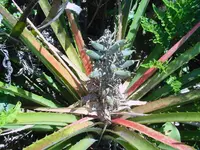
Wild banana, Bromelia antiacantha, is a terrestrial bromeliad native to South America, especially Brazil, Argentina, and nearby regions. It usually grows as a clumping rosette rather than on trees. Its arching, spiny leaves form dense, low mounds, often with a striking central cluster of flowers followed by bright, ornamental fruits. The sharp leaf edges are the main physical challenge when handling and placing the plant. This species copes well with heat, sun, and lean, fast-draining soil, which makes it suitable for low-maintenance landscapes in warm climates. Once the basic needs are understood, it is relatively straightforward to care for wild banana.

Care Difficulty
Moderate Care

Light Preference
Partial Sun

Water Requirements
Moderate Water

Temperature Preference
Warm Climate

Hardiness Zone
9–11

Soil Texture
Sandy, Loamy, Organic-rich

Soil pH
Acidic (5.5–6.5), Slightly acidic (6.5–7.0)

Soil Drainage
Well-drained

Fertilization
Minimal (feed rarely)
Scan your plant to receive care tips personalized for your specific plant
Available on iOS and Android
Bromelia antiacantha prefers bright, open conditions similar to its native scrub and restinga habitats.
This terrestrial bromeliad prefers evenly moist but not saturated soil, with short dry intervals between waterings.
This species thrives in warm, frost-free conditions and handles heat better than cold.
This bromeliad prefers moderately humid air but adapts to typical home conditions.
This species needs a very free-draining, aerated mix that dries quickly around the roots.
This species is well suited to container growing, especially for patios or frost-prone areas.
Bromelia antiacantha grows reasonably well with modest feeding in containers or poor soils, similar to many wild banana relatives.
Pruning Bromelia antiacantha focuses on hygiene and managing offsets rather than shaping the plant.
Transplanting or repotting Bromelia antiacantha is mainly needed when clumps outgrow their space or containers.
Propagation of Bromelia antiacantha is most reliable through offsets, with seeds used mainly for larger-scale growing.
Bromelia antiacantha has some cold tolerance but benefits from simple winter precautions in most temperate regions.

Plant Health Check
Not sure what's wrong with your plant? Check your plant's health inside the app.
This species forms dense, spiny clumps whose rigid leaf spines provide shelter and protection for ants, which in turn can defend the plant from herbivores by aggressive behavior.
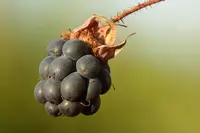
Its fleshy fruits ripen from green to yellow or reddish tones and are an important seasonal food resource for birds that disperse the seeds through their droppings.
Native to open, sandy and rocky habitats in southern Brazil, Paraguay, Uruguay, and northern Argentina, this bromeliad tolerates strong sun, wind, and periodic coastal or grassland fires better than many forest-dwelling relatives.

In parts of southern Brazil and neighboring regions, its tough, overlapping leaf rosettes can form nearly impenetrable, low thickets that function as living fences, historically used to deter livestock and human passage in rural landscapes.
Leaf browning often results from low humidity, excess sun scorch, or accumulated fertilizer salts at the roots. Check for dry, crispy tips, adjust exposure, flush the potting mix, and trim only completely dead tissue.
Keep your plants happy and healthy with plant identification, disease detection, and easy care guidance.