tuberous polypore Care (Polyporus tuberaster)

tuberous polypore

About tuberous polypore

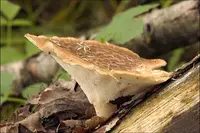
Polyporus tuberaster, commonly called tuberous polypore, is a wood-decay fungus rather than a traditional green plant. It forms firm, tan to brown caps with pores underneath, usually growing from buried wood or woody debris.

In nature it occurs mainly in temperate woodlands, especially in Europe and parts of Asia, where it helps break down dead hardwood. It is considered moderately easy to cultivate by experienced mushroom growers but less suitable for complete beginners.

It prefers stable moisture, good air circulation, and a wood-based substrate instead of regular potting soil. Basic knowledge of how to care for tuberous polypore is helpful before attempting any home cultivation.

Main Plant Requirements

Care Difficulty

Hard Care

Light Preference

Partial Shade

Water Requirements

Keep Soil Moist

Temperature Preference

Cool Climate

Hardiness Zone

Unknown

Soil Texture

Loamy, Organic-rich

Soil pH

Acidic (5.5–6.5), Slightly acidic (6.5–7.0)

Soil Drainage

Moist but well-drained

Fertilization

Minimal (feed rarely)

Get Personalized Care Plan

Scan your plant to receive care tips personalized for your specific plant

Available on iOS and Android

How to Care for the tuberous polypore

This fungus prefers dappled woodland light rather than strong, open sun.

  • Provide 2–4 hours of soft morning sun or bright filtered light under trees; avoid harsh afternoon sun that can dry the substrate too quickly.
  • Site tuberous polypore where it receives partial shade for most of the day, such as a north or east side of logs or buried wood pieces.
  • In summer, increase shade or mulch around the substrate to reduce overheating; in cooler seasons, slightly more light is acceptable as long as wood moisture is maintained.

This wood-decaying fungus depends on consistently moist, but not waterlogged, substrate.

  • Allow the top 2–3 cm of surrounding soil or mulch over the colonized wood to feel slightly dry before re-moistening with gentle, even watering.
  • Use well-drained soil or mulch around the host log so excess water can escape; persistent puddling encourages rot and anaerobic conditions harmful to Polyporus tuberaster.
  • In hot, dry periods, check moisture every 1–2 days and mist or water when the surface looks dull and feels dry, while in cool, wet seasons rely more on natural rainfall and reduce supplemental watering.

This species grows best in mild, temperate conditions with moderate seasonal variation.

  • Aim for an active growth range of 60–75°F (16–24°C), which supports steady mycelium activity and reliable fruiting on buried or surface wood.
  • Protect the substrate from hard frost below 25°F (-4°C) using mulch or leaf litter, since repeated freezing and thawing can damage exposed mycelium.
  • Limit exposure to prolonged heat above 85°F (29°C); provide deeper shade and thicker mulch during heat waves to keep the colonized wood cooler and retain moisture.

This species grows on wood and does not have specific ambient humidity requirements for cultivation.

Polyporus tuberaster develops from a sclerotium embedded in decaying wood, so the surrounding substrate must be moisture-retentive yet aerated.

  • Use a coarse, organic-rich substrate such as chipped hardwood, shredded bark, and leaf litter rather than standard potting soil.
  • Maintain a structure that stays evenly moist but not waterlogged by mixing in 20–30% coarse wood chips to keep air spaces.
  • Keep pH roughly neutral to slightly acidic (pH 6.0–7.0) by using hardwood-based material instead of alkaline composts.
  • Avoid compacted, fine-textured, or heavily clay-based substrates that restrict gas exchange around the developing fungal tissues.

This species can be grown in containers when its wood-based substrate and moisture needs are met.

  • Use a deep, sturdy tub or box that can hold a solid block of hardwood pieces, allowing the fungus to colonize in three dimensions.
  • Drill or use existing side and bottom holes so excess water drains while some moisture remains trapped within the wood mass.
  • Position the container where it will not overheat or dry out rapidly, such as a shaded outdoor area with limited direct sun and wind exposure.

This fungus grows on woody substrates and generally does not need added fertilizer when established outdoors.

  • For cultivation on logs or hardwood blocks, nutrients are supplied mainly by the wood itself, so extra feeding is usually unnecessary.
  • In sawdust or supplemented substrate, use a pre-mixed mushroom-growing medium instead of garden fertilizers, which can upset microbial balance.
  • If growth is weak, a light application of well-aged compost to surrounding soil may support host tree or shrub vigor rather than the tuberous polypore directly.

Pruning is not a standard practice for Polyporus tuberaster, which is a wood-decaying fungus rather than a typical garden plant.

Cultivation focuses on moving or renewing colonized wood or substrate, not traditional repotting.

  • Transplant only when the mycelium has fully colonized a log, plug, or block and growth slows or substrate is largely exhausted.
  • Best timing is during mild weather in spring or early fall to limit temperature stress on the mycelium.
  • Shift the colonized piece onto fresh compatible hardwood or partially bury it in shaded, moist soil near other wood pieces to extend fruiting.
  • Handle blocks gently, keeping them intact and shaded, and water lightly after placement to reduce shock from drying and temperature swings.

Propagation of this species relies on fungal methods rather than standard plant techniques.

  • Use spore inoculation or colonized dowel plugs inserted into pre-drilled holes in fresh hardwood logs or stumps.
  • Inoculate in spring or early summer when temperatures are stable and wood moisture is moderate.
  • Seal holes with wax to maintain humidity and prevent contamination while the mycelium spreads.
  • Keep inoculated wood shaded and evenly moist; avoid waterlogging to encourage steady colonization and later fruiting.

Outdoor Polyporus tuberaster on hardy hardwoods usually tolerates normal winter conditions in temperate climates without special attention.

  • Ensure colonized logs rest on soil or mulch rather than bare rock or metal, which can cause extreme temperature swings.
  • A light mulch layer around the base of partially buried substrate helps buffer freeze-thaw cycles.
  • Container-grown blocks in very cold regions can be moved to an unheated but frost-moderated garage or shed to prevent deep freezing.

Care Tips

Use hardwood blocks

For reliable fruiting, inoculate clean, freshly cut hardwood blocks or logs rather than loose chips, as dense wood maintains moisture and supports multiple flushes over several seasons when caring for tuberous polypore.

Pre‑soak substrates

Before inoculation, soak hardwood logs or blocks in clean, cool water for 12–24 hours and then drain well, which helps the wood reach an even internal moisture level that supports rapid mycelium colonization.

Control fruiting humidity

During primordia and fruiting, use a plastic tent, humidity dome, or misting schedule that keeps the immediate environment moist but ventilated, preventing caps from cracking while still limiting bacterial slime and mold.

Manage air exchange

Provide gentle, regular fresh air exchange around developing brackets, for example by using a small fan on low away from direct airflow, which reduces CO₂ buildup and encourages thicker, well‑formed fruiting bodies.

Rotate colonized blocks

After each flush, rest the colonized wood in a cooler, slightly drier area for 1–2 weeks, then rehydrate and return it to fruiting conditions to stimulate additional production cycles without exhausting the mycelium too quickly.

Common Pests and Diseases

Competing wood-decay fungi

This disease involves other wood-decaying fungi colonizing the same log or stump, outcompeting the tuber and fruiting bodies. Symptoms include distorted, reduced, or absent Polyporus tuberaster fruiting and the presence of different bracket or crust fungi on the substrate.

Solution

Remove and discard heavily colonized wood and, if cultivating, move any healthy tubers or colonized pieces to fresh, clean hardwood. Use well-seasoned but not heavily decomposed logs, avoid mixing many unknown wild fungi on the same substrate, and maintain good airflow to reduce constant wetness that favors aggressive competitors.

Fungal parasitism (mold overgrowth)

This disease occurs when fast-growing molds such as Trichoderma or Penicillium overrun developing mycelium or fruiting bodies on very wet or contaminated substrates. Symptoms include green, blue-green, or gray powdery growth on or around the polypore and arrested fruit development.

Solution

Physically remove and discard contaminated sections of substrate and any affected fruiting bodies, then reduce moisture by improving drainage and airflow around the culture. For controlled cultivation, start with pasteurized or well-cleaned hardwood and tools, avoid standing water, and space substrates so surfaces dry slightly between waterings, following general Polyporus tuberaster care instructions to prevent chronic saturation.

Wood-boring beetle larvae

These insects tunnel through the host log or stump and can damage the fungal feeding base, indirectly weakening or stopping fruiting. Symptoms include small round exit holes, fine wood dust, and declining or sporadic fruiting of the fungus.

Solution

Cut out and discard heavily infested sections of wood and, if growing tuberous polypore, transfer viable tubers or colonized blocks to new, solid hardwood pieces. Store cultivation logs off bare soil, keep them shaded but not constantly wet, and avoid using wood that already shows numerous beetle holes or frass when starting a new culture.

Mycophagous slugs and snails

These pests feed directly on young fruiting bodies, creating ragged edges, pits, and sometimes complete loss of small caps. Symptoms include slime trails on the substrate and extensive grazing on tender tissues, particularly in damp, shaded outdoor setups.

Solution

Hand-pick slugs and snails at dusk or after rain, and use physical barriers such as copper tape or coarse grit rings around cultivation beds or containers. Reduce thick ground cover right around the substrate so it dries slightly between rains, and elevate logs on bricks or racks to make access more difficult.

Interesting Facts

Tuber-forming growth

This species develops a dense, often potato-like sclerotium (tuber) in the soil or in buried wood, which serves as a long-lasting storage organ allowing the fungus to resprout after unfavorable conditions.

Preference for buried wood

Fruiting bodies typically emerge from soil or leaf litter but are actually connected to decaying buried hardwood, showing a strong association with subsurface woody debris rather than exposed logs.

Distinctive scaly cap

Mature fruiting bodies often show a yellowish to ochre cap densely covered with darker, rough scales, which helps distinguish it from smoother-capped relatives in the same genus.

Botan icon

Did you know?

Experimental work has shown that the underground sclerotia of this species can be used as a starting material to grow Polyporus tuberaster under controlled conditions, making it one of the few wild polypores that has been reliably cultivated on an artificial substrate.

FAQs about tuberous polypore

This bracket fungus is technically edible when very young, but texture becomes tough and corky with age. It is not considered a choice edible and has limited culinary value, so most guides recommend against collecting it for food.

Grow Healthy Plants with Botan Care

Keep your plants happy and healthy with plant identification, disease detection, and easy care guidance.

Botan plant care app — identify plants on mobile

Explore More Plants