Small Chanterelle Care (Cantharellus minor)

Small Chanterelle

About Small Chanterelle

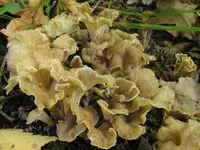
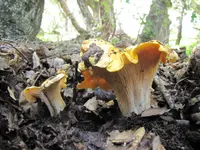
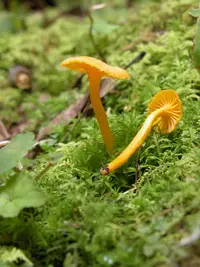
Small chanterelle, Cantharellus minor, is a small, wild mushroom rather than a traditional houseplant. It forms delicate, funnel-shaped yellow to orange caps with shallow, forked ridges instead of true gills. The fruiting bodies usually appear in groups on forest floors, often among leaf litter under hardwoods or mixed woodland.

This species occurs mainly in temperate regions of North America and favors moist, mossy, or humus-rich soils. It relies on a mycorrhizal partnership, meaning it lives in close association with tree roots, which makes it difficult to cultivate at home. For those exploring how to care for Small Chanterelle, it is typically best appreciated as a seasonal wild mushroom rather than a backyard crop.

Main Plant Requirements

Care Difficulty

Hard Care

Light Preference

Shade

Water Requirements

Keep Soil Moist

Temperature Preference

Cool Climate

Hardiness Zone

Unknown

Soil Texture

Loamy, Silty, Organic-rich

Soil pH

Strongly acidic (4.5–5.5), Acidic (5.5–6.5)

Soil Drainage

Moist but well-drained

Fertilization

Minimal (feed rarely)

Get Personalized Care Plan

Scan your plant to receive care tips personalized for your specific plant

Available on iOS and Android

How to Care for the Small Chanterelle

This forest mushroom prefers low, filtered light similar to a shaded woodland floor.

  • Provide dappled shade or bright shade under trees, with only brief morning sun (1–2 hours) and no direct afternoon sun.
  • Aim for conditions that mimic a closed or semi-closed canopy, where sunlight is filtered through leaves for 6–10 hours rather than striking the ground directly.
  • Excessive direct sun dries the soil and mycelium, reducing fruiting of Small Chanterelle, while deep, constant darkness can also limit mushroom production.

This species needs consistently moist, but never waterlogged, soil around its mycelium in the forest floor.

  • Check moisture in the top 2–5 cm of soil; it should feel evenly damp, not soggy or dusty-dry, before considering supplemental watering in managed woodland beds.
  • Increase moisture support during warm, dry periods so the soil stays cool and slightly springy to the touch, reducing it during cool, wet seasons to prevent standing water.
  • Dark, sour-smelling soil, surface mold, or slimy organic matter indicate overwatering, while cracked soil, shrinking leaf litter, and slow or absent Cantharellus minor fruiting suggest chronic dryness.

This woodland fungus performs best in mild, cool to moderately warm conditions.

  • Optimal fruiting usually occurs around 55–70°F (13–21°C), especially when combined with moist, shaded soil and stable humidity.
  • The mycelium often survives down to about 25–30°F (-4 to -1°C) under insulating leaf litter, but hard, prolonged frost without cover can reduce survival and fruiting.
  • Sustained heat above 80°F (27°C), particularly with dry soil, stresses the organism, so deeper shade, thicker mulch, and steady moisture help buffer summer temperature swings.

This mycorrhizal fungus needs consistently moist, cool air to fruit well.

  • Aim for 70–90% humidity around fruiting areas, mimicking damp forest conditions.
  • Dry air causes caps to crack, edges to curl, and pins to abort before developing.
  • Increase humidity with fine misting of the substrate surface and by using a loose, ventilated cover to trap moisture without stopping airflow.

This species fruits in naturally loose, organic forest soils rather than conventional garden or potting soil.

  • Use a deep layer of well-aerated, humus-rich material such as decayed hardwood leaf litter mixed with fine bark and a little coarse sand.
  • Maintain consistently moist but never waterlogged conditions; excess standing water quickly suffocates the fungal mycelium.
  • Target a slightly acidic pH around 5.0–6.0, similar to many oak or beech woodland soils where Cantharellus minor occurs.
  • Avoid compacted, high-clay, heavily fertilized, or sterile artificial mixes, which restrict gas exchange and disrupt mycorrhizal development.

This woodland chanterelle is not realistically suitable for container growing because it depends on a mycorrhizal partnership with tree roots that is very difficult to maintain in pots.

This mycorrhizal fungus relies on its tree partners and typically does not benefit from direct fertilization.

Pruning is not applicable to Cantharellus minor, as it is a wild ectomycorrhizal fungus rather than a conventional garden plant.

Cultivation focuses on establishing suitable woodland habitat rather than routine repotting of this fungus.

  • Transplant only by moving colonized soil or inoculated host tree seedlings, not by handling individual mushrooms.
  • Carry out any moves in cool, moist weather to reduce stress on fungal mycelium in the soil.
  • Keep root systems and surrounding soil intact, avoiding shaking or washing roots of host trees.
  • After transplanting, maintain consistent soil moisture and undisturbed leaf litter to support re-establishment.

This species is not commonly propagated in home settings because it relies on complex mycorrhizal relationships with host trees.

In suitable climates, this woodland fungus is naturally cold hardy and needs no specific winter care from gardeners.

Care Tips

Use host trees

Establish new patches near compatible host trees such as oaks or beech, as this species relies on a mycorrhizal partnership with tree roots rather than growing well in isolated beds or containers.

Mimic forest litter

Apply a loose layer of hardwood leaf litter and small twigs over the site to mimic a natural forest floor, which helps maintain the fungal network, moderates surface temperature, and protects developing fruiting bodies.

Gentle harvesting

Cut mushrooms at the base with a clean knife instead of pulling, and avoid disturbing the surrounding soil or roots to protect the underground mycelium so it can fruit again in future seasons.

Seasonal moisture checks

During dry spells in late summer and fall, check soil moisture under the leaf litter and, if needed, lightly irrigate the root zone of host trees with a fine spray in the evening to support fruiting without waterlogging.

Mark productive spots

Flag or discretely mark reliable fruiting areas and avoid trampling or raking these zones, which helps maintain stable microhabitats important for growing Small Chanterelle over multiple years.

Common Pests and Diseases

Mycophagous springtails

These insects feed on fungal tissue and can graze on developing chanterelle fruiting bodies, especially in moist, organic-rich substrates. This pest is usually more of a quality and yield issue than a complete loss problem.

Solution

Reduce excess surface moisture by improving drainage and ventilation around the fruiting area, and avoid overwatering any nearby host vegetation. For small‑scale production, gently remove heavily infested fruiting bodies and adjust irrigation schedules; in severe cases, a biological control containing entomopathogenic fungi or nematodes labeled for springtails can be used around, but not directly on, the mushrooms.

Fungus gnat larvae

These insects lay eggs in moist organic matter, and the larvae may tunnel through young mushroom primordia and stems, leading to deformed or partially hollow fruiting bodies. Symptoms include small entrance holes, internal browning, and reduced market quality.

Solution

Lower excess humidity in the immediate fruiting zone, reduce standing water, and use fine mesh exclusion netting to limit adult gnats. Yellow sticky traps help monitor and reduce adult numbers, and biological controls like Bacillus thuringiensis israelensis (Bti) applied to surrounding moist soil can suppress larvae without directly treating the mushrooms.

Moldy basidiomes

This disease occurs when secondary molds colonize chanterelle fruiting bodies, producing whitish, gray, or green patches that soften and spoil the mushrooms. Symptoms include surface fuzz, off odors, and rapid tissue collapse in very humid, stagnant air conditions.

Solution

Improve airflow at the forest floor or cultivation site by reducing dense ground cover, spacing fruiting areas, and avoiding plastic coverings that trap moisture. Promptly harvest healthy mushrooms, remove moldy basidiomes from the site, and avoid leaving overripe or damaged mushrooms in place, as they act as inoculum sources for further mold spread.

Slugs and snails

These pests are attracted to moist, shaded fruiting sites and can chew irregular holes into the caps and ridges of chanterelles. Symptoms include ragged margins, slime trails, and partial consumption of young mushrooms.

Solution

Reduce hiding places such as thick debris layers, boards, or pots around the fruiting zone and maintain slightly drier surface conditions without desiccating the mycorrhizal host tree roots. Hand-pick slugs at dusk or early morning, use copper barriers or coarse barriers like sharp grit where practical, and in managed settings apply iron phosphate slug baits placed away from the mushrooms but within slug travel paths.

Interesting Facts

North American specialist

This small chanterelle is native to eastern North America, where it fruits in mixed hardwood and conifer forests rather than being a widespread global species like some other chanterelles.

Microscopic identification keys

Its very small, hollow stem and tiny, thin-fleshed cap make it easy to confuse with other orange fungi, so mycologists rely on details such as spore size and subtle gill-fold structure under the microscope for confident identification.

Late summer fruiting

It typically appears in late summer to early autumn, often in scattered groups on mossy or well-decayed forest litter, indicating a preference for moist, shaded microhabitats with stable humidity.

FAQs about Small Chanterelle

This species is considered an edible wild mushroom and is generally regarded as good quality, though smaller and less substantial than larger chanterelles. Always confirm identification with an expert, since some orange or yellow mushrooms can be poisonous look-alikes.

Grow Healthy Plants with Botan Care

Keep your plants happy and healthy with plant identification, disease detection, and easy care guidance.

Botan plant care app — identify plants on mobile

Explore More Plants