Edge Containment
Install a shallow plastic or metal edging 5–8 cm deep around beds to keep this stolon-forming groundcover from spreading into lawns or paths while still allowing a dense carpet to form.

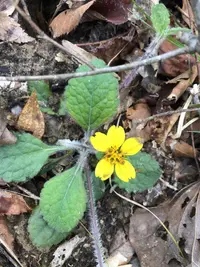
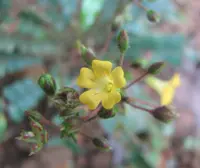
Golden star, Chrysogonum virginianum var. australe, is a low-growing perennial groundcover known for its bright yellow, daisy-like flowers. It forms dense, spreading mats of green foliage that help suppress weeds and stabilize soil.
This variety is native to the southeastern United States, typically found in open woodlands and along woodland edges. Its preference for partial shade and consistent moisture reflects these natural habitats.
Golden star is generally considered easy to grow when planted in well-drained, humus-rich soil and sheltered from extreme heat or drought. Gardeners who learn how to care for Golden Star often value it for its reliability and long blooming season.

Care Difficulty
Easy Care

Light Preference
Partial Shade

Water Requirements
Moderate Water

Temperature Preference
Cold Hardy

Hardiness Zone
5–9

Soil Texture
Loamy, Sandy, Organic-rich

Soil pH
Acidic (5.5–6.5), Slightly acidic (6.5–7.0)

Soil Drainage
Moist but well-drained

Fertilization
Minimal (feed rarely)
Scan your plant to receive care tips personalized for your specific plant
Available on iOS and Android
This low-growing groundcover prefers bright, gentle light rather than intense full sun.
This plant prefers consistently moist but not saturated soil, especially during establishment.
This hardy perennial tolerates a wide temperature range but grows best in moderate conditions.
This species handles a wide humidity range and rarely needs special humidity management outdoors.
This plant prefers loose, humus-rich soil that stays evenly moist yet drains freely.
This groundcover adapts well to container culture when moisture and spread are managed carefully.
This native groundcover needs only light feeding, so focus on soil health rather than heavy fertilizer use when caring for Golden Star.
Pruning needs for Chrysogonum virginianum var. australe are minimal and focus on tidiness and flower performance.
This plant is usually grown as an in-ground groundcover, so transplanting established clumps is more common than repotting.
Chrysogonum virginianum var. australe is most commonly propagated by division and rooted runners, with seed occasionally used for larger projects.
This species is generally cold hardy in much of the eastern and central US and needs only modest winter attention in the ground.

Plant Health Check
Not sure what's wrong with your plant? Check your plant's health inside the app.
This variety is naturally restricted to the southeastern coastal plain of the US, especially the Florida Panhandle and nearby Gulf Coast, where it grows in moist, seasonally wet pine flatwoods and open woodlands.
Unlike some more clumping forms of the species, this variety tends to spread into tight, low mats in the wild, helping to stabilize soil and suppress competing low vegetation on the forest floor.
In its native range it is most often found under open pine canopies or along woodland edges, indicating an evolutionary preference for bright but filtered light rather than deep shade or full, exposed sun.
This species spreads slowly to moderately by short stolons, forming a low, dense mat over time. It is generally not aggressive and is usually easy to keep within bounds with occasional edging or division.
Keep your plants happy and healthy with plant identification, disease detection, and easy care guidance.