Hibiscus Summerific Cranberry Crush Care

About Hibiscus Summerific Cranberry Crush

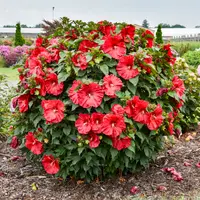
Hibiscus Summerific Cranberry Crush is a compact, hardy perennial hibiscus bred for bold landscape impact rather than wild habitats. It forms a dense, upright clump with deep green foliage and very large, saucer-shaped red flowers in late summer.

This cultivar is derived from North American hardy hibiscus species, so it tolerates colder climates better than tropical hibiscus types. It suits mixed borders, pollinator gardens, and statement plantings where dramatic flowers are desired.

Plants prefer full sun, consistent moisture, and well-drained, fertile soil to flower heavily. Understanding how to care for Hibiscus Summerific Cranberry Crush helps maintain strong stems, abundant buds, and reliable flowering year after year.

Main Plant Requirements

Care Difficulty

Moderate Care

Light Preference

Full Sun

Water Requirements

Regular Water

Temperature Preference

Cold Hardy

Hardiness Zone

4–9

Soil Texture

Loamy, Clay, Organic-rich

Soil pH

Acidic (5.5–6.5), Slightly acidic (6.5–7.0)

Soil Drainage

Moist but well-drained

Fertilization

Light (every 4–6 weeks)

Get Personalized Care Plan

Scan your plant to receive care tips personalized for your specific plant

Available on iOS and Android

How to Care for the Hibiscus Summerific Cranberry Crush

This hardy perennial hibiscus needs strong light to produce large, abundant flowers in summer.

  • Provide 6–8 hours of direct sun daily; 8+ hours promotes the heaviest blooming for Hibiscus Summerific Cranberry Crush.
  • Allow light afternoon shade in very hot climates, especially with reflected heat from pavement or walls, to reduce leaf scorch and bud drop.
  • Avoid dense shade; stems stretch, foliage thins, and flower count drops if it receives less than about 4 hours of direct sun.

This moisture-loving perennial performs best in consistently damp but not waterlogged soil.

  • Aim for evenly moist soil during active growth; do not let more than the top 2–3 cm dry out, especially in midsummer.
  • Use rich, well-drained soil that still holds moisture; standing water for several days can cause root rot, yellowing leaves, and stem collapse.
  • In cooler months, allow the top 3–5 cm to dry a bit deeper between waterings; wilting, crisp leaf edges, and small buds signal underwatering.

This hardy hibiscus thrives in warm summers but must also withstand cold winters in the ground.

  • Optimal growth occurs at 70–85°F (21–29°C); flower production slows below 65°F (18°C) and during prolonged cool spells.
  • Mature plants in the ground tolerate winter lows near -20°F (-29°C) when mulched; stems die back, but crowns regrow in spring.
  • Heat-tolerant up to about 95°F (35°C) if soil stays moist; above this, provide mulch and avoid reflected heat to limit stress and bud drop.

This hibiscus prefers moderately moist air but mainly relies on consistent soil moisture rather than high humidity.

  • Aim for 40–60% relative humidity, similar to typical outdoor summer conditions in much of the US.
  • It tolerates short periods of drier air if the root zone never dries out completely.
  • Curling leaves, limp growth, and increased spider mite activity can signal low-humidity stress, reduced by regular watering at the root and mulching the soil surface.

Hibiscus Summerific Cranberry Crush performs best in deep, moisture-retentive but aerated soil.

  • Use a loamy structure with high organic matter, such as garden soil amended with compost and leaf mold, to hold moisture evenly.
  • Ensure drainage is moderate, not fast; the soil should stay moist but never waterlogged or soupy.
  • Target a slightly acidic to neutral pH of 6.0–7.0, avoiding highly alkaline sites that can restrict nutrient uptake and cause chlorosis.
  • Improve aeration and prevent compaction by mixing in coarse materials such as pine bark fines or shredded bark, and avoid heavy, unamended clay.

This variety is suitable for containers if the pot is large and stable enough for its vigorous, top-heavy growth.

  • Choose a pot at least 40–50 cm wide and deep so the extensive root system can support tall stems without tipping.
  • Use a heavier material such as ceramic or thick-walled plastic to improve stability in wind and reduce rapid moisture loss.
  • Position the container where it cannot blow over, for example braced against a wall or railing, since large blooms and tall stems catch wind easily.

This hardy perennial hibiscus responds well to consistent, moderate feeding during its active season.

  • Use a balanced, water-soluble fertilizer (around 10-10-10 or 20-20-20) at 1/2 strength every 2–3 weeks from late spring to early fall.
  • Alternatively, apply a slow-release balanced fertilizer or a thin layer of compost in spring around the root zone.
  • Water before and after liquid feeding to prevent root burn and help nutrients move into the soil profile.
  • Stop feeding Hibiscus Summerific Cranberry Crush in late fall and do not fertilize during winter dormancy.

Pruning maintains a tidy shape and supports strong flowering on this perennial hibiscus.

  • Cut back dead stems to 10–15 cm above ground in late winter or very early spring before new shoots emerge.
  • During the growing season, remove dead, damaged, or crossing stems to improve airflow and reduce disease risk.
  • Deadhead spent blooms if desired to keep the plant neat, although it is not essential for flowering.
  • Use clean, sharp hand pruners and make cuts just above a bud or side shoot to direct new growth outward.

This cultivar is most often grown in the ground, with transplanting done mainly to improve space, soil, or drainage.

  • Transplant in early spring or early fall when weather is mild and the plant is not in peak bloom.
  • Look for signs such as crowded crowns, stunted growth, or roots circling inside a container as cues to move or upsize.
  • Dig a wide hole, keeping as much of the root ball intact as possible, and set the crown at the same soil level.
  • Water deeply after transplanting, then keep soil evenly moist for several weeks to limit stress and support new root growth.

Home propagation of Hibiscus Summerific Cranberry Crush is possible but requires attention to timing and conditions.

  • Take softwood to semi-ripe stem cuttings in late spring to midsummer, 10–15 cm long with several nodes.
  • Remove lower leaves, dip the cut base in rooting hormone, and insert into a sterile, moist, well-drained medium.
  • Maintain high humidity and bright, indirect light at 70–75°F until roots form, usually in several weeks.
  • Division of mature clumps in early spring is possible but can be stressful; replant divisions promptly and water well.

This hardy perennial dies back to the ground in winter but usually needs only modest preparation in most temperate climates.

  • In zones near its hardiness limit, add 5–7 cm of mulch over the root zone after the ground cools, not before.
  • Leave a short section of stem above soil level to mark the plant’s location and protect emerging buds.
  • For container plants, move pots into a sheltered, frost-free but cool spot, keeping soil just barely moist.

Care Tips

Install sturdy supports

Place low, discreet plant supports or a peony ring around the clump in late spring before stems elongate fully so heavy flowers stay upright and do not split at the base in storms.

Mulch for cool roots

Apply a 5–7 cm layer of bark or shredded wood mulch over the root zone each spring, keeping it a few cm away from stems, to stabilize soil moisture and temperature and reduce stress during summer heat waves.

Monitor for Japanese beetles

Check foliage and flowers daily during beetle season and hand-pick pests into soapy water early in the morning to protect leaves and blooms without resorting immediately to broad-spectrum insecticides.

Deadhead strategically

Remove spent blooms by snapping off the flower and seed pod once petals collapse, which keeps the plant tidy and can slightly extend the blooming display while directing energy back into root and stem strength.

Plan for dormancy

Mark the plant’s position and avoid disturbing the crown in late fall and winter, since caring for Hibiscus Summerific Cranberry Crush includes leaving the root system undisturbed while it is completely dormant and invisible above ground.

Common Pests and Diseases

Japanese beetles

These insects skeletonize leaves and can chew petals, often congregating in large clusters on flowers and upper foliage.

Solution

Handpick beetles in early morning into soapy water, then use row covers or fine netting during peak activity to protect buds and flowers; in landscape settings, targeted use of beetle-specific traps placed away from the plant can help reduce pressure but should be combined with physical removal for best Hibiscus Summerific Cranberry Crush care instructions.

Hibiscus sawfly larvae

These pests feed on leaf tissue between the veins, causing a lace-like appearance and rapid defoliation on hardy hibiscus foliage.

Solution

Inspect leaves regularly, crush or remove larvae by hand, and prune out heavily infested stems; for ongoing pressure, apply a contact insecticidal soap or spinosad product, coating the undersides of leaves and repeating as label directions recommend.

Aphids

These insects cluster on tender stems, buds, and leaf undersides, sucking sap and leaving sticky honeydew that can lead to sooty mold.

Solution

Dislodge colonies with a strong stream of water, then use insecticidal soap or horticultural oil directed at shoot tips and leaf undersides, repeating every 5–7 days until populations decline; encourage natural predators such as lady beetles by avoiding broad-spectrum insecticides nearby.

Hibiscus leaf spot

This disease causes tan to brown circular spots on leaves, sometimes with darker margins, leading to premature yellowing and drop in humid weather.

Solution

Remove and discard affected leaves and plant debris to reduce spore spread, water at soil level to keep foliage dry, and improve spacing and airflow around plants; in recurring cases, apply a labeled ornamental fungicide at the first sign of spotting and repeat as directed during wet periods.

Botrytis blight

This disease leads to spotting and browning of buds and petals, with gray fuzzy mold developing on decaying tissue in cool, damp conditions.

Solution

Promptly remove and discard spent flowers and any mushy buds, avoid overhead watering, and thin surrounding growth to increase air circulation; if conditions stay cool and wet, protect plants with a preventive fungicide labeled for ornamental use, focusing on buds and flower clusters.

Interesting Facts

Compact hardy hibiscus

This cultivar is a hybrid hardy hibiscus selected to stay relatively compact, typically forming a dense, rounded clump rather than the tall, open habit seen in many older Hibiscus moscheutos types.

Saucer-sized red blooms

It is known for very large, flat flowers in a uniform deep red color that holds without developing a lighter eye zone, which distinguishes it from many other large-flowered hardy hibiscus cultivars.

Genetic cold tolerance

The plant was bred from cold-hardy Hibiscus species, giving it reliable winter survival in much of the US, where the woody stems die back to the crown each winter and resprout from the root system in spring.

Botan icon

Did you know?

This cultivar was developed through intensive hybridization work by plant breeder Walter’s Gardens in the United States as part of the Summerific series, combining multiple hardy Hibiscus species to achieve consistent deep red flowers, a compact habit, and strong garden performance in colder climates.

FAQs about Hibiscus Summerific Cranberry Crush

This cultivar is a hardy herbaceous perennial. Top growth dies back to the ground each winter, then new shoots emerge from the crown in spring, increasing in size and flower production over several years with proper care.

Grow Healthy Plants with Botan Care

Keep your plants happy and healthy with plant identification, disease detection, and easy care guidance.

Botan plant care app — identify plants on mobile

Explore More Plants