yellow thistle Care (Cirsium horridulum)

Also known as: bristle thistle, Purple Thistle, Horrid Thistle
yellow thistle

About yellow thistle

Yellow thistle, Cirsium horridulum, is a spiny, short-lived perennial or biennial native to the southeastern United States and parts of the Atlantic coast. It often appears in sandy fields, roadsides, and open, disturbed sites.

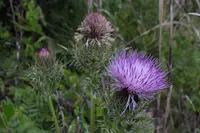
The plant forms a low rosette of sharply spined leaves and sends up a tall, bristly stem topped with bright yellow to purple flower heads. It attracts many pollinators, especially bees and butterflies.

This species tolerates poor, dry soils and high heat but resents heavy shade and constantly wet ground. Gardeners who want to learn how to care for yellow thistle should understand its need for full sun, well-drained soil, and some space away from foot traffic due to its spines.

Main Plant Requirements

Care Difficulty

Moderate Care

Light Preference

Full Sun

Water Requirements

Moderate Water

Temperature Preference

Warm Climate

Hardiness Zone

5–9

Soil Texture

Sandy, Loamy, Rocky

Soil pH

Acidic (5.5–6.5)

Soil Drainage

Well-drained

Fertilization

Minimal (feed rarely)

Get Personalized Care Plan

Scan your plant to receive care tips personalized for your specific plant

Available on iOS and Android

How to Care for the yellow thistle

This sun-loving native thistle thrives in open, bright conditions with long daily exposure.

  • Provide full sun for 6–8 hours per day; yellow thistle flowers and forms sturdier stems in unobstructed light.
  • Plant in open fields, roadsides, or meadow-style sites; it tolerates light afternoon shade but becomes taller and weaker in too much shade.
  • Avoid dense shade from trees or buildings; insufficient light reduces flowering, while strong sun with wind can dry soil faster, so monitor moisture in midsummer.

This species prefers dry to moderately moist soil and is adapted to seasonally lean watering conditions.

  • Allow the top 3–5 cm of soil to dry between rains or manual watering; Cirsium horridulum dislikes constantly saturated ground.
  • Use freely draining, sandy or loamy soil so water does not pool around the crown; soggy soil encourages root rot and stem collapse.
  • In cooler seasons, natural rainfall is often enough; in hot, dry spells, water when leaves begin to soften or curl slightly, but stop if the soil stays wet for more than 24 hours.

This hardy thistle tolerates a broad temperature range but responds best to mild to warm conditions.

  • Optimal growth occurs around 65–80°F (18–27°C), especially during the main growing season in spring and early summer.
  • The plant withstands winter lows near 20°F (−6°C) once established, but repeated hard freezes below this can damage rosettes and young crowns.
  • Heat tolerance is good up to about 95°F (35°C) if soil is not waterlogged; in prolonged heat waves, drought plus extreme heat can stunt growth and shorten flowering.

This species tolerates a wide humidity range and usually needs no special humidity management.

Cirsium horridulum prefers dry, lean, well-drained soil that mimics sandy or open field habitats.

  • Use sandy or sandy-loam soil with low to moderate organic matter to keep the profile open and fast-draining.
  • Aim for slightly acidic to neutral pH around 6.0–7.0, avoiding strongly acidic or alkaline mixes that limit nutrient uptake.
  • For containers, blend coarse sand with a small amount of compost and some fine gravel to improve drainage and aeration.
  • Avoid heavy clay, peat-heavy, or water-retentive mixes, which promote root rot and weaken the plant’s drought adaptation.

This species can grow in containers outdoors if the pot replicates its dry, fast-draining native conditions.

  • Choose a deep, heavy container that resists tipping as the rosette and flowering stems become tall and top-heavy.
  • Use a wide surface area so the basal rosette can spread without crowding against the pot rim.
  • Place the container in a very sunny, exposed position where wind movement keeps stems sturdy and prevents damp, stagnant air around foliage.

This native biennial thrives in lean soils, so fertilizing Cirsium horridulum is usually unnecessary and often counterproductive.

Pruning Cirsium horridulum is mostly done to manage spread and improve appearance rather than to shape the plant.

  • Cut spent flower heads in late bloom to limit self-seeding and encourage a tidier look.
  • Remove dead, damaged, or diseased stems at ground level using clean, sharp pruners or loppers.
  • Thin out crowded rosettes around desirable plants to reduce competition and improve airflow.

Transplanting is more relevant than repotting for this wild thistle, which is usually grown in open ground rather than containers.

  • Move seedlings or young plants in early spring or early fall, when temperatures are mild and soil is workable.
  • Transplant if growth stalls, plants are overcrowded, or desirable seedlings appear in unsuitable spots.
  • Lift plants with a generous soil clump, disturbing roots as little as possible to reduce transplant shock.
  • Water deeply after transplanting and keep soil lightly moist for 1–2 weeks while roots re-establish.

Propagation of Cirsium horridulum is typically done from seed, taking advantage of the plant’s natural self-sowing habit.

  • Collect ripe seed heads in late summer, before fluff blows away, and dry them in a paper bag.
  • Sow fresh seeds outdoors in fall so natural winter chilling breaks dormancy.
  • For controlled sowing, cold-stratify seeds at 35–40°F for 4–6 weeks, then surface-sow in bright light.
  • Keep the seed mix just moist, not wet, and thin seedlings to reduce crowding and promote strong growth.

This species is generally cold hardy in much of its range and needs minimal winter care once established.

  • Rosettes usually overwinter outdoors, tolerating light frost without additional protection.
  • In colder zones or exposed sites, apply a 2–5 cm mulch around the root zone, keeping crowns uncovered.
  • Container-grown plants are less insulated; move pots to a sheltered, unheated area during hard freezes.

Care Tips

Disturbance Seedbed

After flowering, lightly scarify or rake a small patch of soil around established plants to create bare, disturbed spots where dropped seed can germinate, which mimics the natural habitat conditions and maintains a staggered age structure in the stand.

Controlled Self-Seeding

If volunteer seedlings appear where they are not wanted, transplant very young rosettes with a deep plug of soil into a designated patch before the taproot extends, which allows natural regeneration while keeping the plant from becoming weedy in sensitive areas.

Rosette Protection

In colder or wind-exposed sites, place a low, breathable barrier such as a short wire ring or stones around first-year rosettes to mark and protect them from foot traffic, mowing, and accidental cultivation.

Pollinator Corridor Planning

Position plants in loose drifts spaced 30–60 cm apart in a sunny corridor or along a border edge so pollinators can move efficiently between blooms, which improves both wildlife value and seed set when growing yellow thistle.

Targeted Deadheading

On sites where spread must be limited, cut and bag only a portion of the spent flower heads just as they fade, leaving some to mature for wildlife while preventing excessive self-seeding into paths, lawns, or neighboring beds.

Common Pests and Diseases

Thistle head weevil

This pest targets flower heads and developing seeds, causing distorted or poorly formed seedheads. Symptoms include small exit holes and brown, damaged florets inside the flower head.

Solution

Hand-pick and destroy affected flower heads before adults emerge, and cut back spent blooms to reduce breeding sites. In garden settings, encourage beneficial insects and avoid unnecessary broad-spectrum insecticides that may disrupt natural enemies of the weevils.

Stem-boring moth larvae

These insects tunnel inside stems, leading to wilting shoots, weak growth, and stems that easily snap or collapse. Symptoms include frass (sawdust-like droppings) at stem entry points and hollow stems when cut open.

Solution

Prune out and dispose of infested stems as soon as wilting or tunneling is noticed, cutting back to healthy tissue. Remove and destroy plant debris at season’s end to reduce overwintering larvae and limit future infestations.

Aphids

These insects cluster on tender shoots and undersides of leaves, sucking sap and causing curling, yellowing, and sticky honeydew that can attract ants. This pest can also weaken flower stalks and reduce vigor, especially in young plants.

Solution

Spray colonies off with a firm stream of water and repeat as needed, then spot-treat remaining clusters with insecticidal soap or horticultural oil, coating stems and leaf undersides. Limit high-nitrogen fertilization, which encourages soft, aphid-prone growth, and support natural predators such as lady beetles where possible.

Powdery mildew

This disease appears as white to gray powdery patches on leaves and sometimes stems, often starting on older foliage. Symptoms include reduced vigor and premature leaf yellowing or drop in dense or shaded plantings.

Solution

Improve air circulation by spacing plants properly and removing dense surrounding vegetation, and water at soil level rather than overhead. Remove and discard heavily infected leaves, and if needed apply a sulfur or potassium bicarbonate-based fungicide at the first sign of infection, following label directions.

Rust

This disease causes orange to brown pustules on the undersides of leaves, with yellowing spots on the upper surface. Symptoms include gradual weakening of plants and early leaf loss when infection is heavy.

Solution

Remove and dispose of infected leaves as soon as pustules appear and avoid overhead watering that keeps foliage wet for long periods. In sites with recurring problems, provide full sun exposure, improve airflow, and consider applying a labeled rust-control fungicide early in the season if environmental conditions favor disease development.

Interesting Facts

Specialist pollinator partner

The yellow, spiny flower heads are a primary nectar source for the endangered frosted elfin butterfly in parts of its range, making this thistle a key species in some conservation programs.

Annual-to-biennial life cycle

This species typically starts as a basal rosette for 1–2 years, then bolts, flowers, and dies after seed set, a pattern botanists describe as an annual or short-lived biennial strategy.

Sandy soil specialist

It is strongly associated with dry, sandy habitats such as coastal dunes, pinelands, and sandy roadsides in the southeastern US, where its deep taproot helps it tolerate drought and shifting substrates.

Botan icon

Did you know?

In many southeastern US longleaf pine ecosystems, this thistle is among the earliest native forbs to flower after winter, providing one of the first substantial nectar resources for emerging native bees and butterflies at the start of the growing season.

FAQs about yellow thistle

This species self-seeds readily and can form dense patches where soil is disturbed or turf is thin. Deadhead spent flower heads before seeds mature and maintain healthy groundcover nearby to limit unwanted spread in gardens or small properties.

Grow Healthy Plants with Botan Care

Keep your plants happy and healthy with plant identification, disease detection, and easy care guidance.

Botan plant care app — identify plants on mobile

Explore More Plants