Mexican pricklypoppy Care (Argemone mexicana)

Also known as: Bathurst Bur-weed, Yellow-flowered Mexican Poppy, Prickly Poppy, Yellow Poppy, Yellow-Flowered Mexican, Yellow Mexican Poppy
Mexican pricklypoppy

About Mexican pricklypoppy

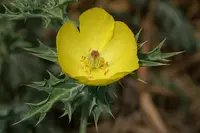
Mexican pricklypoppy (Argemone mexicana) is a spiny annual herb in the poppy family, known for its gray-green leaves and bright yellow, poppy-like flowers. It often forms clumps with a stiff, upright habit and armed stems and capsules.

This species is native to Mexico and other warm regions of the Americas but has naturalized widely in dry, disturbed sites, roadsides, and fields. It thrives with full sun, low to moderate moisture, and well-drained, often poor or sandy soils.

Deep roots and drought tolerance make it tough and resilient, but its sharp spines and self-seeding habit require some caution when you care for Mexican pricklypoppy.

Main Plant Requirements

Care Difficulty

Easy Care

Light Preference

Full Sun

Water Requirements

Low Water

Temperature Preference

Tropical / Frost Sensitive

Hardiness Zone

8–11

Soil Texture

Sandy, Loamy, Rocky

Soil pH

Slightly acidic (6.5–7.0), Slightly alkaline (7.0–7.5)

Soil Drainage

Well-drained

Fertilization

Minimal (feed rarely)

Get Personalized Care Plan

Scan your plant to receive care tips personalized for your specific plant

Available on iOS and Android

How to Care for the Mexican pricklypoppy

This drought-adapted annual thrives in strong light and open, exposed sites.

  • Provide full sun for 6–10 hours daily; Mexican pricklypoppy flowers and branches best in unobstructed sun.
  • Plant in open ground or roadside-style sites with minimal shade; light afternoon shade is tolerated only in very hot regions.
  • Leggy stems, sparse blooms, and pale foliage indicate insufficient light, while leaf scorch or crisping suggests intense heat combined with reflected light from walls or pavement.

This species prefers dry, fast-draining conditions and is highly drought tolerant once established.

  • Allow soil to dry completely between waterings; the top 5–8 cm should feel dry and loose before adding any water.
  • In the ground, rainfall usually suffices; in unusually long dry spells, water deeply but infrequently to wet the root zone, then let it dry again.
  • Overwatering causes yellowing leaves, soft stems, and root rot in poorly drained soil, while underwatering shows as temporary wilting that quickly recovers after rain.

This plant is adapted to hot, arid to semi-arid climates and performs best in warm seasons.

  • Optimal growth occurs around 75–95°F (24–35°C), with strong flowering during consistently warm, sunny weather.
  • Argemone mexicana tolerates high heat up to about 105°F (40°C) if soil is very well drained and humidity is low.
  • Frost is damaging; growth slows below 50°F (10°C) and plants are usually killed near or just below 32°F (0°C), so it behaves as a warm-season annual in cooler climates.

Humidity is not a significant factor for this drought-adapted species in typical home or outdoor conditions.

This species prefers lean, very well-drained soil that does not retain prolonged moisture.

  • Use sandy or gravelly loam with low to moderate organic matter to mimic its native dry habitats.
  • Ensure rapid drainage by blending mineral topsoil with coarse sand or grit at roughly 2:1 ratio.
  • Aim for slightly acidic to slightly alkaline pH around 6.0–8.0, as Argemone mexicana tolerates a broad range.
  • Avoid heavy clay, compacted areas, or soil mixes with high peat content that hold water for long periods.

This species can be grown in containers outdoors if provided with fast-draining conditions.

  • Choose a deep, heavy pot to anchor the tall, thorny stems and reduce tipping in strong wind.
  • Fill the container with a gritty mix, such as 50% mineral topsoil and 50% coarse sand or pumice, to prevent waterlogging.
  • Elevate the pot on feet or bricks so drainage holes stay clear and excess water exits rapidly after rain or irrigation.

This tough wildflower typically grows well in poor soils and usually needs no fertilizer once established.

Pruning Argemone mexicana is minimal and mainly for safety and tidiness rather than shaping.

  • Cut back dead or damaged stems in late winter or early spring using hand pruners and gloves, as the plant is spiny and exudes irritating sap.
  • Remove spent flowering stems at the base to limit self-seeding and maintain a neater outline.
  • Thin out crowded, leaning stems if access paths are blocked, but avoid heavy cutting that may reduce flowering.

This species is usually grown in open ground, so focus on careful transplanting rather than frequent repotting.

  • Transplant young seedlings in spring once frost risk has passed; older plants dislike root disturbance and establish poorly when moved.
  • Look for roots circling a small nursery pot or very slow growth as signs a container plant needs a one-time shift to a slightly larger pot.
  • Water well the day before moving, then gently loosen the root ball and minimize breaking the taproot to reduce transplant shock.
  • Replant into very well-drained, sandy soil at the same depth, firm lightly, and water once to settle, then keep on the dry side.

Argemone mexicana is most often propagated from seed, which germinates reliably in warm, well-drained conditions.

  • Sow fresh seeds in late spring when soil temperatures reach about 65–75°F, either directly outdoors or in small pots.
  • Use a very gritty, free-draining mix, press seeds lightly into the surface, and barely cover, as light improves germination.
  • Keep the medium just slightly moist, never wet; seedlings usually appear in 1–3 weeks under warm conditions.
  • Thin or transplant seedlings while still small, spacing them so mature plants have good air movement and room to develop.

This annual or short-lived perennial from warm regions has low cold tolerance and generally dies back after hard frost.

  • In mild climates, allow plants to self-seed so new seedlings replace frost-killed adults each spring.
  • Where occasional light frosts occur, a thin, dry mulch around the base can protect roots of any overwintering plants.
  • Container specimens in cooler regions can be moved to a bright, cool, frost-free area and kept almost dry to extend their life slightly.

Care Tips

Glove-safe handling

Always handle plants with thick gloves and long sleeves, and use tongs or a small shovel when thinning or transplanting to avoid contact with the sharp spines and irritating latex sap.

Controlled self-seeding

If you want a patch without it becoming invasive, deadhead most flower heads before they set seed and leave only a few selected capsules to ripen for controlled self-sowing.

Seed scarification

Lightly nick or sand the hard seed coat before sowing to improve germination uniformity and establish a more even stand when growing Mexican pricklypoppy.

Dry-site erosion use

On poor, sloping, or compacted ground, use the plant as a temporary pioneer cover to stabilize soil, then gradually replace it with longer-lived, less spiny species as the soil structure improves.

Targeted pest monitoring

In dry, open sites monitor buds and young leaves for aphids and leaf-mining insects, and if numbers rise, wash them off with a firm water spray in the morning so foliage can dry rapidly in the sun.

Common Pests and Diseases

Leaf beetles

This pest frequently feeds on foliage, creating small to large holes and ragged leaf margins, especially on young plants in dry, open sites.

Solution

Hand-pick beetles and larvae where practical, and destroy heavily infested leaves to reduce feeding pressure. For larger stands, use targeted foliar sprays containing neem oil or pyrethrins in the early morning, and reduce nearby weedy hosts that can harbor beetle populations.

Aphids

These insects cluster on young stems, flower buds, and the undersides of leaves, sucking sap and causing curling, distortion, and sticky honeydew deposits.

Solution

Dislodge colonies with a firm stream of water and prune heavily infested tips. If needed, apply insecticidal soap or horticultural oil, ensuring thorough coverage of the undersides of leaves, and encourage natural predators such as lady beetles by avoiding broad-spectrum chemicals.

Powdery mildew

This disease appears as a white, powdery coating on leaves and young stems, which can lead to yellowing and premature leaf drop in crowded or humid conditions.

Solution

Remove and discard affected leaves to lower spore levels and avoid overhead watering to keep foliage dry. Improve spacing and airflow around plants and, if disease persists, use a sulfur or potassium bicarbonate fungicide labeled for ornamental species, applied according to label directions.

Leaf spot

Symptoms include small, dark, water-soaked or tan lesions on leaves that may enlarge, coalesce, and cause partial defoliation under warm, moist conditions.

Solution

Promptly remove and destroy badly spotted leaves and any plant debris on the soil surface to limit pathogen spread. Water at soil level, increase sun exposure where possible, and use a copper-based fungicide on high-value specimens if new spotting continues to develop.

Interesting Facts

Yellow latex alkaloids

This species produces a bright yellow latex rich in benzylisoquinoline alkaloids such as berberine and protopine, which help defend the plant against many insects and grazing animals.

Seed dispersal by ants

Its small black seeds often bear an oil-rich appendage called an elaiosome, which attracts ants that carry the seeds away and aid in their dispersal.

Disturbed-soil specialist

The plant commonly colonizes freshly disturbed, dry, nutrient-poor soils along roadsides, fields, and construction sites, acting as an early pioneer species in many warm regions.

Botan icon

Did you know?

The species is thought to be native to Mexico and parts of the southwestern United States but has become a widespread invasive weed across tropical and subtropical regions worldwide, from Africa and India to Australia, largely following human-driven habitat disturbance and trade.

FAQs about Mexican pricklypoppy

Lack of flowers usually comes from too much fertility, excess shade, or stress. Avoid rich fertilizers, give full sun, and prevent waterlogging. In cooler regions, late frosts or very short summers can also limit flowering.

Grow Healthy Plants with Botan Care

Keep your plants happy and healthy with plant identification, disease detection, and easy care guidance.

Botan plant care app — identify plants on mobile

Explore More Plants