Self-sowing control
Leave a few of the healthiest flower stalks to set seed for natural reseeding, but deadhead the rest promptly so the plant does not exhaust itself or overwhelm nearby perennials with unwanted seedlings.

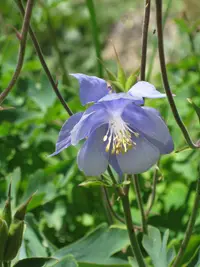
Aquilegia bernardii is a compact perennial from the columbine group, known for its delicate, nodding flowers and finely divided, fern-like foliage. It forms small clumps that suit rock gardens, borders, and naturalistic plantings.
This species is native to mountainous areas of Europe, where it grows in rocky, well-drained soils with cool to mild conditions. It is generally moderate in difficulty, as it prefers stable moisture, good drainage, and light shade, and may need regular replanting from seed as plants are often short-lived.
Gardeners who learn how to care for Aquilegia bernardii usually find it rewarding for adding airy color and a soft texture in spring to early summer displays.

Care Difficulty
Moderate Care

Light Preference
Partial Shade

Water Requirements
Moderate Water

Temperature Preference
Cold Hardy

Hardiness Zone
5–8

Soil Texture
Loamy, Sandy, Organic-rich

Soil pH
Acidic (5.5–6.5), Slightly acidic (6.5–7.0)

Soil Drainage
Moist but well-drained

Fertilization
Minimal (feed rarely)
Scan your plant to receive care tips personalized for your specific plant
Available on iOS and Android
This perennial prefers bright conditions with some protection from intense afternoon sun.
This plant prefers evenly moist but never waterlogged soil, especially during active growth.
This hardy perennial tolerates cool climates but has clear limits for heat and severe frost.
This species grows best in relatively dry to moderately humid outdoor air and usually does not need special humidity control.
Aquilegia bernardii prefers loose, well-structured soil that stays moist but never waterlogged.
This species can be grown successfully in containers outdoors when drainage and root space are managed carefully.
This perennial grows well in modest soils, so Aquilegia bernardii benefits from light feeding rather than heavy fertilization.
Pruning focuses on keeping plants tidy and supporting repeat flowering rather than reshaping Aquilegia bernardii.
This columbine is usually grown in beds, so transplanting young plants carefully is more important than frequent repotting.
Aquilegia bernardii is most commonly propagated from seed, with division used sparingly due to its taproot.
This hardy perennial usually requires minimal winter attention in typical temperate gardens.

Plant Health Check
Not sure what's wrong with your plant? Check your plant's health inside the app.
This species is narrowly endemic to southeastern France, mainly in the Provence region, where it grows naturally on rocky limestone slopes and open woodland clearings at low to mid elevations.
It shows a marked preference for calcareous, well-drained soils derived from limestone, and wild populations are typically associated with sunny to lightly shaded, dry, stony habitats.
Compared with many other European Aquilegia species, it remains distinctly compact, forming low clumps with relatively small, nodding flowers adapted to exposed, often windy Mediterranean hillside sites.
This species usually blooms in late spring to early summer. Flowering often lasts 3–4 weeks, depending on temperature and moisture. Deadheading spent blooms can slightly extend the display and help conserve the plant’s energy.
Keep your plants happy and healthy with plant identification, disease detection, and easy care guidance.