Controlled trellis training
Install a narrow trellis or wire netting early in the season and wind new shoots horizontally along it every few days to create a dense screen while preventing the vine from smothering nearby plants.

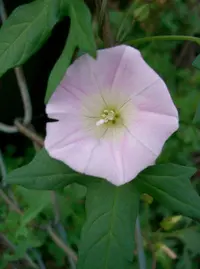
Japanese false bindweed (Calystegia hederacea) is a vigorous, twining perennial vine in the morning glory family. It typically has slender climbing stems and triangular, ivy-like leaves.
The plant produces attractive, funnel-shaped white to pale pink flowers that open during the day. It often spreads by creeping stems and underground parts, which can make it persistent once established.
Calystegia hederacea is native to East Asia and can be found in fields, roadsides, and disturbed ground. It tends to thrive in full sun to light shade and moderately moist, well-drained soil.
Its fast growth and spreading habit mean it is easy to start but can be challenging to control, so plan carefully if you want to care for Japanese false bindweed in a garden setting.

Care Difficulty
Easy Care

Light Preference
Full Sun

Water Requirements
Moderate Water

Temperature Preference
Cold Hardy

Hardiness Zone
5–9

Soil Texture
Sandy, Loamy, Organic-rich

Soil pH
Acidic (5.5–6.5), Slightly acidic (6.5–7.0)

Soil Drainage
Well-drained

Fertilization
Minimal (feed rarely)
Scan your plant to receive care tips personalized for your specific plant
Available on iOS and Android
Calystegia hederacea grows best with consistent, bright outdoor light that supports strong vining growth.
This vining perennial prefers evenly moist, well-drained soil without staying waterlogged.
This species is a hardy perennial that tolerates a broad range of outdoor temperatures once established.
This species handles a wide humidity range and rarely needs special humidity management outdoors.
This twining perennial prefers loose, moderately fertile soil that drains freely but does not dry out too fast.
This species adapts well to container growing when given enough volume and support for its twining growth.
This vigorous vine needs only light feeding in typical garden soil, so focus on modest nutrition rather than heavy fertilization for Japanese false bindweed.
Pruning Calystegia hederacea controls its spread and maintains a manageable, flowering display.
This species is most often grown in the ground, so care focuses on transplanting clumps rather than frequent repotting.
Calystegia hederacea spreads readily, and propagation is most practical through division and stem cuttings.
In many temperate regions this vine is cold hardy and needs only modest winter attention once established.

Plant Health Check
Not sure what's wrong with your plant? Check your plant's health inside the app.
This species spreads by slender underground rhizomes that can form dense ground-hugging patches, with many above-ground stems belonging to a single genetic individual.
Its leaves are shallowly 3-lobed with a somewhat ivy-like outline, which helps distinguish it from related bindweeds that usually have simple, arrow-shaped leaves.
The pale pink to nearly white funnel-shaped flowers usually open in the morning and close by afternoon, timed with the activity of common day-flying pollinators in its native East Asian range.

In some parts of East Asia this vine is an important host plant for specialist moth larvae, which use its foliage as their primary food source and can influence local populations of both the plant and its herbivores.
This species spreads quickly by creeping stems and underground rhizomes. In mild climates it can form dense patches and overrun nearby plants. Use barriers, containers, and regular cutting back if you want controlled growth while growing Japanese false bindweed.
Keep your plants happy and healthy with plant identification, disease detection, and easy care guidance.