bigpod sesbania Care (Sesbania herbacea)

Also known as: colorado river hemp, coffee weed, Pencilpod Sesbania, Danglepod
bigpod sesbania

About bigpod sesbania

Bigpod sesbania (Sesbania herbacea) is a fast-growing annual or short-lived perennial legume often found in wet fields, ditches, and along pond margins. It is native to the southeastern United States and parts of the Caribbean and thrives in warm, humid climates.

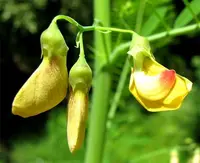
The plant forms tall, upright stems with fine, feathery leaves and showy yellow flowers that develop into large, inflated seed pods. Its vigorous growth and ability to fix nitrogen in the soil make it useful in restoration and cover-crop settings.

For those learning how to care for bigpod sesbania, it generally prefers full sun, consistently moist soil, and sites that do not dry out for long periods.

Main Plant Requirements

Care Difficulty

Easy Care

Light Preference

Full Sun

Water Requirements

Aquatic

Temperature Preference

Tropical / Frost Sensitive

Hardiness Zone

8–11

Soil Texture

Sandy, Loamy, Silty

Soil pH

Acidic (5.5–6.5), Slightly acidic (6.5–7.0)

Soil Drainage

Waterlogged tolerant

Fertilization

Minimal (feed rarely)

Get Personalized Care Plan

Scan your plant to receive care tips personalized for your specific plant

Available on iOS and Android

How to Care for the bigpod sesbania

This fast-growing wetland legume prefers strong sun exposure to fuel vigorous growth.

  • Provide full sun for 6–8 hours daily; bigpod sesbania flowers and fixes nitrogen best in open, unshaded sites.
  • Tolerates light partial shade, especially with morning sun and dappled afternoon light, but stems may stretch and produce fewer pods.
  • In hot summers, strong midday sun is acceptable if soil moisture stays high; in early spring and fall, choose the sunniest available location to maintain growth.

This species thrives in consistently moist to saturated soils and tolerates brief flooding.

  • Aim for soil that stays damp to wet; in the field, it handles standing water, while on drier sites let only the top 1–2 cm begin to dry between soakings.
  • Poor drainage is not a problem in heavy clay or low spots, but anaerobic, foul-smelling mud signals extreme stagnation rather than healthy wetland conditions.
  • Wilting, dull foliage, and slow growth indicate underwatering, while yellowing lower leaves with soft stems suggest prolonged waterlogging without enough oxygen.

This warm-season annual grows best in hot, frost-free conditions.

  • Optimal growth occurs around 77–95°F (25–35°C), typical of mid to late summer in warm climates.
  • Growth slows noticeably below 68°F (20°C) and plants are usually killed by frost near 32°F (0°C), so sow only after danger of frost has passed.
  • Sesbania herbacea tolerates short heat spikes up to about 100–104°F (38–40°C) if soil moisture remains high, but prolonged extreme heat with dry soil stresses plants and reduces biomass.

Sesbania herbacea handles a wide humidity range but grows best with moderate ambient moisture.

  • Aim for 40–60% humidity; it tolerates brief drier spells but grows more vigorously in the middle of this range.
  • Dry indoor air may cause slower growth, leaf edge browning, and premature leaf drop in bigpod sesbania.
  • Increase humidity outdoors by grouping plants near other vegetation, or indoors by placing the pot on a pebble tray with water below the pot base.

Sesbania herbacea prefers moist, loose, and nutrient-rich soil that still allows air around the roots.

  • Use a loamy or sandy-loam mix with high organic matter, such as garden loam blended with compost, to support fast growth.
  • Ensure steady moisture but avoid standing water by combining compost with coarse sand or fine gravel to improve drainage.
  • Target a slightly acidic to neutral pH around 6.0–7.0, which supports nutrient availability and healthy root function.
  • Avoid heavy, compacted clay or poorly drained low spots; lighten such soils with added compost and coarse mineral material to increase aeration.

This species can be grown in containers if the pot is sized and stabilized for its tall, fast growth.

  • Choose a deep, heavy pot to counteract the plant’s height and prevent tipping in wind or on balconies.
  • Use a moisture-retentive yet draining mix, such as compost-rich soil cut with coarse sand, to keep roots oxygenated under frequent watering.
  • Elevate the container slightly on pot feet or bricks so drainage holes stay clear and water exits quickly after irrigation or rain.

Sesbania herbacea grows quickly and benefits from moderate feeding in poor or depleted soils.

  • Use a balanced NPK fertilizer (such as 10-10-10) or well-rotted compost for caring for bigpod sesbania in nutrient-poor sites.
  • Apply fertilizer every 4–6 weeks during the warm growing season if growth or foliage color is weak.
  • Dilute liquid fertilizers to 1/2 strength to avoid excess leafiness and potential salt buildup.
  • Stop feeding in late fall and winter, when growth slows or plants die back in cold climates.

Sesbania herbacea responds well to light, purposeful pruning to maintain structure and safety.

  • Carry out main pruning in late winter or early spring before vigorous new growth starts.
  • Remove dead, damaged, or crossing stems first, then thin crowded shoots to improve light and airflow.
  • Shorten overly tall or leaning stems to shape plants and reduce the risk of lodging or breakage.
  • Use clean, sharp hand pruners and make angled cuts just above a leaf node or branch junction.

This species is typically field-grown, so focus on careful transplanting rather than long-term container culture.

  • Transplant seedlings or young plants in spring after frost risk passes, when soil is warm and workable.
  • Move plants when roots lightly fill starter cells or pots; roots circling the container and stalled growth signal the need to transplant.
  • Plant into loose, well-drained soil and water deeply to settle soil around roots and remove large air pockets.
  • Reduce root stress by handling the root ball gently, keeping roots shaded and moist, and watering consistently for 1–2 weeks after planting.

Sesbania herbacea is most commonly propagated from seed under warm, bright conditions.

  • Sow seeds in spring when temperatures reach 70–85°F, either in trays or directly in the ground.
  • Scarify hard seed coats by lightly nicking with a blade or rubbing with sandpaper, then soak in warm water for 12–24 hours.
  • Use a free-draining medium, keep it evenly moist, and provide full sun to promote strong seedling growth.
  • Transplant seedlings once they have several true leaves, disturbing roots as little as possible.

In mild climates this species behaves as a tender perennial, but in colder regions it often grows as a warm-season annual.

  • Plants are sensitive to hard frost and usually die back when temperatures drop near or below freezing.
  • Add a 5–8 cm mulch layer in autumn around the root zone where winters are cool but not severe.
  • For container-grown plants in cooler areas, move pots into a bright, frost-free space before the first freeze.
  • In regions with harsh winters, treat plants as annuals and rely on reseeding each year rather than overwintering.

Care Tips

Early-season support

Install sturdy stakes or a light wire fence when plants are 15–20 cm tall so the fast, top-heavy growth stays upright and resists wind damage later in the season.

Cut-and-regrow management

Mow or cut stems back to 15–30 cm just before flowering to encourage dense regrowth, improve biomass production, and reduce unwanted self-seeding in adjacent areas.

Inoculate with rhizobia

Before sowing, coat seeds with an appropriate cowpea-group rhizobium inoculant to maximize nitrogen fixation and improve overall vigor, especially in soils with no history of legumes.

Moisture-buffer mulching

Apply a 5–8 cm layer of clean, weed-free mulch between rows (not directly against stems) to moderate soil temperature, reduce crusting, and keep the rooting zone evenly moist in hot, drying weather.

Seed pod control

Monitor for developing pods and remove them promptly if you want to limit reseeding, maintaining bigpod sesbania populations only where they are intentionally planted and managed.

Common Pests and Diseases

Sesbania stem borer

This pest is the larval stage of certain moths that tunnel into young stems, causing wilting, dieback, and hollowed shoots. Symptoms include yellowing tops, drooping stems, and frass (sawdust-like material) near entry holes.

Solution

Prune and destroy infested stems as soon as wilting or borer holes are noticed, cutting back to healthy solid tissue. Encourage predators by maintaining plant diversity nearby, and in larger plantings use pheromone or light traps to monitor moth activity and time targeted biological insecticides containing Bacillus thuringiensis kurstaki to young larvae on stems and foliage.

Leaf-mining flies

These insects create winding, pale tunnels inside leaves as larvae feed between the leaf surfaces, reducing photosynthesis and weakening young plants. Symptoms include serpentine white or light-green trails that eventually dry and turn brown.

Solution

Hand-remove and destroy mined leaves before larvae complete development to reduce the next generation. For heavier infestations, use yellow sticky traps to monitor adults and apply a horticultural oil or spinosad-based spray to the foliage, coating leaf undersides while avoiding application during high heat to limit leaf burn.

Cercospora leaf spot

This disease is caused by Cercospora fungi that produce small, circular to irregular brown or gray spots with darker margins on leaves, which may coalesce and cause premature defoliation. Symptoms include thinned canopies and reduced vigor, especially in warm, humid weather.

Solution

Remove and dispose of heavily spotted fallen leaves to reduce fungal spores, and avoid overhead irrigation that keeps foliage wet for long periods. In repeated or severe cases, improve spacing and air movement around plants and consider using a copper-based fungicide on new growth at the start of warm, wet periods, following label directions carefully.

Rhizoctonia seedling blight

This disease affects germinating seeds and young seedlings in warm, moist soils, causing damping-off, brown lesions at the soil line, and sudden collapse. Symptoms include water-soaked stems, poor emergence, and patchy gaps in plant rows or stands.

Solution

Use clean, well-drained seedbeds and avoid sowing seed too deeply or in overly wet, compacted soil, which favors the fungus. Discard obviously diseased seedlings, rotate planting sites, and if problems recur, use fungicide-treated seed or a biological seed treatment labeled for damping-off control to protect emerging seedlings.

Root-knot nematodes

These microscopic roundworms attack roots and cause swollen galls, reduced root function, and general plant stunting, especially in light, sandy soils. Symptoms include poor growth despite adequate water, reduced nodulation on this legume, and plants that wilt quickly in heat.

Solution

Pull and destroy severely affected plants and avoid replanting in the same spot with other susceptible hosts, especially other legumes, for several seasons. Improve soil organic matter with compost, rotate with non-host cover crops like small grains, and in small garden beds consider soil solarization during the hottest part of summer to lower nematode populations, which supports more reliable Sesbania herbacea plant care in future plantings.

Interesting Facts

Nitrogen-fixing wetland shrub

This legume forms root nodules with Rhizobium bacteria that convert atmospheric nitrogen into plant-available forms, allowing it to thrive in nutrient-poor, waterlogged soils of marshes and ditches across the southeastern United States.

Rapid biomass producer

In warm, wet conditions this species can reach 2–3 m in a single growing season, building substantial leafy and woody biomass that is often used in research and practice as a green manure to improve soil organic matter.

Specialist pollinator visitors

Its purple pea-like flowers are primarily visited by large bees, including carpenter bees and bumblebees, which are strong enough to depress the flower keel and trigger the pollen-release mechanism typical of many legumes.

Botan icon

Did you know?

This species is one of the native North American hosts for larvae of some specialist moths and butterflies that rely on legumes, so stands of Sesbania herbacea can function as important insect nursery habitat in wetland and roadside ecosystems.

FAQs about bigpod sesbania

This species grows very quickly, often reaching 90–180 cm in a single warm season if moisture and nutrients are adequate. Growth slows in cool weather or poor soil and can stop completely under drought or nutrient deficiency.

Grow Healthy Plants with Botan Care

Keep your plants happy and healthy with plant identification, disease detection, and easy care guidance.


Botan plant care app — identify plants on mobile

Explore More Plants