Peruvian-lily Care (Alstroemeria aurea)

Peruvian-lily

About Peruvian-lily

Peruvian-lily (Alstroemeria aurea) is a clump-forming perennial grown mainly for its long-lasting, lily-like flowers and upright, leafy stems. It is often used in borders and as a cut flower.

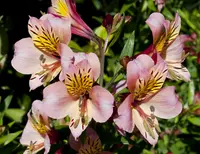
The plant produces colorful, speckled blooms in warm shades such as yellow, orange, and red, held above narrow, lance-shaped leaves. Stems emerge from fleshy underground rhizomes that slowly spread, forming dense patches over time.

Alstroemeria aurea is native to Chile and Argentina, where it grows in cool, temperate conditions. It is generally moderate in difficulty, as it prefers stable moisture, fertile, well-drained soil, and protection from extreme heat.

Gardeners who want to learn how to care for Peruvian-lily should note that it rewards consistent conditions with reliable flowering and strong growth.

Main Plant Requirements

Care Difficulty

Moderate Care

Light Preference

Full Sun

Water Requirements

Moderate Water

Temperature Preference

Cool Climate

Hardiness Zone

6–9

Soil Texture

Sandy, Loamy, Organic-rich

Soil pH

Acidic (5.5–6.5), Slightly acidic (6.5–7.0)

Soil Drainage

Moist but well-drained

Fertilization

Light (every 4–6 weeks)

Get Personalized Care Plan

Scan your plant to receive care tips personalized for your specific plant

Available on iOS and Android

How to Care for the Peruvian-lily

Alstroemeria aurea flowers best with abundant light but benefits from some daily shade in hot climates.

  • Provide 6–8 hours of sun, with morning sun and light afternoon shade ideal, especially in zones with strong summer sun.
  • Allow partial shade (about 3–4 hours of direct sun) in hotter regions; plants may grow tall and lean but foliage will avoid scorch.
  • In summer, protect Peruvian-lily from intense afternoon sun to reduce leaf burn; in cooler seasons, choose the brightest, sunniest spot available.

Alstroemeria aurea prefers steady soil moisture without prolonged saturation.

  • Water when the top 3–5 cm of soil feels dry, aiming for consistently moist but not soggy soil during active growth and flowering.
  • Use free-draining soil or beds so water runs through in seconds; yellowing, soft stems indicate overwatering, while limp, crisping leaves signal underwatering.
  • Reduce watering frequency in late fall and winter as growth slows, allowing the soil surface to dry a bit deeper between waterings while never letting it become bone dry for long.

This species grows best in mild, frost-protected conditions with moderate summer temperatures.

  • Aim for active growth in 60–75°F (16–24°C); plants generally tolerate short peaks to 80–85°F (27–29°C) if soil moisture is stable and roots are mulched.
  • Rhizomes usually survive brief drops to about 20–25°F (-6 to -4°C) if mulched, but repeated hard freezes can damage buds and reduce flowering the following season.
  • In hot summers above 85°F (29°C), provide afternoon shade and consistent moisture; in cooler regions, choose a warm, sheltered site to extend the flowering season.

This species grows best in moderate humidity close to typical outdoor conditions.

  • Aim for 40–60% humidity; Peruvian-lily generally adapts well to drier garden air.
  • Crisp leaf tips and rolling or browning leaf edges can indicate humidity stress combined with heat or wind.
  • In hot, very dry weather, group plants together and use mulch around the base to reduce moisture loss from leaves and soil.

Alstroemeria aurea prefers loose, fertile, well-drained soil that still holds some consistent moisture.

  • Use a loamy mix enriched with organic matter, such as garden soil blended with compost or well-rotted manure.
  • Ensure sharp drainage by incorporating coarse sand or fine gravel, especially in heavy or compacted soils.
  • Target a slightly acidic to neutral pH around 6.0–7.0 to support nutrient uptake and root health.
  • Avoid dense clay, waterlogged sites, or pure sand; improve aeration and structure by adding compost plus a small portion of perlite.

This species is suitable for container growing when given a deep, stable pot with reliable drainage.

  • Choose a container at least 30–40 cm deep so the fleshy rhizomes and roots can spread downward without crowding.
  • Use a heavier material like ceramic or clay in windy spots to reduce tipping as tall flowering stems develop.
  • Raise the container on feet or bricks so drainage holes stay clear and excess water escapes quickly after irrigation.

Alstroemeria aurea responds well to moderate feeding that supports flowering without creating weak, lush growth.

  • Use a balanced NPK fertilizer (such as 10-10-10) or well-rotted compost on established clumps in spring.
  • Feed every 4–6 weeks during the active growing and flowering season, then stop once foliage begins to yellow.
  • Apply liquid feeds at half label strength to avoid root burn, especially in containers.
  • For caring for Peruvian-lily in pots, consider a slow-release granular fertilizer mixed into the top 5–8 cm of soil in spring.

Pruning Alstroemeria aurea focuses on cleaning and encouraging repeat flowering rather than shaping the plant heavily.

  • In the growing season, gently pull or cut spent flowering stems down at the base once blooms fade to promote new stalks.
  • Remove dead, damaged, or diseased stems whenever noticed, using clean, sharp pruners or scissors.
  • In late autumn, cut back dry or collapsed foliage near ground level in colder regions to tidy the clump.
  • Thin out crowded, weak stems in dense patches during spring to improve air flow and flower quality.

Alstroemeria aurea is most often grown in beds and borders, so focus on dividing and transplanting clumps rather than frequent repotting.

  • Plan division and transplanting in early spring or just after flowering, when temperatures are mild.
  • Look for signs such as congested rhizomes, weak flowering, or roots circling a container as cues for moving or dividing.
  • Lift the clump carefully, tease apart rhizomes with minimal breakage, and replant at the same depth in well-drained soil.
  • Water thoroughly after transplanting, then keep soil evenly moist and shade plants lightly for 7–10 days to reduce transplant shock.

Propagation of Alstroemeria aurea is commonly done by division, with seeds used mainly for breeding or larger-scale growing.

  • Divide established clumps in early spring, separating rhizomes so each piece has several healthy shoots and roots.
  • Replant divisions into loose, well-drained soil, water in, and maintain consistent moisture until new growth is established.
  • Sow fresh seed in trays with sterile mix, barely covering, and keep at 60–70°F with bright, indirect light.
  • Keep germinating seeds and new divisions sheltered from extreme heat or frost to improve survival and early growth.

Alstroemeria aurea is moderately cold hardy, but winter care can help maintain strong clumps and reliable flowering.

  • In regions with freezing winters, apply a 5–8 cm layer of mulch over the root zone after the ground cools.
  • Allow top growth to die back naturally, then cut dry stems near ground level in late fall or early spring.
  • In colder zones or exposed sites, grow in containers and move pots to a frost-free but cool, bright area for winter.

Care Tips

Staggered Planting Blocks

Plant clumps in small groups 2–3 weeks apart in spring so flowering is naturally staggered, making it easier to manage deadheading and extend the overall display period.

Flower Harvest Technique

When cutting stems for vases, firmly pull and twist the stem from the base rather than snipping it mid-stem, which encourages new flowering shoots and reduces the risk of rotting stubs in the crown.

Crown Mulch Collar

Apply a 5–8 cm ring of loose organic mulch around but not directly on top of the crown to keep roots cool, reduce weed competition, and avoid crown rot from constant moisture contact.

Rhizome Division Strategy

Divide crowded clumps every 3–4 years in early spring or after flowering by lifting the rhizomes, discarding woody, exhausted sections, and replanting only firm, vigorous pieces with several buds.

Targeted Slug Management

Place low, rough barriers (such as sharp grit or copper tape) and set evening slug traps near young shoots, since protecting early growth from chewing damage greatly improves flowering when growing Peruvian-lily.

Common Pests and Diseases

Slugs and snails

These pests chew irregular holes in leaves and flower buds and can completely strip young shoots, especially in damp, shaded spots.

Solution

Hand-pick in the evening, use slug traps or barriers such as copper tape around pots, and reduce dense ground cover near clumps; in severe cases, apply iron phosphate slug pellets according to label directions and keep mulch slightly drier to make the area less attractive.

Spider mites

These insects cause fine speckling, dulling of foliage color, and in heavy infestations can leave fine webbing on stems and undersides of leaves, especially in hot, dry conditions.

Solution

Rinse foliage thoroughly with a strong but gentle stream of water, increase humidity around plants, remove heavily damaged leaves, and use insecticidal soap or a horticultural oil spray directed to leaf undersides, repeating as needed according to the product label.

Leaf spot (Alternaria)

This disease produces small, dark, often circular spots on leaves that may enlarge, merge, and cause premature yellowing and drop, particularly in wet or crowded plantings.

Solution

Remove and dispose of affected leaves, avoid overhead watering, improve spacing and airflow, and if spotting continues during wet weather, apply a fungicide labeled for ornamental leaf spot, ensuring good coverage of both leaf surfaces.

Botrytis blight

This disease causes flower buds and open blooms to discolor, turn mushy, and collapse, often with a gray fuzzy mold on petals, stems, and decaying foliage in cool, humid conditions.

Solution

Promptly remove and discard infected flowers and foliage, avoid overhead watering and wetting of blooms, thin dense growth to improve airflow, and in persistent cases apply a suitable ornamental fungicide during cool, damp periods following label directions.

Aphids

These insects cluster on young stems and buds, sucking sap and causing distortion, sticky honeydew, and sometimes sooty mold on leaves and flowers.

Solution

Dislodge colonies with a firm stream of water, pinch or prune heavily infested tips, encourage or introduce natural predators such as lady beetles, and use insecticidal soap or a light horticultural oil spray aimed at shoot tips and bud clusters, repeating as needed.

Interesting Facts

Chilean mountain origins

This species is native to central Chile, where it grows in temperate Andean foothills and coastal ranges, often in open scrub and rocky grasslands rather than deep forest.

Frost-hardy tuberous roots

Unlike many tropical relatives, it forms underground tuberous rhizomes that allow it to survive winter frosts and resprout in spring in cool-temperate climates.

Twisted leaf petioles

Its leaves use a twist in the petiole, the small stalk that attaches the blade to the stem, so the blades appear upside down, an adaptation thought to optimize light capture and water runoff.

Botan icon

Did you know?

Alstroemeria aurea has become naturalized in several cool, oceanic regions such as parts of the British Isles and New Zealand, where escaped garden populations have formed persistent colonies along roadsides, riverbanks, and disturbed grasslands.

FAQs about Peruvian-lily

Lack of blooms usually comes from insufficient light, overcrowded clumps, or nutrient imbalance. Older clumps benefit from division every 3–4 years. Avoid heavy high-nitrogen feeding, which favors foliage at the expense of flowers when growing Peruvian-lily.

Grow Healthy Plants with Botan Care

Keep your plants happy and healthy with plant identification, disease detection, and easy care guidance.

Botan plant care app — identify plants on mobile

Explore More Plants