Mounting for airflow
If conditions allow, mount plants on cork or hardwood slabs with a thin pad of sphagnum around the roots to increase air movement, reduce rot risk, and mimic this species’ natural epiphytic habit.


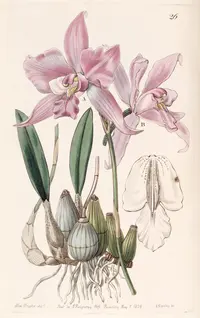
Forbes' Cattleya (Cattleya forbesii) is a compact epiphytic orchid native to coastal forests of Brazil. It typically grows on trees, forming clumps of upright, slender pseudobulbs with firm leaves.
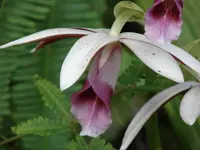
The plant produces star-shaped flowers in soft shades of yellow, green, or tan, often with a more colorful lip. Blooms are usually fragrant and appear on short stems above the foliage.
This species prefers bright, filtered light, regular moisture with good airflow, and a very free-draining orchid substrate. Its forgiving nature and moderate size make it suitable for growers with some basic orchid experience who want to learn how to care for Forbes' Cattleya.

Care Difficulty
Moderate Care

Light Preference
Partial Sun

Water Requirements
Moderate Water

Temperature Preference
Tropical / Frost Sensitive

Hardiness Zone
11–12

Soil Texture
Sandy, Organic-rich

Soil pH
Acidic (5.5–6.5)

Soil Drainage
Well-drained

Fertilization
Moderate (every 2–4 weeks)
Scan your plant to receive care tips personalized for your specific plant
Available on iOS and Android
This epiphytic orchid prefers bright, filtered light to produce compact growth and reliable flowering.
This orchid prefers thorough watering followed by a partial dry period around the roots.
This species grows best in intermediate to warm conditions with a mild day–night temperature drop.
This orchid prefers moderate to high humidity to keep pseudobulbs plump and foliage healthy.
Cattleya forbesii grows best in a very airy, fast-draining orchid substrate rather than standard potting soil.
This species is well suited to container growing when the pot supports its epiphytic root system.
This orchid responds well to light, consistent feeding during active growth.
Cattleya forbesii needs only light, targeted pruning to stay healthy and tidy.
Repotting keeps this epiphytic orchid healthy by renewing its airy medium and allowing room for new roots.
Division is the standard method for increasing Cattleya forbesii plants in home collections.
This orchid is not frost hardy and needs mild, protected winter conditions.

Plant Health Check
Not sure what's wrong with your plant? Check your plant's health inside the app.
This orchid is native to Brazil’s Atlantic coastal forests and restinga scrub, where it often grows on rocks or low trees exposed to strong light and sea breezes.
Populations show notable variation in flower color and shape, ranging from yellow‑green to bronze petals with a contrasting purple‑veined lip, which has led to its frequent use in hybrid breeding.
It forms relatively short pseudobulbs with 1–2 narrow leaves and tends to grow in tight clumps, an adaptation that helps it anchor securely in windy, exposed habitats.

Cattleya forbesii was formally described in the mid‑19th century and became an important parent in early Cattleya hybridization, valued by breeders for passing on its compact growth, floriferous nature, and tolerance of brighter, warmer conditions.
Lack of flowers usually comes from insufficient light, too much nitrogen fertilizer, or no distinct cooler, drier rest after growth. Slight temperature drop at night and a short drier period often trigger bud formation.
Keep your plants happy and healthy with plant identification, disease detection, and easy care guidance.